15 Topics
 10 Days
Programme Overview
Training Description
Who Should Attend
This course is designed for IT and security professionals seeking to implement Zero Trust security in their organizations, including:
- Security Architects
- Network Engineers
- Security Analysts
- System Administrators
- IT Managers
- Anyone responsible for implementing or managing security infrastructure
Session Objectives
- Understand the principles and components of a Zero Trust security model.
- Implement a Zero Trust framework within their organization.
- Design and implement micro-segmentation strategies.
- Utilize identity and access management (IAM) solutions for Zero Trust.
- Secure endpoints and devices in a Zero Trust environment.
- Implement continuous monitoring and analytics for Zero Trust.
- Understand and apply Zero Trust principles to cloud and hybrid environments.
About the Course
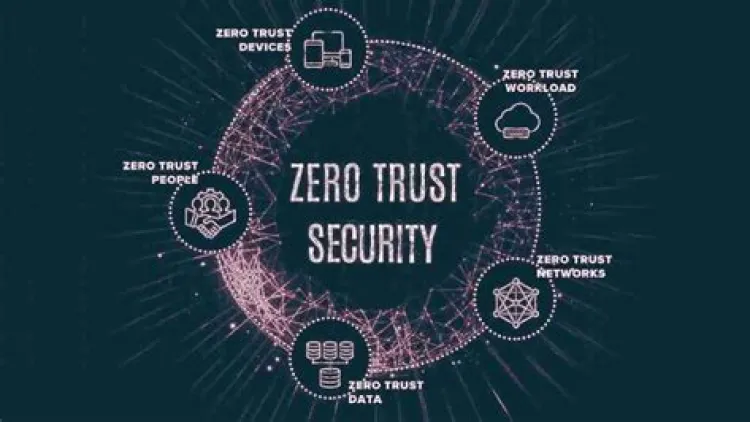
In today's perimeter-less world, traditional security models are no longer sufficient. This course on Zero Trust Security Architecture provides a comprehensive understanding of implementing a Zero Trust security model. Participants will learn how to shift from implicit trust to continuous verification, securing access to resources regardless of location. This course bridges the gap between legacy security approaches and modern, adaptable security frameworks, empowering professionals to build robust and resilient security postures.
Curriculum & Topics
15 Topics | 10 Days
-
 Subtopic 1.1:
Understanding the limitations of traditional perimeter-based security.
Subtopic 1.1:
Understanding the limitations of traditional perimeter-based security.
-
Subtopic 1.2:
Defining Zero Trust principles and concepts.
-
Subtopic 1.3:
The evolution of security and the need for Zero Trust.
-
Subtopic 1.4:
Benefits of implementing a Zero Trust architecture.
-
Subtopic 1.5:
Understanding the Zero Trust maturity model.
-
Subtopic 2.1:
"Never trust, always verify" principle.
-
Subtopic 2.2:
Micro-segmentation and least privilege access.
-
Subtopic 2.3:
Identity-centric security and continuous authentication.
-
Subtopic 2.4:
Device security and endpoint protection.
-
Subtopic 2.5:
Data security and classification.
-
Subtopic 2.6:
Visibility and analytics.
-
Subtopic 3.1:
Implementing multi-factor authentication (MFA) and adaptive authentication.
-
Subtopic 3.2:
Managing user identities and access privileges.
-
Subtopic 3.3:
Role-based access control (RBAC) and attribute-based access control (ABAC).
-
Subtopic 3.4:
Identity governance and administration (IGA).
-
Subtopic 3.5:
Privileged access management (PAM).
-
Subtopic 4.1:
Implementing endpoint detection and response (EDR) solutions.
-
Subtopic 4.2:
Device posture assessment and compliance.
-
Subtopic 4.3:
Mobile device management (MDM) and mobile application management (MAM).
-
Subtopic 4.4:
Secure boot and hardware-based security.
-
Subtopic 4.5:
Implementing device certificates and encryption.
-
Subtopic 5.1:
Understanding micro-segmentation principles.
-
Subtopic 5.2:
Designing and implementing network segmentation.
-
Subtopic 5.3:
Utilizing software-defined networking (SDN) for micro-segmentation.
-
Subtopic 5.4:
Implementing next-generation firewalls (NGFWs) and intrusion detection/prevention systems (IDPS).
-
Subtopic 5.5:
Network access control (NAC) in a Zero Trust environment.
-
Subtopic 6.1:
Data classification and labeling.
-
Subtopic 6.2:
Data loss prevention (DLP) strategies.
-
Subtopic 6.3:
Data encryption and tokenization.
-
Subtopic 6.4:
Implementing data access controls and auditing.
-
Subtopic 6.5:
Data governance and compliance.
-
Subtopic 7.1:
Zero Trust security for cloud wo• Implementing Zero Trust in hybrid cloud architectures.rkloads (AWS, Azure, GCP).
-
Subtopic 7.2:
Secure access to cloud applications and services.
-
Subtopic 7.3:
Cloud security posture management (CSPM).
-
Subtopic 7.4:
Serverless security in a Zero Trust context.
-
Subtopic 8.1:
Implementing security information and event management (SIEM) systems.
-
Subtopic 8.2:
Utilizing user and entity behavior analytics (UEBA).
-
Subtopic 8.3:
Real-time threat detection and response.
-
Subtopic 8.4:
Log analysis and forensic investigations.
-
Subtopic 8.5:
Security analytics and reporting.
-
Subtopic 9.1:
Developing and implementing Zero Trust security policies.
-
Subtopic 9.2:
Utilizing policy enforcement points (PEPs).
-
Subtopic 9.3:
Automating security workflows and responses.
-
Subtopic 9.4:
Implementing security orchestration, automation, and response (SOAR).
-
Subtopic 9.5:
Policy-as-code and infrastructure-as-code.
-
Subtopic 10.1:
Developing a Zero Trust implementation roadmap.
-
Subtopic 10.2:
Conducting a Zero Trust maturity assessment.
-
Subtopic 10.3:
Identifying key stakeholders and requirements.
-
Subtopic 10.4:
Designing a Zero Trust architecture.
-
Subtopic 10.5:
Developing a proof of concept (POC) and pilot program.
-
Subtopic 11.1:
Phased implementation strategies.
-
Subtopic 11.2:
Managing change and user adoption.
-
Subtopic 11.3:
Integrating Zero Trust with existing security infrastructure.
-
Subtopic 11.4:
Troubleshooting common implementation challenges.
-
Subtopic 11.5:
Validating and testing the Zero Trust architecture.
-
Subtopic 12.1:
Securing remote access and VPN replacements.
-
Subtopic 12.2:
Securing applications and APIs.
-
Subtopic 12.3:
Securing IoT and operational technology (OT) environments.
-
Subtopic 12.4:
Implementing Zero Trust for privileged access.
-
Subtopic 12.5:
Securing data in motion and at rest.
-
Subtopic 13.1:
Aligning Zero Trust with compliance frameworks (e.g., NIST, ISO 27001).
-
Subtopic 13.2:
Meeting regulatory requirements with Zero Trust controls.
-
Subtopic 13.3:
Demonstrating compliance to auditors and stakeholders.
-
Subtopic 13.4:
Understanding data privacy regulations and Zero Trust.
-
Subtopic 13.5:
Developing a compliance reporting strategy.
-
Subtopic 14.1:
Monitoring and managing the Zero Trust environment.
-
Subtopic 14.2:
Incident response in a Zero Trust architecture.
-
Subtopic 14.3:
Continuous improvement and optimization.
-
Subtopic 14.4:
Updating and maintaining Zero Trust policies and configurations.
-
Subtopic 14.5:
Managing the lifecycle of Zero Trust components.
-
Subtopic 15.1:
Exploring emerging Zero Trust technologies and solutions.
-
Subtopic 15.2:
Understanding the impact of AI and machine learning on Zero Trust.
-
Subtopic 15.3:
Zero Trust and the future of cybersecurity.
-
Subtopic 15.4:
Developing a long-term Zero Trust strategy.
-
Subtopic 15.5:
learning and professional development in Zero Trust security.