15 Topics
 5 Days
 74 Sessions
Programme Overview
Training Description
Who Should Attend
This course is designed for professionals who are involved in fraud detection, investigation, or prevention, including:
-
Forensic accountants and fraud investigators
-
Internal and external auditors
-
Chief Financial Officers (CFOs) and finance directors
-
Corporate compliance and risk management officers
-
Legal counsel and corporate governance professionals
-
Law enforcement officers and financial crime investigators
-
Tax inspectors and regulatory compliance officials
-
Banking and financial institution risk analysts
Session Objectives
- Understand the different types of financial fraud.
- Identify red flags and indicators of fraud.
- Apply forensic accounting techniques to detect and investigate fraud.
- Gather and analyse financial evidence.
- Conduct effective fraud investigations.
- Interview witnesses and suspects.
- Document findings and prepare reports.
About the Course
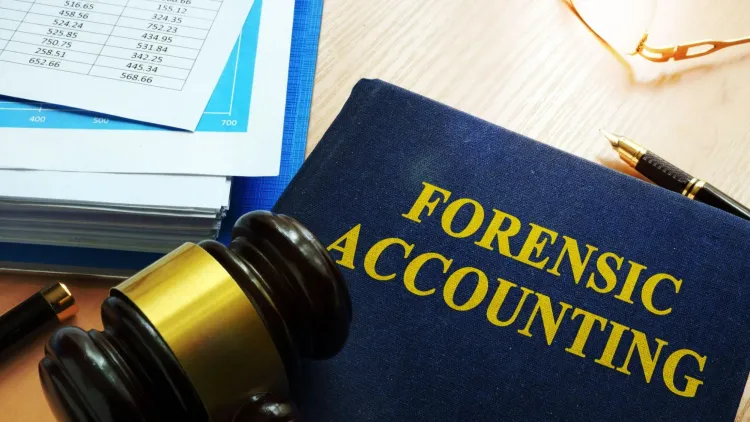
Financial fraud remains a widespread and expensive challenge for organizations worldwide. This thorough training course on Forensic Accounting and Fraud Detection provides professionals with specialized competencies to detect, investigate, and prevent financial deception. Attendees master advanced forensic accounting strategies, fraud detection methodologies, and rigorous investigative protocols, enabling them to uncover financial discrepancies, collect admissible evidence, and aid in legal proceedings. By merging core accounting principles with investigative expertise, the program prepares participants to combat financial crime with confidence and safeguard organizational assets.
Curriculum & Topics
15 Topics | 74 Sessions
-
 Workshop 1.1:
Defining forensic accounting and its role in fraud detection and investigation.
-
Workshop 1.2:
Understanding the different types of financial fraud (e.g., asset misappropriation, financial statement fraud, corruption).
-
Workshop 1.3:
The fraud triangle and its components (opportunity, rationalization, pressure).
-
Workshop 1.4:
The cost of fraud and its impact on organizations.
-
Workshop 1.5:
Ethical considerations in forensic accounting.
-
Workshop 2.1:
Identifying and assessing fraud risks.
-
Workshop 2.2:
Developing a fraud risk assessment framework.
-
Workshop 2.3:
Analyzing internal controls and identifying vulnerabilities.
-
Workshop 2.4:
Using risk assessment tools and techniques.
-
Workshop 2.5:
Prioritizing fraud risks for mitigation.
-
Workshop 3.1:
Data mining and analytics for fraud detection.
-
Workshop 3.2:
Benford's Law and its applications.
-
Workshop 3.3:
Ratio analysis and trend analysis.
-
Workshop 3.4:
Anomaly detection and outlier analysis.
-
Workshop 3.5:
Using technology for fraud detection.
-
Workshop 4.1:
Planning and conducting a fraud investigation.
-
Workshop 4.2:
Gathering and analyzing evidence.
-
Workshop 4.3:
Conducting interviews and interrogations.
-
Workshop 4.4:
Documenting findings and preparing reports.
-
Workshop 4.5:
Maintaining confidentiality and chain of custody.
-
Workshop 5.1:
Preparing for interviews and developing interview questions.
-
Workshop 5.2:
Establishing rapport and building trust.
-
Workshop 5.3:
Active listening and observing non-verbal cues.
-
Workshop 5.4:
Interviewing witnesses, suspects, and informants.
-
Workshop 5.5:
Documenting interview statements.
-
Workshop 6.1:
Identifying and collecting different types of evidence (e.g., documents, emails, financial records, witness statements).
-
Workshop 6.2:
Evaluating the credibility and relevance of evidence.
-
Workshop 6.3:
Analyzing financial data and transactions.
-
Workshop 6.4:
Maintaining chain of custody for evidence.
-
Workshop 6.5:
Using forensic accounting software and tools.
-
Workshop 7.1:
Understanding financial statement fraud and its motivations.
-
Workshop 7.2:
Techniques used to manipulate financial statements.
-
Workshop 7.3:
Analyzing financial statements for red flags.
-
Workshop 7.4:
Identifying accounting irregularities and misstatements.
-
Workshop 7.5:
Case studies of financial statement fraud.
-
Workshop 8.1:
Understanding asset misappropriation schemes (e.g., theft, embezzlement, skimming).
-
Workshop 8.2:
Identifying red flags and indicators of asset misappropriation.
-
Workshop 8.3:
Investigating asset misappropriation cases.
-
Workshop 8.4:
Recovering misappropriated assets.
-
Workshop 8.5:
Case studies of asset misappropriation.
-
Workshop 9.1:
Understanding corruption and bribery schemes.
-
Workshop 9.2:
Identifying red flags and indicators of corruption.
-
Workshop 9.3:
Investigating corruption and bribery cases.
-
Workshop 9.4:
International anti-corruption laws and regulations.
-
Workshop 9.5:
Case studies of corruption and bribery.
-
Workshop 10.1:
Understanding cybercrime and its impact on financial fraud.
-
Workshop 10.2:
Identifying cyber threats and vulnerabilities.
-
Workshop 10.3:
Investigating cyber-related fraud cases.
-
Workshop 10.4:
Data breaches and their implications.
-
Workshop 10.5:
Cybersecurity best practices for fraud prevention.
-
Workshop 11.1:
Understanding the legal and regulatory framework related to fraud.
-
Workshop 11.2:
Working with law enforcement and regulatory agencies.
-
Workshop 11.3:
Legal considerations in fraud investigations.
-
Workshop 11.4:
Testifying in court.
-
Workshop 12.1:
Designing and implementing effective internal controls.
-
Workshop 12.2:
Preventing fraud through policies and procedures.
-
Workshop 12.3:
Promoting a culture of ethical conduct.
-
Workshop 12.4:
Employee training and awareness programs.
-
Workshop 12.5:
Monitoring internal controls and identifying weaknesses.
-
Workshop 13.1:
Overview of forensic accounting software and tools.
-
Workshop 13.2:
Data analytics and visualization tools.
-
Workshop 13.3:
Computer forensics and e-discovery.
-
Workshop 13.4:
Using technology for fraud detection and investigation.
-
Workshop 13.5:
Selecting and implementing forensic accounting technology.
-
Workshop 14.1:
Preparing clear and concise forensic accounting reports.
-
Workshop 14.2:
Communicating findings effectively to stakeholders.
-
Workshop 14.3:
Presenting evidence in court.
-
Workshop 14.4:
Writing expert witness reports.
-
Workshop 14.5:
Developing communication strategies for fraud cases.
-
Workshop 15.1:
Analyzing real-world fraud cases.
-
Workshop 15.2:
Applying forensic accounting techniques in practical exercises.
-
Workshop 15.3:
Simulating fraud investigations.
-
Workshop 15.4:
Developing investigation plans and reports.
-
Workshop 15.5:
Sharing best practices and lessons learned.