9 Topics
 5 Days
Programme Overview
Training Description
Finance and accounting professionals
Department and team leaders
Project and program managers
Marketing and sales leaders
IT and technology managers
Human resources professionals
Operations and supply chain managers
Business analysts
Emerging leaders
Budget planning committee members
Session Objectives
- Understand the critical importance of cross-functional collaboration in budgeting. Identify and break down the common barriers to effective teamwork. Develop a common language to facilitate communication between finance and business teams. Implement structured workshops for collaborative budget planning. Mediate and resolve conflicts that arise during the budgeting process.
About the Course
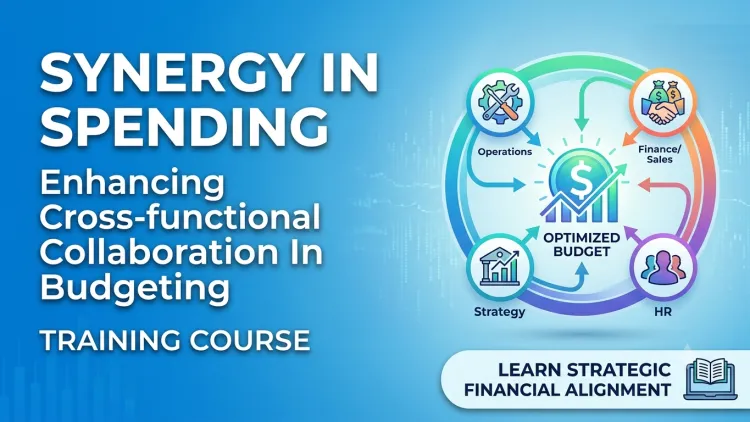
Effective budgeting is no longer the sole domain of the finance department; it is a collaborative effort that requires input and alignment from every corner of the organization. When functional teams operate in silos, the budget can become a source of conflict and inefficiency, leading to missed opportunities and misaligned priorities. This training course is designed to dismantle these barriers and build a unified approach to financial planning, where diverse perspectives are leveraged to create a more accurate, strategic, and successful budget.
This 5-day program will equip participants with the skills to bridge communication gaps, foster mutual understanding, and build a culture of trust and shared responsibility. You will learn practical techniques for facilitating constructive dialogue, translating technical financial jargon for non-finance teams, and creating a budgeting process that is both inclusive and effective. By the end of this course, you will be able to transform your organization's budgeting from a fragmented, siloed task into a powerful exercise in cross-functional teamwork, driving better decisions and stronger business outcomes
Curriculum & Topics
9 Topics | 5 Days
-
 Subtopic 1.1:
The hidden costs of siloed budgeting.
Subtopic 1.1:
The hidden costs of siloed budgeting.
-
Subtopic 1.2:
How cross-functional teams improve budget accuracy and buy-in.
-
Subtopic 1.3:
The role of empathy in understanding different team perspectives.
-
Subtopic 1.4:
Aligning departmental goals with overall financial objectives.
-
Subtopic 1.5:
Overcoming the "us versus them" mentality.
-
Subtopic 2.1:
Techniques for active listening and effective questioning.
-
Subtopic 2.2:
Facilitating productive meetings and workshops.
-
Subtopic 2.3:
Creating a safe space for open and honest communication.
-
Subtopic 2.4:
Identifying and leveraging the unique strengths of each team.
-
Subtopic 2.5:
The art of consensus building in a diverse group.
-
Subtopic 3.1:
Translating financial jargon into simple, actionable terms.
-
Subtopic 3.2:
Helping non-finance teams understand key financial reports.
-
Subtopic 3.3:
Using visual aids to make financial data accessible.
-
Subtopic 3.4:
Creating a shared glossary of budgeting terms.
-
Subtopic 3.5:
Building a foundation of basic financial literacy for all participants.
-
Subtopic 4.1:
The phases of a truly cross-functional budgeting cycle.
-
Subtopic 4.2:
Defining clear roles and responsibilities for each team.
-
Subtopic 4.3:
Implementing tools for real-time collaboration and feedback.
-
Subtopic 4.4:
Using a "zero-based" or "activity-based" approach.
-
Subtopic 4.5:
Creating a project charter for the budgeting process itself.
-
Subtopic 5.1:
Transitioning from a gatekeeper to a strategic partner.
-
Subtopic 5.2:
Providing consultative support to departmental leaders.
-
Subtopic 5.3:
Empowering teams with data to make informed decisions.
-
Subtopic 5.4:
Acting as a mediator in inter-departmental discussions.
-
Subtopic 5.5:
Building long-term relationships based on trust.
-
Subtopic 6.1:
Understanding the root causes of budgeting conflicts.
-
Subtopic 6.2:
Applying structured negotiation techniques.
-
Subtopic 6.3:
Focusing on objective data rather than subjective opinions.
-
Subtopic 6.4:
Creating a clear escalation process for unresolved issues.
-
Subtopic 6.5:
Turning disagreements into opportunities for strategic alignment.
-
Subtopic 7.1:
Evaluating budgeting software with strong collaboration features.
-
Subtopic 7.2:
Using cloud-based platforms for a single source of truth.
-
Subtopic 7.3:
Implementing dashboards for real-time performance tracking.
-
Subtopic 7.4:
Automating data entry to free up time for strategic discussions.
-
Subtopic 7.5:
Leveraging communication tools to keep everyone informed.
-
Subtopic 8.1:
Linking departmental performance metrics to budget outcomes.
-
Subtopic 8.2:
Creating a system for shared accountability for budget results.
-
Subtopic 8.3:
Holding regular check-ins to review progress collaboratively.
-
Subtopic 8.4:
The importance of celebrating team-level financial successes.
-
Subtopic 8.5:
Building a culture where everyone feels responsible for the bottom line.
-
Subtopic 9.1:
Embedding collaborative budgeting into annual planning cycles.
-
Subtopic 9.2:
Providing ongoing cross-functional training and development.
-
Subtopic 9.3:
Recognizing and rewarding collaborative behavior.
-
Subtopic 9.4:
Conducting a post-budget review with all key stakeholders.
-
Subtopic 9.5:
The role of senior leadership in championing the collaborative model long-term.