15 Topics
 5 Days
 60 Sessions
Programme Overview
Training Description
Farmers and agricultural producers
Agricultural extension officers and advisors
Soil scientists and consultants
Compost producers and managers
Organic farming practitioners
Environmental consultants and NGOs
Researchers and scientists
Sustainability officers
Land managers and conservationists
Rural development practitioners
Agricultural educators
Horticulture professionals
Enthusiasts of sustainable agriculture
Session Objectives
- Understand the principles and benefits of sustainable soil fertility management. Implement techniques for producing and applying effective compost. Utilize biofertilizers to enhance nutrient availability and uptake. Understand the role of nutrient cycling in soil health. Implement techniques for managing soil organic matter. Understand the role of cover crops and green manures in soil fertility. Implement techniques for soil testing and nutrient analysis.
About the Course
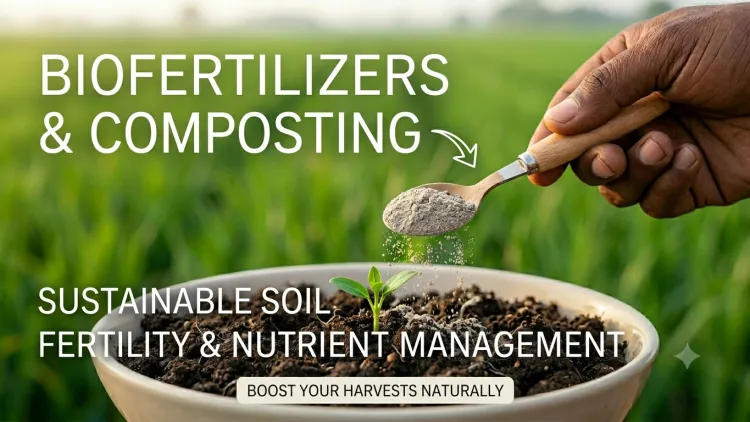
Sustainable Soil Fertility and Nutrient Management equips farmers and agricultural professionals with the knowledge and skills to enhance soil health and optimize nutrient cycling through biofertilizers and composting. This course focuses on implementing eco-friendly practices that minimize reliance on synthetic fertilizers, improve soil structure, and enhance crop productivity. Participants will learn to create and apply biofertilizers, manage composting systems, and understand nutrient dynamics. By mastering sustainable soil management, professionals can contribute to environmental sustainability and improve farm profitability.
Curriculum & Topics
15 Topics | 60 Sessions
-
 Workshop 1.1:
Principles and benefits of sustainable soil management.
-
Workshop 1.2:
Understanding the role of soil health in crop productivity.
-
Workshop 1.3:
Benefits of reducing reliance on synthetic fertilizers.
-
Workshop 1.4:
Historical context and modern practices.
-
Workshop 2.1:
Techniques for producing high-quality compost.
-
Workshop 2.2:
Selecting appropriate composting materials.
-
Workshop 2.3:
Managing composting processes and parameters.
-
Workshop 2.4:
Applying compost for soil improvement and nutrient enrichment.
-
Workshop 3.1:
Types of biofertilizers: bacterial, fungal, and algal.
-
Workshop 3.2:
Mechanisms of biofertilizer action.
-
Workshop 3.3:
Selecting and applying appropriate biofertilizers.
-
Workshop 3.4:
Integrating biofertilizers into nutrient management plans.
-
Workshop 4.1:
Understanding the nitrogen, phosphorus, and potassium cycles.
-
Workshop 4.2:
Role of soil microorganisms in nutrient transformation.
-
Workshop 4.3:
Managing nutrient availability and uptake.
-
Workshop 4.4:
Implementing closed-loop nutrient systems.
-
Workshop 5.1:
Importance of soil organic matter for soil health.
-
Workshop 5.2:
Techniques for building and maintaining soil organic matter.
-
Workshop 5.3:
Utilizing organic amendments and mulching.
-
Workshop 5.4:
Benefits of enhanced soil carbon sequestration.
-
Workshop 6.1:
Selecting appropriate cover crop species.
-
Workshop 6.2:
Implementing cover crop rotations and mixes.
-
Workshop 6.3:
Utilizing green manures for soil enrichment.
-
Workshop 6.4:
Benefits of cover crops in weed suppression and erosion control.
-
Workshop 7.1:
Techniques for soil sampling and testing.
-
Workshop 7.2:
Interpreting soil test results.
-
Workshop 7.3:
Developing nutrient management plans based on soil analysis.
-
Workshop 7.4:
Monitoring soil fertility over time.
-
Workshop 8.1:
Role of soil bacteria, fungi, and protozoa.
-
Workshop 8.2:
Enhancing microbial diversity and activity.
-
Workshop 8.3:
Implementing techniques for promoting beneficial microorganisms.
-
Workshop 8.4:
Benefits of a thriving soil food web.
-
Workshop 9.1:
Understanding the impact of pH and salinity on soil health.
-
Workshop 9.2:
Techniques for adjusting soil pH.
-
Workshop 9.3:
Managing soil salinity through leaching and amendments.
-
Workshop 9.4:
Selecting salt-tolerant crops.
-
Workshop 10.1:
Principles of integrated nutrient management.
-
Workshop 10.2:
Combining organic and inorganic nutrient sources.
-
Workshop 10.3:
Implementing site-specific nutrient management.
-
Workshop 10.4:
Benefits of optimizing nutrient use efficiency.
-
Workshop 11.1:
Techniques for minimizing nutrient leaching and runoff.
-
Workshop 11.2:
Implementing buffer zones and riparian areas.
-
Workshop 11.3:
Managing manure and waste effectively.
-
Workshop 11.4:
Benefits of reducing environmental impacts.
-
Workshop 12.1:
Analyzing the economic benefits of sustainable soil management.
-
Workshop 12.2:
Evaluating the costs and returns of organic amendments.
-
Workshop 12.3:
Identifying market opportunities for sustainably produced crops.
-
Workshop 12.4:
Developing business models for soil fertility services.
-
Workshop 13.1:
Developing communication and extension strategies.
-
Workshop 13.2:
Building farmer networks and knowledge sharing platforms.
-
Workshop 13.3:
Implementing training programs for sustainable soil management.
-
Workshop 13.4:
Scaling up successful soil fertility models.
-
Workshop 14.1:
Analyzing real-world examples of sustainable soil management practices.
-
Workshop 14.2:
Highlighting best practices and innovative techniques.
-
Workshop 14.3:
Documenting economic and environmental impacts.
-
Workshop 14.4:
Farmer testimonials and field visits.
-
Workshop 15.1:
Exploring emerging trends and innovations.
-
Workshop 15.2:
Integrating new technologies and research findings.
-
Workshop 15.3:
Adapting to evolving environmental and market conditions.
-
Workshop 15.4:
Building resilient and sustainable agricultural systems through soil health