9 Topics
 5 Days
 45 Sessions
Programme Overview
Training Description
- Finance managers and directors
- Budget managers and officers
- FP&A professionals
- Financial controllers
- HR managers and HR business partners
- Organizational development professionals
- Strategy and planning professionals
- Departmental and business-unit managers
- Operations managers
- Project and programme managers
- Senior executives and team leaders
- Professionals responsible for organizational change and performance management
Session Objectives
- Understand the symbiotic relationship between budget and organizational culture. Identify how current budget practices reflect and influence culture. Lead a budget planning process that is collaborative and transparent. Translate core values into measurable financial objectives. Use budget decisions to incentivize desired behaviors and outcomes.
About the Course
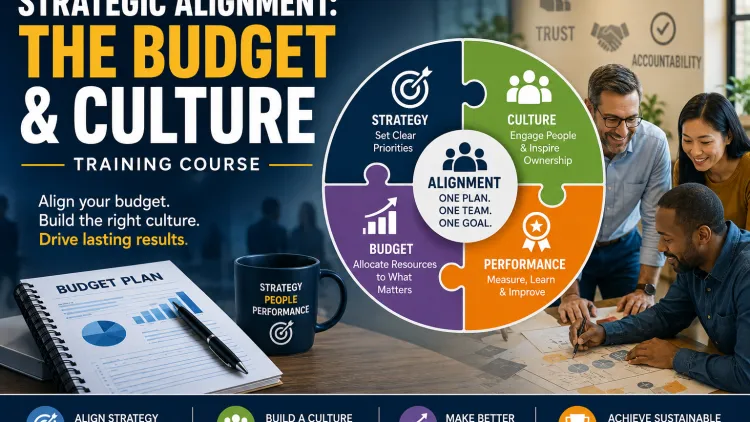
Strategic Alignment: The Budget & Culture Training is a practical professional programme designed to help finance, HR, strategy, and management professionals understand and strengthen the relationship between organizational culture, strategic priorities, and budgeting.The course explores how organizational values, leadership behaviors, employee attitudes, accountability, incentives, and decision-making practices influence budget performance. Participants will learn how to create a budgeting culture that promotes financial responsibility, strategic alignment, transparency, collaboration, cost consciousness, and long-term value creation.
Curriculum & Topics
9 Topics | 45 Sessions
-
 Workshop 1.1:
Understanding what organizational culture is and why it matters.
Workshop 1.1:
Understanding what organizational culture is and why it matters.
-
Workshop 1.2:
The link between resource allocation and cultural values.
-
Workshop 1.3:
How budgets can either reinforce or erode trust.
-
Workshop 1.4:
Identifying hidden cultural messages in financial documents.
-
Workshop 1.5:
The role of budget leaders as cultural stewards.
-
Workshop 2.1:
A framework for evaluating your current budgeting process.
-
Workshop 2.2:
Identifying misalignments between budget and stated values.
-
Workshop 2.3:
Diagnosing where cultural resistance to financial decisions originates.
-
Workshop 2.4:
Conducting a team-based cultural-financial assessment.
-
Workshop 2.5:
The importance of open feedback and psychological safety.
-
Workshop 3.1:
Shifting from a top-down to a collaborative approach.
-
Workshop 3.2:
Techniques for involving teams in the budget process.
-
Workshop 3.3:
Using data to facilitate discussions, not just dictate decisions.
-
Workshop 3.4:
Building a sense of ownership and shared responsibility.
-
Workshop 3.5:
Ensuring fairness and equity in resource distribution.
-
Workshop 4.1:
Defining a value-based budgeting framework.
-
Workshop 4.2:
Creating KPIs that reflect both financial and cultural goals.
-
Workshop 4.3:
Aligning departmental spending with mission-critical initiatives.
-
Workshop 4.4:
The process of justifying investments that support culture.
-
Workshop 4.5:
Measuring the ROI of employee development and wellness programs.
-
Workshop 5.1:
The art of communicating budget decisions transparently.
-
Workshop 5.2:
Explaining the "why" behind resource allocations.
-
Workshop 5.3:
Building a narrative that connects the budget to team purpose.
-
Workshop 5.4:
Handling difficult conversations about budget cuts or resource limits.
-
Workshop 5.5:
Using clear, non-jargon language to discuss financials.
-
Workshop 6.1:
Designing incentive structures that align with cultural values.
-
Workshop 6.2:
Moving beyond just financial rewards for performance.
-
Workshop 6.3:
Using discretionary funds to reward innovation and collaboration.
-
Workshop 6.4:
The impact of rewards and recognition on long-term culture.
-
Workshop 6.5:
Avoiding unintended consequences of budget-driven incentives.
-
Workshop 7.1:
Understanding the human side of budget changes.
-
Workshop 7.2:
Proactively addressing fears and anxieties about budget shifts.
-
Workshop 7.3:
Building a coalition of leaders to support change.
-
Workshop 7.4:
Techniques for resolving conflict and gaining buy-in.
-
Workshop 7.5:
Leading with empathy during periods of financial transition.
-
Workshop 8.1:
How budget decisions directly impact hiring and training.
-
Workshop 8.2:
Allocating funds to support employee growth and development.
-
Workshop 8.3:
The link between competitive compensation and cultural health.
-
Workshop 8.4:
Using budget to create a positive and empowering work environment.
-
Workshop 8.5:
Forecasting and budgeting for future talent needs.
-
Workshop 9.1:
Synthesizing key learnings into a concrete action plan.
-
Workshop 9.2:
Identifying the first steps to take back in your organization.
-
Workshop 9.3:
Setting a timeline for implementing new budget practices.
-
Workshop 9.4:
Defining success metrics for cultural-financial alignment.
-
Workshop 9.5:
Committing to a continuous cycle of improvement and learning.