15 Topics
 10 Days
 75 Sessions
Programme Overview
Training Description
Who Should Attend
This course is ideal for;
- Energy storage engineers
- Grid integration specialists
- Renewable energy project managers
- Electrical engineers
- Battery technology developers
- Energy consultants
- Utility engineers
- System integrators
- Researchers
- Sustainability managers
- Project developers
- Energy auditors
- Individuals interested in ESS
Session Objectives
- Understand the principles of smart grid technologies and their role in renewable energy integration.
- Implement techniques for analyzing smart grid components and architectures.
- Understand the role of demand-side management in optimizing grid performance.
- Implement techniques for integrating distributed energy resources into existing grids.
- Implement techniques for utilizing grid control systems and communication networks.
- Understand the principles of advanced metering infrastructure (AMI) and data analytics.
- Understand the role of energy storage in enhancing grid stability and flexibility.
- Implement techniques for conducting grid impact assessments and stability studies.
- Understand the principles of cybersecurity and data privacy in smart grid operations.
- Implement techniques for utilizing advanced control algorithms and optimization techniques.
- Understand the legal and regulatory considerations related to smart grid deployment.
- Develop strategies for managing smart grid projects and teams.
- Develop strategies for measuring and analyzing the effectiveness of smart grid implementations.
About the Course
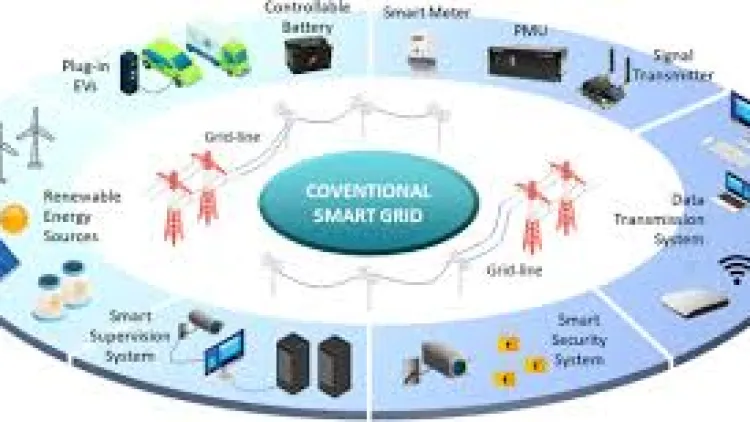
Smart Grids and Renewable Energy Integration training empowers professionals to understand and implement smart grid technologies, facilitating the seamless integration of renewable energy sources into existing power grids. This course focuses on analyzing smart grid components, implementing demand-side management strategies, and understanding the impact of renewable energy integration on grid stability and efficiency. Participants will learn to develop smart grid architectures, utilize advanced metering infrastructure, and understand the intricacies of using grid control systems to optimize renewable energy utilization. By mastering smart grid technologies and renewable energy integration, professionals can enhance their ability to create resilient and sustainable energy systems, improve grid reliability, and contribute to a cleaner and more efficient energy future.
The increasing adoption of renewable energy and the growing need for grid modernization necessitate a comprehensive understanding of smart grid technologies and integration best practices. This course delves into the nuances of distributed energy resources, advanced control algorithms, and grid communication systems, empowering participants to develop and implement tailored smart grid solutions. By integrating technical expertise with energy system knowledge, this program enables organizations to lead initiatives that maximize the potential of renewable energy and drive long-term grid sustainability.
Curriculum & Topics
15 Topics | 75 Sessions
-
 Workshop 1.1:
Smart grid technologies overview
Workshop 1.1:
Smart grid technologies overview
-
Workshop 1.2:
Benefits and challenges of smart grid implementation
-
Workshop 1.3:
Key components and architectures
-
Workshop 1.4:
Integration with renewable energy sources
-
Workshop 1.5:
Future trends and market outlook
-
Workshop 2.1:
Advanced metering infrastructure (AMI)
-
Workshop 2.2:
Smart sensors and monitoring devices
-
Workshop 2.3:
Communication networks and protocols
-
Workshop 2.4:
Control centers and data management systems
-
Workshop 2.5:
Distributed energy resources (DER) integration
-
Workshop 3.1:
DSM strategies and techniques
-
Workshop 3.2:
Demand response programs
-
Workshop 3.3:
Energy efficiency and conservation measures
-
Workshop 3.4:
Smart appliances and home energy management systems
-
Workshop 3.5:
Customer engagement and behavioral change
-
Workshop 4.1:
Integration of solar PV, wind, and energy storage
-
Workshop 4.2:
Microgrid and virtual power plant (VPP) concepts
-
Workshop 4.3:
DER control and coordination
-
Workshop 4.4:
Grid interconnection standards and regulations
-
Workshop 4.5:
Impact of DER on grid stability
-
Workshop 5.1:
AMI architecture and functionalities
-
Workshop 5.2:
Data collection and management
-
Workshop 5.3:
Smart meter technologies and applications
-
Workshop 5.4:
Remote monitoring and control
-
Workshop 5.5:
Data analytics and customer insights
-
Workshop 6.1:
SCADA systems and network management
-
Workshop 6.2:
Communication protocols and standards (e.g., IEC 61850)
-
Workshop 6.3:
Cybersecurity and data encryption
-
Workshop 6.4:
Real-time monitoring and control
-
Workshop 6.5:
Fault detection and diagnosis
-
Workshop 7.1:
Energy storage applications in smart grids
-
Workshop 7.2:
Battery technologies and grid-scale storage
-
Workshop 7.3:
Frequency regulation and voltage support
-
Workshop 7.4:
Renewable energy smoothing and firming
-
Workshop 7.5:
Grid resilience and reliability
-
Workshop 8.1:
Power flow analysis and simulation
-
Workshop 8.2:
Transient stability studies
-
Workshop 8.3:
Voltage stability analysis
-
Workshop 8.4:
Harmonic analysis and mitigation
-
Workshop 8.5:
Grid impact assessment methodologies
-
Workshop 9.1:
Cybersecurity threats and vulnerabilities
-
Workshop 9.2:
Data privacy and protection regulations
-
Workshop 9.3:
Security protocols and standards
-
Workshop 9.4:
Incident response and recovery
-
Workshop 9.5:
Risk assessment and management
-
Workshop 10.1:
Optimal power flow (OPF) and voltage control
-
Workshop 10.2:
Adaptive and predictive control algorithms
-
Workshop 10.3:
Machine learning and AI applications
-
Workshop 10.4:
Real-time optimization techniques
-
Workshop 10.5:
Distributed control and coordination
-
Workshop 11.1:
Grid modernization policies and regulations
-
Workshop 11.2:
Interconnection agreements and standards
-
Workshop 11.3:
Data privacy and security laws
-
Workshop 11.4:
Incentive programs and tariffs
-
Workshop 11.5:
Environmental regulations and permitting
-
Workshop 12.1:
Project planning and execution
-
Workshop 12.2:
Stakeholder engagement and communication
-
Workshop 12.3:
Risk management and mitigation
-
Workshop 12.4:
Budgeting and cost control
-
Workshop 12.5:
Performance monitoring and evaluation
-
Workshop 13.1:
Key performance indicators (KPIs) for smart grids
-
Workshop 13.2:
Data logging and analysis
-
Workshop 13.3:
Performance benchmarking and optimization
-
Workshop 13.4:
Grid reliability and resilience metrics
-
Workshop 13.5:
Continuous improvement strategies
-
Workshop 14.1:
Blockchain for energy transactions
-
Workshop 14.2:
Internet of Things (IoT) applications
-
Workshop 14.3:
Digital twin technology for grid management
-
Workshop 14.4:
Advanced sensing and monitoring systems
-
Workshop 14.5:
Edge computing and distributed intelligence
-
Workshop 15.1:
Integration with electric vehicles (EVs) and charging infrastructure
-
Workshop 15.2:
Smart cities and community energy systems
-
Workshop 15.3:
Transactive energy and peer-to-peer trading
-
Workshop 15.4:
Grid resilience in the face of climate change
-
Workshop 15.5:
The role of artificial intelligence in grid operation.