15 Topics
 10 Days
 75 Sessions
Programme Overview
Training Description
Who Should Attend
This course is ideal for;
- Renewable energy technicians
- Installers
- Maintenance personnel
- Safety officers
- Project managers
- Site supervisors
- Electrical engineers
- Construction workers
- Health and safety consultants
- Utility workers
- Emergency responders
- Training managers
- Individuals interested in renewable energy safety
Session Objectives
- Understand the principles of safety in renewable energy systems and the importance of hazard prevention.
- Implement techniques for conducting risk assessments and hazard identification in renewable energy environments.
- Understand the role of electrical safety protocols in working with renewable energy systems.
- Implement techniques for utilizing personal protective equipment (PPE) and safety equipment.
- Implement techniques for conducting confined space entry procedures and safety measures.
- Understand the principles of working at heights and fall protection in renewable energy installations.
- Understand the role of emergency response plans and procedures in renewable energy safety.
- Implement techniques for conducting safety inspections and audits.
- Understand the principles of lockout/tagout (LOTO) procedures and energy isolation.
- Implement techniques for conducting safety training and awareness programs.
- Understand the legal and regulatory requirements for renewable energy safety.
- Develop strategies for managing safety programs and promoting a safety culture.
- Develop strategies for measuring and analyzing safety performance and incident reporting.
About the Course
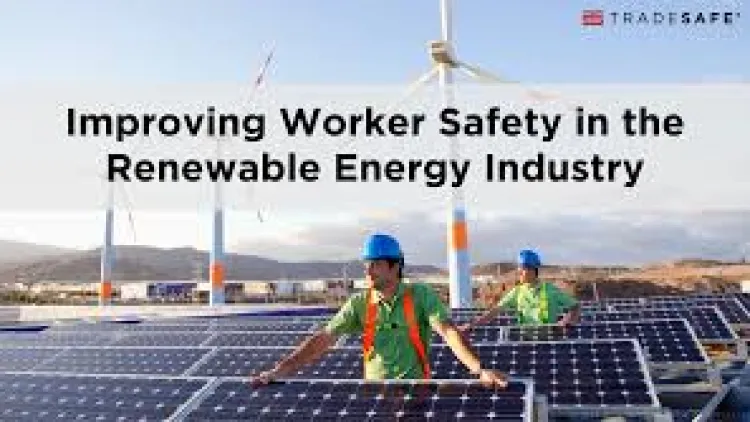
Renewable Energy Safety Training equips professionals with essential safety protocols for working with diverse renewable energy systems, minimizing workplace hazards and ensuring safe operations. This course focuses on analyzing potential safety risks associated with solar, wind, and other renewable technologies, implementing safety procedures, and understanding the impact of regulatory compliance on workplace safety. Participants will learn to conduct risk assessments, utilize personal protective equipment (PPE), and understand the intricacies of using emergency response plans to prevent accidents. By mastering renewable energy safety, professionals can enhance their ability to create safe working environments, reduce workplace injuries, and contribute to the responsible growth of the renewable energy sector.
The increasing deployment of renewable energy systems and the growing need for skilled workers necessitate a comprehensive understanding of safety protocols and hazard mitigation best practices. This course delves into the nuances of electrical safety, working at heights, and confined space entry, empowering participants to develop and implement tailored safety management strategies. By integrating safety expertise with renewable energy knowledge, this program enables organizations to lead initiatives that maximize worker safety and drive long-term operational excellence.
Curriculum & Topics
15 Topics | 75 Sessions
-
 Workshop 1.1:
Introduction to renewable energy hazards
-
Workshop 1.2:
Safety culture and management systems
-
Workshop 1.3:
Regulatory compliance and standards
-
Workshop 1.4:
Risk assessment principles
-
Workshop 1.5:
Incident reporting and investigation
-
Workshop 2.1:
Hazard identification techniques
-
Workshop 2.2:
Risk assessment methodologies
-
Workshop 2.3:
Job hazard analysis (JHA)
-
Workshop 2.4:
Developing risk control measures
-
Workshop 2.5:
Hazard communication and labeling
-
Workshop 3.1:
Electrical hazards and risks
-
Workshop 3.2:
Safe work practices for electrical systems
-
Workshop 3.3:
Grounding and bonding procedures
-
Workshop 3.4:
Arc flash safety
-
Workshop 3.5:
Electrical testing and measurement
-
Workshop 4.1:
Selection and use of appropriate PPE
-
Workshop 4.2:
Inspection and maintenance of PPE
-
Workshop 4.3:
Respiratory protection
-
Workshop 4.4:
Fall protection equipment
-
Workshop 4.5:
Eye and face protection
-
Workshop 5.1:
Fall hazards and prevention methods
-
Workshop 5.2:
Use of fall protection systems
-
Workshop 5.3:
Scaffolding and ladder safety
-
Workshop 5.4:
Aerial lift operations
-
Workshop 5.5:
Rescue and retrieval procedures
-
Workshop 6.1:
Confined space hazards and entry procedures
-
Workshop 6.2:
Atmospheric testing and monitoring
-
Workshop 6.3:
Entry permits and rescue plans
-
Workshop 6.4:
Ventilation and purging techniques
-
Workshop 6.5:
Emergency response in confined spaces
-
Workshop 7.1:
Developing emergency response plans
-
Workshop 7.2:
First aid and CPR training
-
Workshop 7.3:
Fire prevention and suppression
-
Workshop 7.4:
Spill response and containment
-
Workshop 7.5:
Evacuation procedures
-
Workshop 8.1:
Conducting safety inspections
-
Workshop 8.2:
Developing audit checklists
-
Workshop 8.3:
Identifying non-compliance issues
-
Workshop 8.4:
Implementing corrective actions
-
Workshop 8.5:
Documentation and reporting
-
Workshop 9.1:
Energy isolation procedures
-
Workshop 9.2:
Lockout/tagout devices and applications
-
Workshop 9.3:
Authorized and affected employees
-
Workshop 9.4:
LOTO program development
-
Workshop 9.5:
Verification and testing
-
Workshop 10.1:
Developing safety training programs
-
Workshop 10.2:
Conducting safety meetings and toolbox talks
-
Workshop 10.3:
Promoting safety awareness campaigns
-
Workshop 10.4:
Training documentation and record-keeping
-
Workshop 10.5:
Evaluating training effectiveness
-
Workshop 11.1:
OSHA regulations and standards
-
Workshop 11.2:
National and local safety codes
-
Workshop 11.3:
Environmental regulations
-
Workshop 11.4:
Reporting requirements and compliance
-
Workshop 11.5:
Legal liabilities and responsibilities
-
Workshop 12.1:
Developing safety policies and procedures
-
Workshop 12.2:
Implementing safety management systems
-
Workshop 12.3:
Safety committee operations
-
Workshop 12.4:
Safety performance monitoring
-
Workshop 12.5:
Continuous improvement of safety programs
-
Workshop 13.1:
Incident reporting and investigation
-
Workshop 13.2:
Safety performance indicators (SPIs)
-
Workshop 13.3:
Data analysis and trend identification
-
Workshop 13.4:
Leading and lagging indicators
-
Workshop 13.5:
Benchmarking and best practices
-
Workshop 14.1:
Remote monitoring and sensor technology
-
Workshop 14.2:
Wearable safety devices
-
Workshop 14.3:
Virtual reality (VR) safety training
-
Workshop 14.4:
Drone inspections and monitoring
-
Workshop 14.5:
AI-powered safety analytics
-
Workshop 15.1:
Integration of safety into design and engineering
-
Workshop 15.2:
Automation and robotics in hazardous tasks
-
Workshop 15.3:
Predictive safety analytics and risk modeling
-
Workshop 15.4:
Ergonomics and human factors in renewable energy
-
Workshop 15.5:
The role of safety in achieving sustainable development goals (SDGs)