
 15 Topics
 10 Days
Programme Overview
Training Description
Who Should Attend
This course is ideal for;
- Data Engineers
- Software Developers
- Data Architects
- Systems Engineers
- DevOps Engineers
- Backend Developers
- Anyone needing real-time data processing skills
Session Objectives
- Understand the fundamentals of real-time data pipelines.
- Understand the fundamentals of real-time data pipelines.
- Utilize message queues and distributed systems for data ingestion.
- Implement data transformation and aggregation in real-time.
- Design and build scalable real-time data processing systems.
- Optimize data pipelines for low latency and high throughput.
- Troubleshoot and address common issues in real-time systems.
- Implement data serialization and schema management for streaming data.
- Integrate real-time data pipelines with various data storage and analytics platforms.
- Understand how to handle data consistency and fault tolerance in real-time systems.
- Explore advanced real-time data processing techniques (e.g., windowing, state management).
- Apply real world use cases for real-time data pipelines.
- Leverage real-time data processing tools and frameworks for efficient implementation.
About the Course
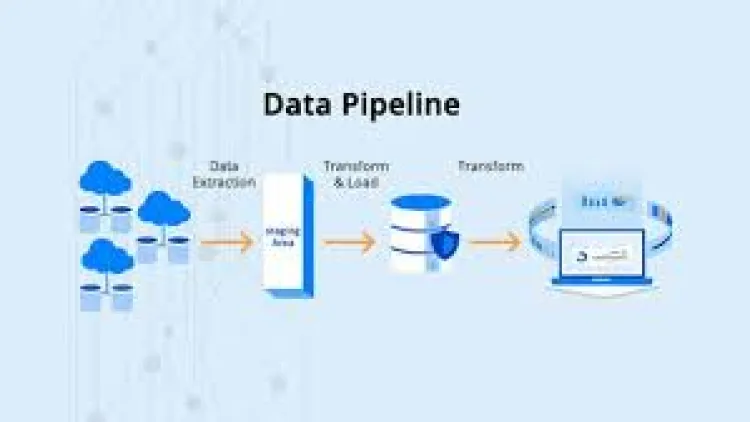
Transform your data handling capabilities with our Real-Time Data Pipelines Training Course. This program is designed to equip you with the essential skills to design and implement systems for real-time data processing, enabling you to build robust and scalable data pipelines that deliver immediate insights. In today's fast-paced data landscape, mastering real-time data processing is crucial for organizations seeking to leverage live data for informed decision-making. Our real-time data pipelines training course offers hands-on experience and expert guidance, empowering you to build systems that capture, process, and analyze data streams with minimal latency.
This build live data systems training delves into the core concepts of real-time data processing, covering topics such as stream processing, message queues, and distributed systems. You'll gain expertise in using industry-standard techniques to design and implement systems for real-time data processing, meeting the demands of modern data-driven organizations. Whether you're a data engineer, software developer, or data architect, this Real-Time Data Pipelines course will empower you to design and implement high-performance real-time data solutions.
Curriculum & Topics
15 Topics | 10 Days
-
 Subtopic 1.1:
Fundamentals of real-time data pipelines.
Subtopic 1.1:
Fundamentals of real-time data pipelines.
-
Subtopic 1.2:
Overview of stream processing, message queues, and distributed systems.
-
Subtopic 1.3:
Setting up a real-time data processing development environment.
-
Subtopic 1.4:
Introduction to real-time data processing tools and frameworks.
-
Subtopic 1.5:
Best practices for real-time data pipelines.
-
Subtopic 2.1:
Mastering stream processing concepts and technologies.
-
Subtopic 2.2:
Understanding data streams, event processing, and windowing.
-
Subtopic 2.3:
Designing and building stream processing applications.
-
Subtopic 2.4:
Optimizing stream processing for low latency.
-
Subtopic 2.5:
Best practices for stream processing.
-
Subtopic 3.1:
Utilizing message queues and distributed systems for data ingestion.
-
Subtopic 3.2:
Implementing message brokers (e.g., Kafka, RabbitMQ).
-
Subtopic 3.3:
Designing and building distributed data pipelines.
-
Subtopic 3.4:
Optimizing data ingestion for high throughput.
-
Subtopic 3.5:
Best practices for message queues.
-
Subtopic 4.1:
Implementing data transformation and aggregation in real-time.
-
Subtopic 4.2:
Utilizing stream processing libraries and frameworks.
-
Subtopic 4.3:
Designing and building data transformation workflows.
-
Subtopic 4.4:
Optimizing data aggregation for real-time analytics.
-
Subtopic 4.5:
Best practices for data transformation.
-
Subtopic 5.1:
Designing and building scalable real-time data processing systems.
-
Subtopic 5.2:
Utilizing distributed computing frameworks (e.g., Apache Flink, Apache Spark Streaming).
-
Subtopic 5.3:
Implementing data partitioning and parallel processing.
-
Subtopic 5.4:
Optimizing systems for scalability and performance.
-
Subtopic 5.5:
Best practices for scalable systems.
-
Subtopic 6.1:
Optimizing data pipelines for low latency and high throughput.
-
Subtopic 6.2:
Utilizing performance tuning and monitoring tools.
-
Subtopic 6.3:
Implementing data buffering and caching strategies.
-
Subtopic 6.4:
Designing efficient data processing architectures.
-
Subtopic 6.5:
Best practices for pipeline optimization.
-
Subtopic 7.1:
Debugging common issues in real-time systems.
-
Subtopic 7.2:
Analyzing system logs and error messages.
-
Subtopic 7.3:
Utilizing troubleshooting techniques for problem resolution.
-
Subtopic 7.4:
Resolving common data processing errors.
-
Subtopic 7.5:
Best practices for troubleshooting.
-
Subtopic 8.1:
Implementing data serialization and schema management for streaming data.
-
Subtopic 8.2:
Utilizing Avro, Protobuf, and JSON schema.
-
Subtopic 8.3:
Designing and building schema registries.
-
Subtopic 8.4:
Optimizing data serialization for performance.
-
Subtopic 8.5:
Best practices for data serialization.
-
Subtopic 9.1:
Integrating real-time data pipelines with various data storage and analytics platforms.
-
Subtopic 9.2:
Utilizing data streaming connectors and APIs.
-
Subtopic 9.3:
Implementing data integration with external databases and data lakes.
-
Subtopic 9.4:
Optimizing integration for data retrieval and analysis.
-
Subtopic 9.5:
Best practices for integration.
-
Subtopic 10.1:
Understanding how to handle data consistency and fault tolerance in real-time systems.
-
Subtopic 10.2:
Utilizing data replication and checkpointing.
-
Subtopic 10.3:
Implementing fault-tolerant data pipelines.
-
Subtopic 10.4:
Designing robust data processing workflows.
-
Subtopic 10.5:
Best practices for consistency.
-
Subtopic 11.1:
Exploring advanced real-time data processing techniques (windowing, state management).
-
Subtopic 11.2:
Utilizing windowing for time-based data aggregation.
-
Subtopic 11.3:
Implementing state management for complex event processing.
-
Subtopic 11.4:
Designing and building advanced real-time solutions.
-
Subtopic 11.5:
Optimizing advanced techniques for specific applications.
-
Subtopic 11.6:
Best practices for advanced techniques.
-
Subtopic 12.1:
Implementing real-time data pipelines for IoT data processing.
-
Subtopic 12.2:
Utilizing real-time data for fraud detection and security monitoring.
-
Subtopic 12.3:
Implementing real-time data for log aggregation and analytics.
-
Subtopic 12.4:
Utilizing real-time data for financial transaction processing.
-
Subtopic 12.5:
Best practices for real-world applications.
-
Subtopic 13.1:
Utilizing real-time data processing tools and frameworks (Apache Flink, Kafka Streams).
-
Subtopic 13.2:
Implementing data pipelines with specific tools.
-
Subtopic 13.3:
Designing and building automated deployment workflows.
-
Subtopic 13.4:
Optimizing tool usage for efficient development.
-
Subtopic 13.5:
Best practices for tool implementation.
-
Subtopic 14.1:
Implementing pipeline monitoring and logging for real-time systems.
-
Subtopic 14.2:
Utilizing monitoring tools and metrics.
-
Subtopic 14.3:
Designing and building performance dashboards.
-
Subtopic 14.4:
Optimizing monitoring for real-time insights.
-
Subtopic 14.5:
Best practices for monitoring.
-
Subtopic 15.1:
Emerging trends in real-time data processing.
-
Subtopic 15.2:
Utilizing AI for real-time data analysis.
-
Subtopic 15.3:
Implementing real-time data mesh architectures.
-
Subtopic 15.4:
Best practices for future applications.