8 Topics
 5 Days
 40 Sessions
Programme Overview
Training Description
First Responders: Police, Fire, Paramedics, and Emergency Medical Services (EMS).
Frontline Workers: Social service staff, teachers, aid workers, and volunteers.
Healthcare Professionals: Nurses, doctors, and allied health staff (non-mental health specialists).
Disaster Relief Personnel: Humanitarian and community organization volunteers.
Managers and Supervisors: Those responsible for staff well-being in crisis settings
Session Objectives
- Define Psychological First Aid (PFA) and its role in early intervention. Describe common reactions to crisis and traumatic events. Apply the Look, Listen, Link core action principles effectively. Identify individuals needing special attention and appropriate referrals. List actions for promoting self and peer care after a crisis response.
About the Course
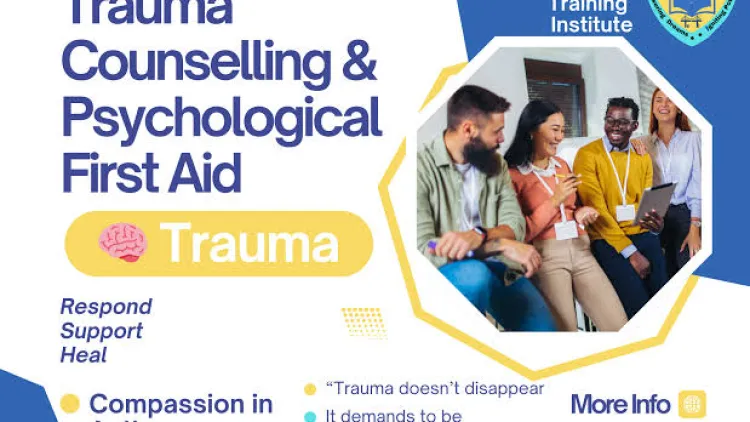
This course equips non-specialist helpers with evidence-informed skills to deliver immediate, practical support during crisis events. Built around Psychological First Aid (PFA) and the Look, Listen, Link action principles, the curriculum covers stress reaction recognition, supporting diverse populations (such as children and families), and connecting survivors with vital resources. Participants also learn essential self-care techniques to manage personal distress while helping others recover.
Curriculum & Topics
8 Topics | 40 Sessions
-
 Workshop 1.1:
Definitions and scope of psychological first aid
Workshop 1.1:
Definitions and scope of psychological first aid
-
Workshop 1.2:
Understanding trauma and stress reactions
-
Workshop 1.3:
The impact of disasters, violence, and displacement on mental health
-
Workshop 1.4:
International guidelines and frameworks for PFA
-
Workshop 1.5:
The role of non-specialists in immediate psychological support
-
Workshop 2.1:
Look, listen, and link: the three pillars of PFA
-
Workshop 2.2:
Establishing rapport and emotional safety
-
Workshop 2.3:
Active listening and non-verbal communication techniques
-
Workshop 2.4:
Managing intense emotions and psychological distress
-
Workshop 2.5:
Addressing basic needs and fostering a sense of control
-
Workshop 3.1:
Types of trauma and their psychological impact
-
Workshop 3.2:
Signs of acute stress, anxiety, and grief
-
Workshop 3.3:
Psychological responses in different age groups
-
Workshop 3.4:
Resilience factors and coping mechanisms
-
Workshop 3.5:
Supporting survivors through early interventions
-
Workshop 4.1:
N/A
-
Workshop 4.2:
N/A
-
Workshop 4.3:
N/A
-
Workshop 4.4:
N/A
-
Workshop 4.5:
N/A
-
Workshop 5.1:
Trauma-informed approaches for children and youth
-
Workshop 5.2:
Supporting survivors of gender-based violence
-
Workshop 5.3:
Psychological support for elderly, disabled, and displaced persons
-
Workshop 5.4:
Culturally sensitive and inclusive support strategies
-
Workshop 5.5:
Ensuring protection, privacy, and consent
-
Workshop 6.1:
Screening for severe mental health conditions
-
Workshop 6.2:
Referral mechanisms and partnerships with mental health services
-
Workshop 6.3:
Collaborative care and case documentation
-
Workshop 6.4:
Working with psychiatrists, psychologists, and counselors
-
Workshop 6.5:
Building local mental health support networks
-
Workshop 7.1:
Stress management and emotional resilience for frontline workers
-
Workshop 7.2:
Preventing secondary trauma and compassion fatigue
-
Workshop 7.3:
Peer support systems and stress debriefing
-
Workshop 7.4:
Self-care strategies and psychological preparedness
-
Workshop 7.5:
Maintaining professional boundaries under stress
-
Workshop 8.1:
Embedding PFA into emergency preparedness and response plans
-
Workshop 8.2:
Community awareness and psychoeducation strategies
-
Workshop 8.3:
Training community-based volunteers in PFA
-
Workshop 8.4:
Monitoring, evaluation, and continuous learning
-
Workshop 8.5:
Building long-term mental health resilience in communities