16 Topics
 5 Days
 80 Sessions
Programme Overview
Training Description
Who Should Attend
- PMO professionals
- Team leaders and supervisors
- Business analysts
- Project assurance professionals
- Risk and compliance professionals
- Consultants
- Change management professionals
- Professionals working on government, corporate, development, IT, construction, and other projects
- Individuals seeking a structured foundation in PRINCE2 project management
Session Objectives
- Understand the key concepts and terminology of PRINCE2.
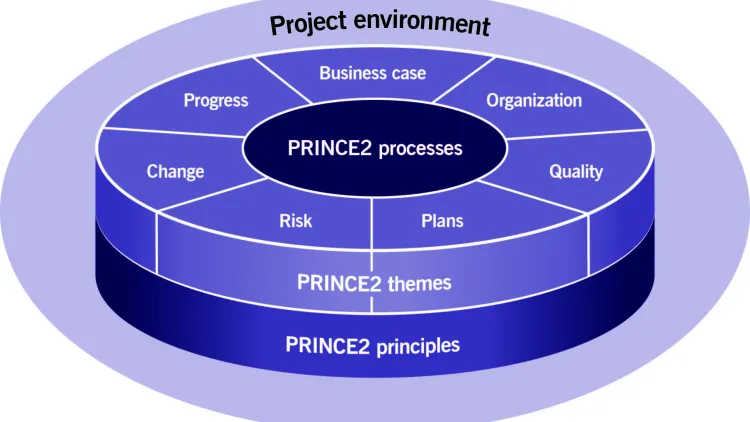
- Comprehend the 7 principles that underpin the PRINCE2 method.
- Learn the purpose and application of the 7 themes.
- Explore the 7 processes and how they guide a project's lifecycle.
- Understand the relationships between the principles, themes, and processes.
- Learn how to effectively contribute to a PRINCE2 project team.
- Prepare for and pass the PRINCE2 Foundation certification exam.
About the Course
The course develops a solid understanding of PRINCE2 principles, practices, processes, roles, responsibilities, project controls, and management products. Participants will learn how PRINCE2 provides a structured framework for initiating, directing, managing, and closing projects while maintaining a clear focus on business justification, governance, risk, quality, resources, and project outcomes.
Through practical examples, case studies, exercises, and scenario-based learning, participants will build the knowledge required to participate effectively in PRINCE2-managed projects and prepare for the relevant Foundation-level assessment.
Curriculum & Topics
16 Topics | 80 Sessions
-
 Workshop 1.1:
Understanding the definition of a project.
-
Workshop 1.2:
The six aspects of project performance.
-
Workshop 1.3:
The benefits of using a structured method.
-
Workshop 1.4:
The purpose and core concepts of PRINCE2.
-
Workshop 1.5:
The relationship between projects, programs, and portfolios.
-
Workshop 2.1:
Continued Business Justification: ensuring the project remains viable.
-
Workshop 2.2:
Learn from Experience: applying lessons from past projects.
-
Workshop 2.3:
Defined Roles and Responsibilities: clear accountability.
-
Workshop 2.4:
Manage by Stages: breaking down the project into manageable parts.
-
Workshop 2.5:
Manage by Exception: saving time by delegating authority.
-
Workshop 3.1:
Focus on Products: defining and delivering the required outputs.
-
Workshop 3.2:
Tailor to Suit the Project Environment: adapting the method.
-
Workshop 3.3:
The purpose and benefits of each principle.
-
Workshop 3.4:
How the principles form the backbone of the method.
-
Workshop 3.5:
How principles guide decision-making.
-
Workshop 4.1:
The purpose of the Business Case.
-
Workshop 4.2:
The Business Case lifecycle.
-
Workshop 4.3:
The importance of benefits and dis-benefits.
-
Workshop 4.4:
How to establish business justification.
-
Workshop 4.5:
The relationship with the Continued Business Justification principle.
-
Workshop 5.1:
The purpose of the Organization theme.
-
Workshop 5.2:
The three project interests: Business, User, and Supplier.
-
Workshop 5.3:
The Project Management Team roles and responsibilities.
-
Workshop 5.4:
The importance of a clear communication structure.
-
Workshop 5.5:
How to define roles for a PRINCE2 project.
-
Workshop 6.1:
The purpose of the Quality theme.
-
Workshop 6.2:
Defining quality and quality management.
-
Workshop 6.3:
The importance of the Product Description.
-
Workshop 6.4:
How to plan for quality assurance and quality control.
-
Workshop 6.5:
The Quality Register and its use.
-
Workshop 7.1:
The purpose of the Plans theme.
-
Workshop 7.2:
The three levels of plan: Project, Stage, and Team.
-
Workshop 7.3:
The product-based planning technique.
-
Workshop 7.4:
Creating a Product Breakdown Structure.
-
Workshop 7.5:
The relationship between plans and progress.
-
Workshop 8.1:
The purpose of the Risk theme.
-
Workshop 8.2:
Understanding risk as both a threat and an opportunity.
-
Workshop 8.3:
The Risk Management Procedure.
-
Workshop 8.4:
The Risk Register and its importance.
-
Workshop 8.5:
The link between risk management and the Manage by Exception principle.
-
Workshop 9.1:
The purpose of the Change theme.
-
Workshop 9.2:
The three types of issues: Request for Change, Off-specification, and Problem/Concern.
-
Workshop 9.3:
The Configuration Management Procedure.
-
Workshop 9.4:
The role of the Change Authority.
-
Workshop 9.5:
The Issue Register and how it is used.
-
Workshop 10.1:
The purpose of the Progress theme.
-
Workshop 10.2:
Defining progress and controlling it.
-
Workshop 10.3:
The use of tolerances for control.
-
Workshop 10.4:
Types of control: event-driven and time-driven.
-
Workshop 10.5:
The roles involved in monitoring and reporting progress.
-
Workshop 11.1:
The purpose of the SU process.
-
Workshop 11.2:
The activities to get a project started.
-
Workshop 11.3:
Creating the Project Brief.
-
Workshop 11.4:
Preparing the Outline Business Case.
-
Workshop 11.5:
Securing the Project Manager and Project Board.
-
Workshop 12.1:
The purpose of the DP process.
-
Workshop 12.2:
The Project Board's responsibilities.
-
Workshop 12.3:
Authorizing Initiation and subsequent stages.
-
Workshop 12.4:
Giving ad hoc direction to the project.
-
Workshop 12.5:
Authorizing project closure.
-
Workshop 13.1:
The purpose of the IP process.
-
Workshop 13.2:
Creating the Project Initiation Documentation (PID).
-
Workshop 13.3:
Planning the project and creating the Project Plan.
-
Workshop 13.4:
Setting up project controls and strategies.
-
Workshop 13.5:
Refining the Business Case.
-
Workshop 14.1:
The purpose of the CS process.
-
Workshop 14.2:
How the Project Manager manages a stage on a day-to-day basis.
-
Workshop 14.3:
Delegating work to the team.
-
Workshop 14.4:
Monitoring progress and handling issues.
-
Workshop 14.5:
The importance of the daily log.
-
Workshop 15.1:
The purpose of the MPD process.
-
Workshop 15.2:
The Team Manager's role in delivering products.
-
Workshop 15.3:
The purpose of the SB process.
-
Workshop 15.4:
Preparing for the end of a stage.
-
Workshop 15.5:
Updating the PID for the next stage.
-
Workshop 16.1:
The purpose of the CP process.
-
Workshop 16.2:
The activities to formally close a project.
-
Workshop 16.3:
Preparing the End Project Report.
-
Workshop 16.4:
Transferring ownership of the product.
-
Workshop 16.5:
A comprehensive review of all topics for the Foundation exam.