10 Topics
 10 Days
 48 Sessions
Programme Overview
Training Description
1) Engineering Project Managers & Directors
2) Civil & Structural Engineers
3) Mechanical & Electrical Engineers
4) Project Leaders & Team Managers
5) Programme Support Staff (PMO
6) Technical Leads & Consultants
7) Cross-Functional Project Team Members
Session Objectives
- Understand core principles, process workflows, and standardized terminology across the PRINCE2 methodology.
- Operationalize fundamental governance principles within civil, structural, mechanical, and energy engineering contexts.
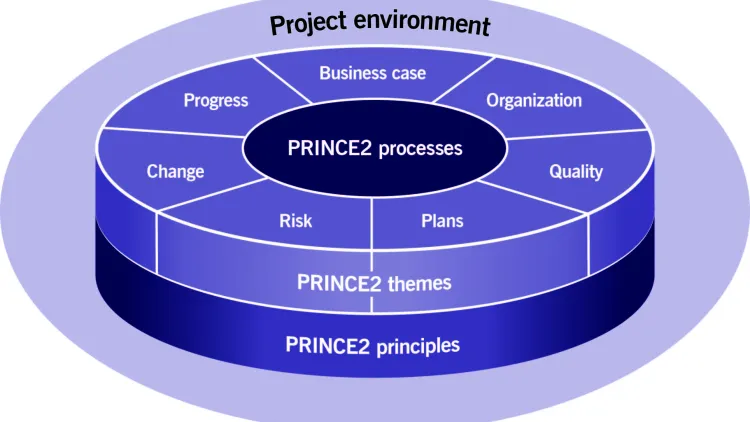
- Apply core practices—including Business Case, Organization, Quality, Plans, Risk, Change, and Progress—throughout the engineering project lifecycle.
- Direct, initiate, manage, and close engineering projects using structured stage boundary controls and work package management.
- Adapt frameworks to fit specific technical constraints, regulatory mandates, and organizational structures.
- Verify ongoing commercial viability, strategic alignment, and ROI across all project execution stages.
About the Course
Execution failures in major infrastructure and technical projects rarely stem
from a lack of engineering competence—they occur when project environments
lack structured control, transparent accountability, and disciplined stage-gate
oversight. This 10-day intensive masterclass delivers a practical, engineering
focused operationalization of PRINCE2® (Projects IN Controlled
Environments), empowering technical leaders to bridge the gap between
complex engineering design and executive project governance.
Designed specifically for the infrastructure landscape in Kenya and across East
Africa, the course transitions PRINCE2 from a theoretical methodology into a
rigorous delivery mechanism. Participants will learn how to replace fragmented,
ad-hoc management practices with standardized governance: setting clear
tolerance boundaries, enforcing product-based planning for physical assets,
maintaining continuous commercial justification, and implementing strict
change control to eliminate scope creep. By pairing real-world engineering case
studies with targeted preparation for both the official PRINCE2 Foundation and
Practitioner certification examinations, this program provides organizations
with the capability to deliver complex capital works on time, within budget, and
fully aligned with national development priorities.
Curriculum & Topics
10 Topics | 48 Sessions
-
 Workshop 1.1:
What is PRINCE2?: Definition, core features, and organizational benefits of process-based project management.
Workshop 1.1:
What is PRINCE2?: Definition, core features, and organizational benefits of process-based project management.
-
Workshop 1.2:
Projects in Controlled Environments: The underlying PRINCE2 philosophy and governance ethos.
-
Workshop 1.3:
Key Project Characteristics: Navigating temporary structures, uniqueness, uncertainty, cross-functional risk, and change.
-
Workshop 1.4:
Methodology Architecture: Overview of the 7 principles, 7 practices (formerly themes), and 7 processes.
-
Workshop 1.5:
Adapting PRINCE2: Tailoring the methodology to modern engineering, construction, and infrastructure environments.
-
Workshop 2.1:
Continued Business Justification: Ensuring projects remain commercially, technically, and strategically viable at every stage.
-
Workshop 2.2:
Learning from Experience: Capturing and applying lessons learned across the project lifecycle.
-
Workshop 2.3:
Defined Roles and Responsibilities: Establishing transparent governance, accountabilities, and communication paths.
-
Workshop 2.4:
Managing by Stages: Dividing complex engineering works into manageable, controllable management stages.
-
Workshop 2.5:
Managing by Exception: Setting tolerance thresholds to empower managers while preserving board oversight.
-
Workshop 2.6:
Focusing on Products: Prioritizing deliverable definitions, product descriptions, and output quality over activity execution.
-
Workshop 2.7:
Tailoring to Suit the Project Environment: Adapting governance scale to match project size, complexity, risk profile, and culture.
-
Workshop 3.1:
The Business Case Practice: Establishing purpose, development steps, and ongoing viability checks.
-
Workshop 3.2:
Maintaining Justification: Tracking capital expenditure, return on investment, and operational value in infrastructure projects.
-
Workshop 3.3:
The Organization Practice: Defining corporate, project board, and delivery management roles.
-
Workshop 3.4:
Project Governance Roles: Differentiating Project Board, Project Manager, Team Manager, Assurance, and Support accountabilities.
-
Workshop 3.5:
Stakeholder Engagement: Structuring communication management approaches for multi-disciplinary engineering stakeholders.
-
Workshop 4.1:
Quality Practice: Defining quality expectations, quality planning methods, and quality control procedures.
-
Workshop 4.2:
Engineering Product Descriptions: Establishing measurable quality criteria and acceptance methods for technical deliverables.
-
Workshop 4.3:
Plans Practice: Structuring Project Plans, Stage Plans, and Team Plans across engineering disciplines.
-
Workshop 4.4:
Product-Based Planning: Creating Product Breakdown Structures (PBS) and Product Flow Diagrams for complex physical assets.
-
Workshop 4.5:
Estimating & Baselining: Applying accurate cost, resource, and schedule estimation techniques.
-
Workshop 5.1:
Risk Practice: Identifying, assessing, planning responses for, and controlling technical and environmental risks.
-
Workshop 5.2:
Risk Governance: Managing risk budgets, risk registers, and threat exposure in capital-intensive projects.
-
Workshop 5.3:
Change Practice: Establishing change control workflows to manage issues, off-specifications, and scope creep.
-
Workshop 5.4:
Configuration Management: Controlling baselines, versioning, and engineering asset documentation.
-
Workshop 5.5:
Change Authority: Setting up and operating a Change Authority within pre-agreed financial and scope tolerances.
-
Workshop 6.1:
Progress Practice: Monitoring performance, tracking milestones, and controlling variance against baselined plans.
-
Workshop 6.2:
Tolerance & Reporting: Setting stage tolerances, executing reporting by exception, and managing stage boundaries.
-
Workshop 6.3:
People in Projects: Understanding the central role of human dynamics, leadership, and team structures in project success.
-
Workshop 6.4:
Leading Organizational Change: Driving culture change, stakeholder alignment, and high-performance technical teams.
-
Workshop 6.5:
Communication Management: Maintaining transparent communication flows across contractors, consultants, and executive sponsors.
-
Workshop 7.1:
Starting Up a Project (SU): Preparing the project brief, defining executive roles, and appointing the project management team.
-
Workshop 7.2:
Directing a Project (DP): Empowering the Project Board to provide strategic direction, oversight, and key decision-making.
-
Workshop 7.3:
Board Authorization Gates: Authorizing project initiation, management stages, and ultimate project closure.
-
Workshop 7.4:
Engineering Governance: Aligning Project Board oversight with institutional, donor, and regulatory compliance standards.
-
Workshop 8.1:
Initiating a Project (IP): Establishing management strategies and developing the Project Initiation Documentation (PID).
-
Workshop 8.2:
Engineering PID Development: Formulating detailed risk, quality, communication, and change control strategies.
-
Workshop 8.3:
Controlling a Stage (CS): Managing day-to-day work package execution, tracking issues, and monitoring stage performance.
-
Workshop 8.4:
Work Package Management: Authorizing, executing, and accepting specialist engineering work packages.
-
Workshop 9.1:
Managing Product Delivery (MP): Coordinating technical execution between Team Managers and specialist suppliers.
-
Workshop 9.2:
Supplier & Team Responsibilities: Accepting work packages, executing quality checks, and obtaining formal acceptance.
-
Workshop 9.3:
Managing a Stage Boundary (SB): Evaluating current stage performance and creating the Next Stage Plan.
-
Workshop 9.4:
Exception Management: Drafting Exception Plans, End Stage Reports, and re-baselining projects when tolerances are breached.
-
Workshop 10.1:
Closing a Project (CP): Executing controlled project shutdown, product handovers, and operational commissioning.
-
Workshop 10.2:
Handover & Lessons Learned: Formalizing asset transfer, evaluating benefit realization, and archiving lessons learned.
-
Workshop 10.3:
Practical Tailoring Scenarios: Adapting PRINCE2 workflows to small, medium, and mega engineering projects.
-
Workshop 10.4:
Exam Preparation: Masterclass exam techniques, sample question reviews, and mock exams for Foundation and Practitioner levels.
General Notes
This course will be delivered by our experts and professionals in data
analysis with vast experience. The workshop will be highly interactive
Training manuals and additional reference materials are provided to the
participants.
Upon successful completion of this course, participants will be issued
with a certificate.
The training will be conducted by PB Institute of Research and
Technology
The training fee covers tuition fees, training materials, lunch and
training venue. Accommodation and airport transfer are arranged for our
participants upon request.
Payment should be sent to our bank account before the start of training
and proof of payment sent to: info@pebblesinstitute.org