15 Topics
 5 Days
 60 Sessions
Programme Overview
Training Description
Farmers and agricultural producers
Post-harvest handlers and processors
Food storage and logistics managers
Agricultural extension officers and advisors
Food safety and quality assurance professionals
Supply chain managers and distributors
Agricultural entrepreneurs and investors
Rural development practitioners
Agricultural educators
Horticulture professionals
Food bank and aid workers
Researchers and scientists
Students of food science and agriculture
Session Objectives
- Understand the principles and benefits of proper post-harvest handling and storage. Implement techniques for minimizing physical damage and losses during harvesting. Understand the role of temperature and humidity control in post-harvest storage. Implement techniques for utilizing different storage methods for various crops. Understand the role of pest and disease management in post-harvest storage. Implement techniques for utilizing controlled atmosphere storage. Understand the role of packaging and labeling in maintaining product quality.
About the Course
Post-Harvest Handling and Storage Techniques equips farmers, processors, and supply chain professionals with the knowledge and skills to minimize losses and improve food security. This course focuses on implementing best practices for handling, storing, and processing agricultural products to maintain quality and extend shelf life. Participants will learn to reduce spoilage, preserve nutrients, and ensure safe food delivery. By mastering post-harvest techniques, professionals can enhance market access and contribute to global food sustainability.
Curriculum & Topics
15 Topics | 60 Sessions
-
 Workshop 1.1:
Principles and benefits of minimizing food loss.
-
Workshop 1.2:
Understanding the role of post-harvest handling in food security.
-
Workshop 1.3:
Benefits of maintaining product quality and extending shelf life.
-
Workshop 1.4:
Historical context and modern techniques.
-
Workshop 2.1:
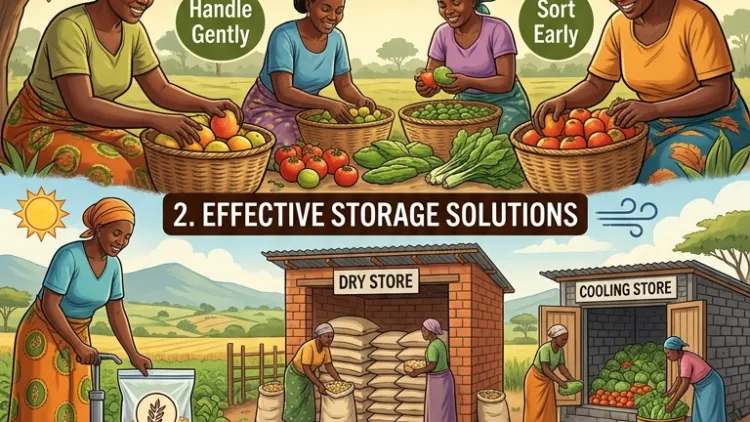
Techniques for gentle harvesting and handling.
-
Workshop 2.2:
Implementing proper harvesting tools and equipment.
-
Workshop 2.3:
Utilizing field sorting and grading.
-
Workshop 2.4:
Managing transportation from field to storage.
-
Workshop 3.1:
Understanding the impact of environmental factors on product quality.
-
Workshop 3.2:
Implementing temperature and humidity monitoring.
-
Workshop 3.3:
Utilizing cooling and ventilation systems.
-
Workshop 3.4:
Managing storage environment parameters.
-
Workshop 4.1:
Techniques for utilizing different storage structures.
-
Workshop 4.2:
Implementing controlled atmosphere storage.
-
Workshop 4.3:
Utilizing silo and warehouse storage.
-
Workshop 4.4:
Managing storage conditions for specific commodities.
-
Workshop 5.1:
Techniques for preventing pest infestations and disease outbreaks.
-
Workshop 5.2:
Implementing sanitation and hygiene practices.
-
Workshop 5.3:
Utilizing pest traps and fumigation.
-
Workshop 5.4:
Managing storage pest control measures.
-
Workshop 6.1:
Techniques for utilizing modified atmosphere packaging.
-
Workshop 6.2:
Implementing controlled atmosphere storage systems.
-
Workshop 6.3:
Managing gas composition and monitoring.
-
Workshop 6.4:
Benefits of extending shelf life and quality.
-
Workshop 7.1:
Techniques for selecting appropriate packaging materials.
-
Workshop 7.2:
Implementing proper labeling and traceability.
-
Workshop 7.3:
Utilizing barrier packaging and modified atmosphere packaging.
-
Workshop 7.4:
Managing packaging design and branding.
-
Workshop 8.1:
Techniques for maintaining product temperature during transportation.
-
Workshop 8.2:
Implementing refrigerated storage and transport.
-
Workshop 8.3:
Utilizing temperature monitoring and data logging.
-
Workshop 8.4:
Managing cold chain logistics and documentation.
-
Workshop 9.1:
Techniques for utilizing drying methods for moisture reduction.
-
Workshop 9.2:
Implementing processing methods for value addition.
-
Workshop 9.3:
Utilizing dehydration and milling techniques.
-
Workshop 9.4:
Managing processing equipment and operations.
-
Workshop 10.1:
Techniques for implementing good hygiene practices.
-
Workshop 10.2:
Utilizing sanitation and disinfection procedures.
-
Workshop 10.3:
Implementing food safety management systems.
-
Workshop 10.4:
Managing food safety audits and certifications.
-
Workshop 11.1:
Techniques for implementing quality control measures.
-
Workshop 11.2:
Utilizing traceability systems and data management.
-
Workshop 11.3:
Implementing product grading and inspection.
-
Workshop 11.4:
Managing quality assurance documentation.
-
Workshop 12.1:
Analyzing the economic losses due to spoilage and waste.
-
Workshop 12.2:
Evaluating the benefits of reducing post-harvest losses.
-
Workshop 12.3:
Identifying cost-effective storage and handling solutions.
-
Workshop 12.4:
Managing economic risk assessments.
-
Workshop 13.1:
Developing communication and extension strategies.
-
Workshop 13.2:
Building farmer networks and knowledge sharing platforms.
-
Workshop 13.3:
Implementing training programs for post-harvest handling skills.
-
Workshop 13.4:
Scaling up successful storage and processing models.
-
Workshop 14.1:
Analyzing real-world examples of effective post-harvest practices.
-
Workshop 14.2:
Highlighting best practices and innovative techniques.
-
Workshop 14.3:
Documenting economic and social impacts.
-
Workshop 14.4:
Farmer testimonials and site visits.
-
Workshop 15.1:
Exploring emerging trends and innovations.
-
Workshop 15.2:
Integrating new technologies and research findings.
-
Workshop 15.3:
Adapting to evolving market demands and climate change.
-
Workshop 15.4:
Building resilient and sustainable food supply chains.