15 Topics
 5 Days
 60 Sessions
Programme Overview
Training Description
Farmers and agricultural producers
Agricultural extension officers and advisors
Plant pathologists and diagnosticians
Crop consultants and agronomists
Researchers and scientists
Seed producers and distributors
Integrated pest management (IPM) specialists
Horticulture professionals
Agricultural inspectors and auditors
Sustainability officers
Agricultural educators
Students of plant pathology and agriculture
Individuals interested in crop health management
Session Objectives
- Implement techniques for identifying common plant disease symptoms. Understand the role of diagnostic tools and techniques in plant disease identification. Implement techniques for collecting and submitting plant samples for diagnosis. Understand the biology and epidemiology of major plant pathogens. Implement techniques for developing integrated disease management (IDM) strategies. Understand the role of cultural practices in disease prevention and control. Implement techniques for utilizing biological control agents in disease management.
About the Course
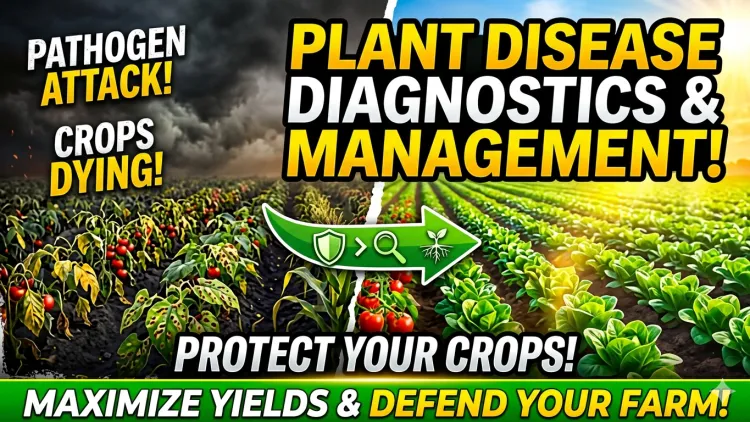
Plant Disease Diagnostics and Management equips agricultural professionals and farmers with the knowledge and skills to accurately identify and effectively control crop diseases. This course focuses on understanding disease symptoms, implementing diagnostic techniques, and developing integrated disease management strategies. Participants will learn to minimize crop losses, enhance yields, and promote sustainable agriculture. By mastering disease management, professionals can safeguard crop health and ensure food security.
Curriculum & Topics
15 Topics | 60 Sessions
-
 Workshop 1.1:
Principles and benefits of effective disease control.
-
Workshop 1.2:
Understanding the role of diagnostics in crop protection.
-
Workshop 1.3:
Benefits of integrated disease management strategies.
-
Workshop 1.4:
Historical context and modern practices.
-
Workshop 2.1:
Techniques for recognizing common disease symptoms.
-
Workshop 2.2:
Utilizing visual inspection and field diagnosis.
-
Workshop 2.3:
Distinguishing between biotic and abiotic disorders.
-
Workshop 2.4:
Managing symptom documentation and record-keeping.
-
Workshop 3.1:
Understanding the role of laboratory diagnostics.
-
Workshop 3.2:
Implementing microscopy and culturing techniques.
-
Workshop 3.3:
Utilizing serological and molecular diagnostic methods.
-
Workshop 3.4:
Managing diagnostic protocols and procedures.
-
Workshop 4.1:
Techniques for collecting representative plant samples.
-
Workshop 4.2:
Implementing proper sample handling and packaging.
-
Workshop 4.3:
Utilizing sample submission forms and protocols.
-
Workshop 4.4:
Managing sample transportation and storage.
-
Workshop 5.1:
Understanding the life cycles of major plant pathogens.
-
Workshop 5.2:
Implementing disease epidemiology and spread analysis.
-
Workshop 5.3:
Utilizing disease forecasting and risk assessment.
-
Workshop 5.4:
Managing pathogen identification and classification.
-
Workshop 6.1:
Techniques for developing comprehensive disease management plans.
-
Workshop 6.2:
Implementing cultural, biological, and chemical control methods.
-
Workshop 6.3:
Utilizing resistant varieties and crop rotations.
-
Workshop 6.4:
Managing IDM implementation and evaluation.
-
Workshop 7.1:
Techniques for optimizing crop hygiene and sanitation.
-
Workshop 7.2:
Implementing proper field preparation and planting practices.
-
Workshop 7.3:
Utilizing crop rotations and resistant varieties.
-
Workshop 7.4:
Managing irrigation and fertilization for disease suppression.
-
Workshop 8.1:
Techniques for utilizing beneficial microorganisms and antagonists.
-
Workshop 8.2:
Implementing biocontrol applications and monitoring.
-
Workshop 8.3:
Utilizing natural enemies and predators.
-
Workshop 8.4:
Managing biocontrol agent production and storage.
-
Workshop 9.1:
Techniques for selecting and applying fungicides.
-
Workshop 9.2:
Implementing proper application methods and timing.
-
Workshop 9.3:
Utilizing pesticide safety and handling procedures.
-
Workshop 9.4:
Managing chemical resistance and environmental impacts.
-
Workshop 10.1:
Techniques for monitoring and preventing pesticide resistance.
-
Workshop 10.2:
Implementing resistance management strategies.
-
Workshop 10.3:
Utilizing alternative control methods.
-
Workshop 10.4:
Managing pesticide rotation and application rates.
-
Workshop 11.1:
Techniques for utilizing weather data and disease models.
-
Workshop 11.2:
Implementing remote sensing and GIS for disease monitoring.
-
Workshop 11.3:
Utilizing early warning systems and alerts.
-
Workshop 11.4:
Managing forecasting data and communication.
-
Workshop 12.1:
Analyzing the economic losses due to plant diseases.
-
Workshop 12.2:
Evaluating the benefits of effective disease management.
-
Workshop 12.3:
Identifying cost-effective control strategies.
-
Workshop 12.4:
Managing economic risk assessments.
-
Workshop 13.1:
Developing communication and extension strategies.
-
Workshop 13.2:
Building farmer networks and knowledge sharing platforms.
-
Workshop 13.3:
Implementing training programs for disease management skills.
-
Workshop 13.4:
Scaling up successful disease control models.
-
Workshop 14.1:
Analyzing real-world examples of effective disease control.
-
Workshop 14.2:
Highlighting best practices and innovative techniques.
-
Workshop 14.3:
Documenting economic and environmental impacts.
-
Workshop 14.4:
Farmer testimonials and field visits.
-
Workshop 15.1:
Exploring emerging trends and innovations.
-
Workshop 15.2:
Integrating new technologies and research findings.
-
Workshop 15.3:
Adapting to evolving pathogen populations and climate change.
-
Workshop 15.4:
Building resilient and sustainable crop protection systems.