15 Topics
 5 Days
 64 Sessions
Programme Overview
Training Description
This course is designed for farmers, agricultural extension officers, farm managers, agricultural entrepreneurs, and food industry professionals. This includes Farmers, Agricultural Consultants, Agricultural Entrepreneurs, Farm Managers, Extension Officers, Food Industry Professionals, Sustainability Officers, Certification Officers, Researchers, and Agricultural Educators. These individuals require expertise in organic farming to implement sustainable practices and access organic markets.
Session Objectives
- Understand the principles and benefits of organic farming. Implement organic soil fertility management techniques. Utilize natural pest and disease management strategies. Understand the organic certification process and standards. Develop skills in record-keeping and documentation for organic certification. Implement organic crop production practices. Understand organic livestock management standards. Navigate organic market access and value chains.
About the Course
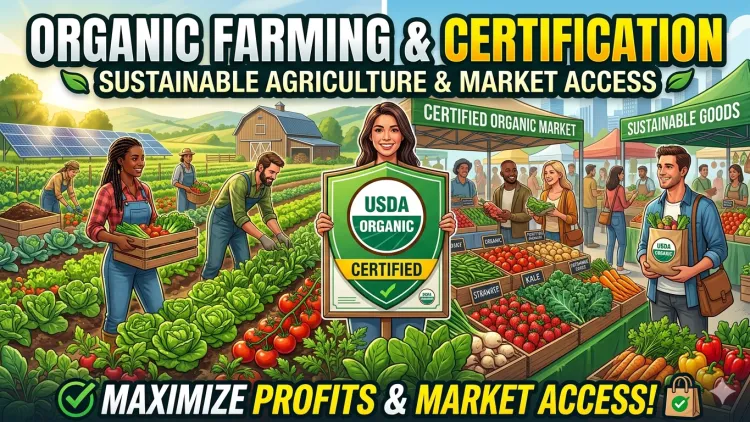
Organic Farming and Certification equips farmers, agricultural professionals, and entrepreneurs with the knowledge and skills to implement organic farming practices and navigate the certification process for enhanced market access. This course focuses on understanding organic standards, implementing sustainable agricultural techniques, and maximizing market opportunities for organic products. Participants will learn to build healthy soil, manage pests naturally, and comply with certification requirements. By mastering organic farming, professionals can contribute to environmental sustainability and capitalize on the growing organic market.
Curriculum & Topics
15 Topics | 64 Sessions
-
 Workshop 1.1:
Principles and philosophy of organic farming.
-
Workshop 1.2:
Historical context and evolution of organic standards.
-
Workshop 1.3:
Benefits: environmental, economic, and social.
-
Workshop 1.4:
Comparing organic with conventional agriculture.
-
Workshop 2.1:
Building soil organic matter.
-
Workshop 2.2:
Composting techniques and applications.
-
Workshop 2.3:
Cover cropping and green manures.
-
Workshop 2.4:
Natural soil amendments.
-
Workshop 2.5:
Nutrient cycling in organic systems.
-
Workshop 3.1:
Integrated pest management (IPM) in organic systems.
-
Workshop 3.2:
Biological control and beneficial insects.
-
Workshop 3.3:
Cultural practices for disease prevention.
-
Workshop 3.4:
Natural pesticides and biopesticides.
-
Workshop 3.5:
Monitoring and scouting techniques.
-
Workshop 4.1:
Understanding national and international organic standards.
-
Workshop 4.2:
Certification bodies and their roles.
-
Workshop 4.3:
Inspection process and requirements.
-
Workshop 4.4:
Maintaining compliance with organic regulations.
-
Workshop 5.1:
Importance of accurate records.
-
Workshop 5.2:
Required documentation for organic certification.
-
Workshop 5.3:
Developing a record-keeping system.
-
Workshop 5.4:
Audit trail and traceability.
-
Workshop 6.1:
Crop rotation and diversification.
-
Workshop 6.2:
Seed selection and management.
-
Workshop 6.3:
Weed management strategies.
-
Workshop 6.4:
Harvesting and post-harvest handling.
-
Workshop 6.5:
Specific practices for various crop types.
-
Workshop 7.1:
Animal welfare and ethical considerations.
-
Workshop 7.2:
Organic feed and nutrition.
-
Workshop 7.3:
Disease prevention and natural treatments.
-
Workshop 7.4:
Pasture management and grazing.
-
Workshop 7.5:
Housing and handling requirements.
-
Workshop 8.1:
Identifying organic market opportunities.
-
Workshop 8.2:
Understanding organic value chains.
-
Workshop 8.3:
Direct marketing and local food systems.
-
Workshop 8.4:
Developing relationships with buyers.
-
Workshop 9.1:
Branding and labeling for organic products.
-
Workshop 9.2:
Developing a marketing strategy.
-
Workshop 9.3:
Communicating the value of organic to consumers.
-
Workshop 9.4:
Utilizing online and offline marketing channels.
-
Workshop 10.1:
Role of organic in biodiversity conservation.
-
Workshop 10.2:
Water and soil conservation practices.
-
Workshop 10.3:
Carbon sequestration and climate change mitigation.
-
Workshop 10.4:
Ecosystem services and ecological balance.
-
Workshop 11.1:
Developing a transition plan.
-
Workshop 11.2:
Overcoming challenges and barriers.
-
Workshop 11.3:
Managing risks during the transition period.
-
Workshop 11.4:
Accessing support and resources.
-
Workshop 12.1:
Understanding relevant legislation and regulations.
-
Workshop 12.2:
Labeling and advertising requirements.
-
Workshop 12.3:
Import and export regulations.
-
Workshop 12.4:
Legal compliance and risk management.
-
Workshop 13.1:
Developing a business plan.
-
Workshop 13.2:
Financial management and budgeting.
-
Workshop 13.3:
Risk assessment and mitigation.
-
Workshop 13.4:
Accessing funding and investment.
-
Workshop 14.1:
Analyzing real-world examples.
-
Workshop 14.2:
Highlighting best practices and innovations.
-
Workshop 14.3:
Documenting economic and environmental impacts.
-
Workshop 14.4:
Farmer testimonials and insights.
-
Workshop 15.1:
Emerging trends and innovations.
-
Workshop 15.2:
Policy and support for organic farming.
-
Workshop 15.3:
Role of technology and research.
-
Workshop 15.4:
Building resilient and sustainable food systems.