7 Topics
 5 Days
 35 Sessions
Programme Overview
Training Description
Who Should Attend
This course is ideal for:
• Change Management Professionals and Specialists
• Process Improvement Specialists
• Project Managers and Program Managers overseeing implementation teams.
• Agile Coaches and Scrum Masters focused on organizational transitions.
• Operational Excellence Managers and Value Stream Mapping Facilitators.
• Leaders and Managers seeking efficient, low-waste change deployment.
Session Objectives
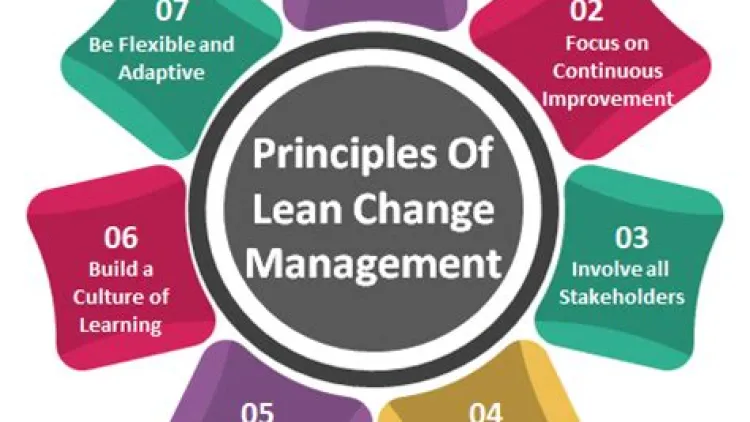
- Understand the core principles of Lean Change Management.
- Develop a strategic framework for applying lean thinking to change initiatives.
- Master techniques for diagnosing change needs and formulating hypotheses.
- Cultivate a culture of continuous experimentation and learning.
- Enhance communication and collaboration skills in lean change environments.
- Learn to identify and address resistance to change with iterative approaches.
- Build resilient individuals and teams capable of thriving amidst continuous change.
- Measure the impact and sustainability of lean change initiatives.
- Create a personalized action plan for implementing lean change in your organization.
About the Course
In today's fast-paced, agile-driven environments, traditional change management approaches can often be too slow and rigid. Lean Change Management offers a dynamic, iterative, and human-centered approach to organizational transformation, enabling businesses to adapt quickly and effectively to continuous disruption. This comprehensive training course is meticulously designed to equip leaders and change practitioners with the strategic foresight and practical tools needed to implement change initiatives with agility, minimize waste, and maximize value delivery in a rapidly evolving landscape.
This intensive five-day program moves beyond theoretical concepts, offering a hands-on blueprint for orchestrating continuous transformation through experimentation and feedback. Participants will learn how to diagnose change needs, craft compelling hypotheses, and leverage short, iterative cycles to build buy-in and accelerate adoption. By the end of this course, you will possess the strategic insights and practical tools to lead change initiatives that not only achieve business objectives but also cultivate a highly engaged, adaptable, and resilient workforce, prepared to thrive in any future scenario.
Curriculum & Topics
7 Topics | 35 Sessions
-
 Workshop 1.1:
Understanding the principles of Lean and Agile
Workshop 1.1:
Understanding the principles of Lean and Agile
-
Workshop 1.2:
The difference between traditional and Lean Change Management
-
Workshop 1.3:
The Lean Change Management Cycle: Insights, Options, Experiments
-
Workshop 1.4:
The value proposition of iterative and adaptive change
-
Workshop 1.5:
Case studies of organizations applying lean change successfully
-
Workshop 2.1:
Tools for assessing the current state and identifying pain points
-
Workshop 2.2:
Techniques for gathering qualitative and quantitative insights
-
Workshop 2.3:
Formulating clear, testable change hypotheses
-
Workshop 2.4:
Defining desired outcomes and success metrics
-
Workshop 2.5:
The importance of a "why" behind every change experiment
-
Workshop 3.1:
Principles of small, iterative experiments for change
-
Workshop 3.2:
How to design a Minimum Viable Change (MVC)
-
Workshop 3.3:
Identifying assumptions and risks in experiments
-
Workshop 3.4:
Creating a feedback loop for rapid learning
-
Workshop 3.5:
The role of continuous improvement in change
-
Workshop 4.1:
Crafting clear, concise, and compelling messages for experiments
-
Workshop 4.2:
Communicating the purpose and expected outcomes of change
-
Workshop 4.3:
Leveraging visual management (e.g., Kanban boards) for transparency
-
Workshop 4.4:
Facilitating effective feedback sessions and retrospectives
-
Workshop 4.5:
Empowering teams to communicate their own change journey
-
Workshop 5.1:
Identifying key stakeholders and their role in experiments
-
Workshop 5.2:
Strategies for building buy-in through involvement and co-creation
-
Workshop 5.3:
Managing expectations in an iterative change process
-
Workshop 5.4:
Addressing resistance by involving individuals in solutions
-
Workshop 5.5:
Fostering a culture of shared ownership and accountability
-
Workshop 6.1:
Defining key performance indicators (KPIs) for change experiments
-
Workshop 6.2:
Collecting and analyzing data from experiments
-
Workshop 6.3:
Interpreting results and deciding to pivot, persevere, or stop
-
Workshop 6.4:
The importance of continuous adaptation and learning from failure
-
Workshop 6.5:
Creating a system for tracking and reporting on change progress
-
Workshop 7.1:
Strategies for applying lean change across larger initiatives
-
Workshop 7.2:
Building a network of change agents and coaches
-
Workshop 7.3:
Integrating lean change with existing organizational processes
-
Workshop 7.4:
Self-assessment of your lean change leadership style
-
Workshop 7.5:
Developing a personal action plan for continuous growth in lean change