15 Topics
 10 Days
Programme Overview
Training Description
Who Should Attend
This course is ideal for;
- Data Scientists
- AI Developers
- Machine Learning Engineers
- Researchers
- Compliance Officers
- Auditors
- Anyone needing XAI and model interpretability skills
Session Objectives
- Understand the fundamentals of Explainable AI (XAI) and model interpretability.
- Master feature importance techniques for model explanation.
- Utilize model visualization for understanding complex models.
- Implement local explanation methods (LIME, SHAP).
- Design and build global explanation models.
- Optimize model explanations for clarity and accuracy.
- Troubleshoot and address interpretability challenges.
- Implement model validation using interpretability metrics.
- Integrate XAI into real-world AI applications.
- Understand how to communicate model explanations effectively.
- Explore advanced XAI techniques (e.g., counterfactual explanations).
- Apply real world use cases for XAI in various domains.
- Leverage XAI libraries for efficient model explanation.
About the Course
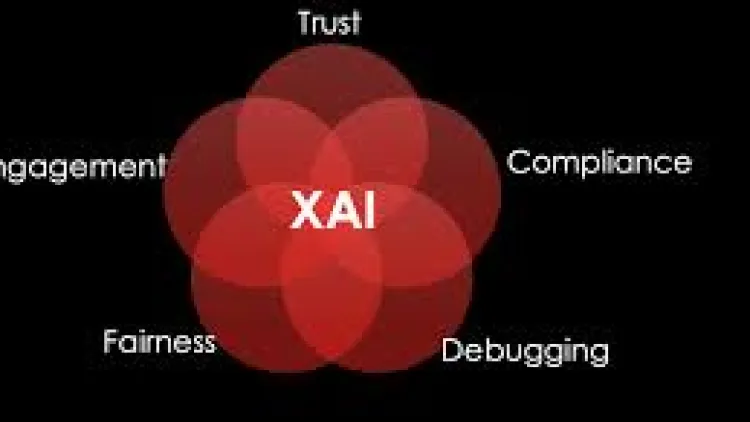
Demystify complex machine learning models with our Explainable AI (XAI) and Model Interpretability Training Course. This program is designed to equip you with the essential skills to apply techniques for understanding and explaining complex machine learning models, enabling you to build transparent and trustworthy AI systems. In today's AI-driven world, mastering model interpretability is crucial for ensuring accountability, building trust, and complying with ethical guidelines. Our explainable AI training course offers hands-on experience and expert guidance, empowering you to implement robust XAI solutions.
This model interpretability training delves into the core concepts of XAI, covering topics such as feature importance, model visualization, and local and global explanations. You'll gain expertise in using industry-standard libraries and tools to understand and explain complex machine learning models, meeting the demands of modern AI projects. Whether you're a data scientist, AI developer, or researcher, this Explainable AI (XAI) and Model Interpretability course will empower you to build transparent and understandable AI.
Curriculum & Topics
15 Topics | 10 Days
-
 Subtopic 1.1:
Fundamentals of Explainable AI (XAI) and model interpretability.
Subtopic 1.1:
Fundamentals of Explainable AI (XAI) and model interpretability.
-
Subtopic 1.2:
Overview of feature importance, visualization, and explanation methods.
-
Subtopic 1.3:
Setting up an XAI development environment.
-
Subtopic 1.4:
Introduction to XAI libraries and tools.
-
Subtopic 1.5:
Best practices for model interpretability.
-
Subtopic 2.1:
Implementing feature importance using permutation importance.
-
Subtopic 2.2:
Utilizing SHAP values for feature attribution.
-
Subtopic 2.3:
Designing and building feature importance analysis pipelines.
-
Subtopic 2.4:
Optimizing feature importance for model understanding.
-
Subtopic 2.5:
Best practices for feature importance.
-
Subtopic 3.1:
Implementing model visualization techniques.
-
Subtopic 3.2:
Utilizing partial dependence plots (PDPs) and ICE plots.
-
Subtopic 3.3:
Designing and building model visualization dashboards.
-
Subtopic 3.4:
Optimizing visualizations for model transparency.
-
Subtopic 3.5:
Best practices for model visualization.
-
Subtopic 4.1:
Implementing LIME for local model explanations.
-
Subtopic 4.2:
Utilizing SHAP for local feature attribution.
-
Subtopic 4.3:
Designing and building local explanation pipelines.
-
Subtopic 4.4:
Optimizing local explanations for individual predictions.
-
Subtopic 4.5:
Best practices for local explanations.
-
Subtopic 5.1:
Designing and building global explanation models.
-
Subtopic 5.2:
Utilizing surrogate models for global interpretation.
-
Subtopic 5.3:
Implementing rule-based explanations.
-
Subtopic 5.4:
Optimizing global explanations for model understanding.
-
Subtopic 5.5:
Best practices for global explanations.
-
Subtopic 6.1:
Optimizing model explanations for clarity and accuracy.
-
Subtopic 6.2:
Utilizing evaluation metrics for explanation quality.
-
Subtopic 6.3:
Designing and building explanation pipelines.
-
Subtopic 6.4:
Optimizing explanations for specific audiences.
-
Subtopic 6.5:
Best practices for explanation optimization.
-
Subtopic 7.1:
Debugging issues in model explanations.
-
Subtopic 7.2:
Analyzing inconsistencies and biases in explanations.
-
Subtopic 7.3:
Utilizing troubleshooting techniques for explanation improvement.
-
Subtopic 7.4:
Resolving common interpretability challenges.
-
Subtopic 7.5:
Best practices for troubleshooting.
-
Subtopic 8.1:
Implementing model validation using interpretability metrics.
-
Subtopic 8.2:
Utilizing explanation-based model evaluation.
-
Subtopic 8.3:
Designing and building validation pipelines.
-
Subtopic 8.4:
Optimizing model validation for explanation quality.
-
Subtopic 8.5:
Best practices for model validation.
-
Subtopic 9.1:
Integrating XAI into real-world AI applications.
-
Subtopic 9.2:
Utilizing APIs and deployment tools for XAI.
-
Subtopic 9.3:
Implementing real-time model explanation systems.
-
Subtopic 9.4:
Optimizing XAI for deployment environments.
-
Subtopic 9.5:
Best practices for integration.
-
Subtopic 10.1:
Communicating model explanations effectively.
-
Subtopic 10.2:
Utilizing visualizations and narratives for explanation.
-
Subtopic 10.3:
Designing and building explanation reports and presentations.
-
Subtopic 10.4:
Optimizing communication for stakeholder understanding.
-
Subtopic 10.5:
Best practices for communication.
-
Subtopic 11.1:
Implementing counterfactual explanations.
-
Subtopic 11.2:
Utilizing causal explanations for model behavior.
-
Subtopic 11.3:
•esigning and building advanced XAI pipelines.
-
Subtopic 11.4:
Optimizing advanced techniques for specific applications.
-
Subtopic 11.5:
Best practices for advanced techniques.
-
Subtopic 12.1:
Implementing XAI in financial risk assessment.
-
Subtopic 12.2:
Utilizing XAI in medical diagnosis.
-
Subtopic 12.3:
Implementing XAI in legal decision-making.
-
Subtopic 12.4:
Utilizing XAI in customer service chatbots.
-
Subtopic 12.5:
Best practices for real-world applications.
-
Subtopic 13.1:
Utilizing SHAP and LIME libraries for model explanations.
-
Subtopic 13.2:
Implementing XAI tools with TensorFlow and PyTorch.
-
Subtopic 13.3:
Designing and building explanation pipelines with libraries.
-
Subtopic 13.4:
Optimizing library usage for efficient explanation.
-
Subtopic 13.5:
Best practices for library implementation.
-
Subtopic 14.1:
Implementing ethical considerations in model explanations.
-
Subtopic 14.2:
Utilizing fairness and bias detection techniques.
-
Subtopic 14.3:
Designing and building ethical XAI frameworks.
-
Subtopic 14.4:
Optimizing explanations for ethical compliance.
-
Subtopic 14.5:
Best practices for ethical considerations.
-
Subtopic 15.1:
Emerging trends in explainable AI.
-
Subtopic 15.2:
Utilizing automated XAI tools.
-
Subtopic 15.3:
Implementing interactive and dynamic model explanations.
-
Subtopic 15.4:
Best practices for future XAI.