15 Topics
 5 Days
 60 Sessions
Programme Overview
Training Description
Dairy farmers and farm managers
Milk processors and plant operators
Dairy entrepreneurs and investors
Agricultural extension officers and advisors
Food safety and quality assurance professionals
Dairy equipment suppliers and technicians
Agribusiness professionals
Rural development practitioners
Agricultural educators
Food scientists and technologists
Livestock nutritionists
Students of dairy science and food technology
Individuals interested in the dairy industry
Session Objectives
- Understand the principles and benefits of efficient dairy farm management. Implement techniques for optimizing milk production and quality. Understand the composition and properties of milk. Implement techniques for ensuring milk hygiene and safety. Understand the principles of various milk processing technologies. Implement techniques for producing different dairy products (e.g., pasteurized milk, yogurt, cheese). Understand the role of quality control and testing in milk processing. Implement techniques for packaging and labeling dairy products.
About the Course
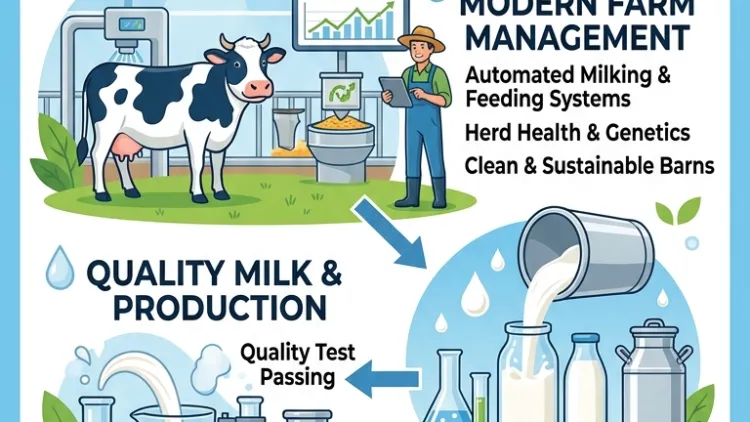
Dairy Farming and Milk Processing Technologies equips dairy farmers, processors, and entrepreneurs with the knowledge and skills to produce high-quality milk and implement efficient processing techniques. This course focuses on optimizing dairy farm management, understanding milk composition and quality parameters, and mastering various milk processing technologies. Participants will learn to enhance milk production, ensure food safety, and develop value-added dairy products. By mastering dairy farming and processing, professionals can improve farm profitability, meet consumer demands, and contribute to the dairy industry's sustainability.
Modern dairy farming and milk processing require a blend of traditional knowledge and cutting-edge technologies. This course provides a comprehensive overview of best practices in animal husbandry, milking hygiene, and advanced processing methods, enabling participants to transform raw milk into a diverse range of safe and nutritious dairy products. By understanding the science behind milk production and processing, individuals can create efficient and profitable dairy enterprises that deliver high-quality products to the market.
Curriculum & Topics
15 Topics | 60 Sessions
-
 Workshop 1.1:
Principles and benefits of modern dairy management.
-
Workshop 1.2:
Understanding the role of farm practices in milk quality.
-
Workshop 1.3:
Benefits of optimizing production and profitability.
-
Workshop 1.4:
Historical context and technological advancements.
-
Workshop 2.1:
Techniques for maximizing milk yield and composition.
-
Workshop 2.2:
Implementing best practices in animal husbandry.
-
Workshop 2.3:
Utilizing advanced milking and cooling systems.
-
Workshop 2.4:
Managing animal health and welfare for quality milk.
-
Workshop 3.1:
Understanding the components and characteristics of milk.
-
Workshop 3.2:
Implementing milk analysis and testing.
-
Workshop 3.3:
Utilizing knowledge of milk chemistry and microbiology.
-
Workshop 3.4:
Managing milk quality parameters and standards.
-
Workshop 4.1:
Techniques for implementing hygienic milking practices.
-
Workshop 4.2:
Utilizing sanitation and disinfection protocols.
-
Workshop 4.3:
Implementing food safety management systems.
-
Workshop 4.4:
Managing milk contamination and spoilage prevention.
-
Workshop 5.1:
Understanding the processes involved in milk transformation.
-
Workshop 5.2:
Implementing heat treatment and separation techniques.
-
Workshop 5.3:
Utilizing fermentation and coagulation methods.
-
Workshop 5.4:
Managing processing equipment and operations.
-
Workshop 6.1:
Techniques for producing pasteurized and UHT milk.
-
Workshop 6.2:
Implementing yogurt and fermented milk production.
-
Workshop 6.3:
Utilizing cheese making and butter production.
-
Workshop 6.4:
Managing specialized dairy product manufacturing.
-
Workshop 7.1:
Techniques for implementing quality assurance programs.
-
Workshop 7.2:
Utilizing laboratory testing and sensory evaluation.
-
Workshop 7.3:
Implementing product grading and inspection.
-
Workshop 7.4:
Managing quality control documentation and records.
-
Workshop 8.1:
Techniques for selecting appropriate packaging materials.
-
Workshop 8.2:
Implementing product labeling and traceability.
-
Workshop 8.3:
Utilizing packaging design and branding.
-
Workshop 8.4:
Managing packaging hygiene and safety.
-
Workshop 9.1:
Techniques for optimizing energy consumption in dairy operations.
-
Workshop 9.2:
Implementing water conservation and recycling.
-
Workshop 9.3:
Utilizing renewable energy sources.
-
Workshop 9.4:
Managing energy and water efficiency audits.
-
Workshop 10.1:
Techniques for managing dairy farm and processing waste.
-
Workshop 10.2:
Implementing manure management and composting.
-
Workshop 10.3:
Utilizing wastewater treatment and biogas production.
-
Workshop 10.4:
Managing environmental impact assessments.
-
Workshop 11.1:
Understanding food safety and dairy industry regulations.
-
Workshop 11.2:
Implementing compliance measures and certifications.
-
Workshop 11.3:
Utilizing labeling and marketing regulations.
-
Workshop 11.4:
Managing legal documentation and record keeping.
-
Workshop 12.1:
Analyzing the economic benefits of efficient dairy operations.
-
Workshop 12.2:
Evaluating the costs and returns of dairy product production.
-
Workshop 12.3:
Identifying market opportunities for dairy products.
-
Workshop 12.4:
Managing financial planning and budgeting.
-
Workshop 13.1:
Developing communication and marketing strategies.
-
Workshop 13.2:
Building farmer networks and processing partnerships.
-
Workshop 13.3:
Implementing training programs for dairy skills.
-
Workshop 13.4:
Scaling up successful dairy businesses.
-
Workshop 14.1:
Analyzing real-world examples of successful dairy operations.
-
Workshop 14.2:
Highlighting best practices and innovative techniques.
-
Workshop 14.3:
Documenting economic and social impacts.
-
Workshop 14.4:
Farmer and processor testimonials.
-
Workshop 15.1:
Exploring emerging trends and innovations.
-
Workshop 15.2:
Integrating new technologies and research findings.
-
Workshop 15.3:
Adapting to evolving consumer demands and market trends.
-
Workshop 15.4:
Building resilient and sustainable dairy industries.