15 Topics
 5 Days
 60 Sessions
Programme Overview
Training Description
Agricultural extension officers and advisors
Agribusiness managers and professionals
Contract farming managers
Supply chain managers
Agricultural cooperatives and producer organizations
Food processors and distributors
Agricultural policymakers and government officials
Rural development practitioners
Agricultural investors and financiers
Logistics and transportation professionals
Agricultural consultants and advisors
Students of agricultural economics and supply chain management
Individuals interested in agricultural partnerships
Session Objectives
- Understand the principles and benefits of contract farming and supply chain management. Implement techniques for developing and negotiating effective contract farming agreements. Understand the role of supply chain planning and logistics in agricultural operations. Implement techniques for optimizing agricultural supply chain efficiency and cost-effectiveness. Understand the principles of quality control and traceability in agricultural supply chains. Implement techniques for ensuring product quality and safety throughout the supply chain. Understand the role of risk management in contract farming and supply chains.
About the Course
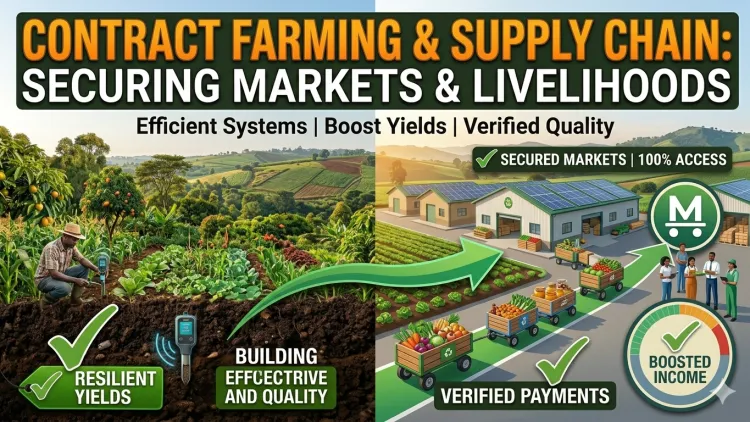
Contract Farming and Supply Chain Management equips professionals with the knowledge and skills to establish and manage efficient agricultural supply chains through contract farming agreements. This course focuses on understanding the principles of contract farming, developing effective supply chain strategies, and building strong relationships between farmers and agribusinesses. Participants will learn to negotiate fair contracts, optimize logistics, and ensure product quality and traceability. By mastering contract farming and supply chain management, professionals can improve farmer livelihoods, enhance food security, and drive sustainable agricultural development.
The agricultural sector relies on robust supply chains to deliver quality products to consumers. This course delves into the intricacies of contract negotiation, supply chain planning, and risk management, empowering participants to develop and implement sustainable agricultural systems. By integrating best practices in contract farming with modern supply chain techniques, this program enables individuals to create efficient and equitable partnerships that benefit all stakeholders in the agricultural value chain.
Curriculum & Topics
15 Topics | 60 Sessions
-
 Workshop 1.1:
Principles and benefits of formalized agricultural partnerships.
Workshop 1.1:
Principles and benefits of formalized agricultural partnerships.
-
Workshop 1.2:
Understanding the role of contracts in supply chain efficiency.
-
Workshop 1.3:
Benefits of risk sharing and market access for farmers.
-
Workshop 1.4:
Historical context and modern contract farming models.
-
Workshop 2.1:
Techniques for drafting clear and equitable contract terms.
-
Workshop 2.2:
Implementing contract negotiation and stakeholder engagement.
-
Workshop 2.3:
Utilizing legal frameworks and best practices.
-
Workshop 2.4:
Managing contract documentation and enforcement.
-
Workshop 3.1:
Understanding the role of planning in agricultural operations.
-
Workshop 3.2:
Implementing supply chain mapping and optimization.
-
Workshop 3.3:
Utilizing logistics management and transportation strategies.
-
Workshop 3.4:
Managing inventory and storage.
-
Workshop 4.1:
Techniques for reducing supply chain inefficiencies and waste.
-
Workshop 4.2:
Implementing cost analysis and performance measurement.
-
Workshop 4.3:
Utilizing technology for logistics and tracking.
-
Workshop 4.4:
Managing supply chain performance and improvement.
-
Workshop 5.1:
Understanding the importance of quality in agricultural products.
-
Workshop 5.2:
Implementing quality assurance and control systems.
-
Workshop 5.3:
Utilizing traceability systems and data management.
-
Workshop 5.4:
Managing product safety and compliance.
-
Workshop 6.1:
Techniques for implementing quality standards and certifications.
-
Workshop 6.2:
Implementing post-harvest handling and processing.
-
Workshop 6.3:
Utilizing laboratory testing and analysis.
-
Workshop 6.4:
Managing product recalls and risk management.
-
Workshop 7.1:
Understanding agricultural risks and mitigation strategies.
-
Workshop 7.2:
Implementing risk assessment and contingency planning.
-
Workshop 7.3:
Utilizing insurance and hedging mechanisms.
-
Workshop 7.4:
Managing contract disputes and conflict resolution.
-
Workshop 8.1:
Techniques for identifying and evaluating risks.
-
Workshop 8.2:
Implementing risk management plans and protocols.
-
Workshop 8.3:
Utilizing data analysis and monitoring tools.
-
Workshop 8.4:
Managing risk communication and reporting.
-
Workshop 9.1:
Understanding the principles of building trust and collaboration.
-
Workshop 9.2:
Implementing communication and feedback mechanisms.
-
Workshop 9.3:
Utilizing farmer training and capacity building.
-
Workshop 9.4:
Managing stakeholder engagement and partnerships.
-
Workshop 10.1:
Techniques for implementing effective communication channels.
-
Workshop 10.2:
Techniques for implementing effective communication channels.
-
Workshop 10.3:
Utilizing digital communication tools.
-
Workshop 10.4:
Managing conflict resolution and negotiation.
-
Workshop 11.1:
Understanding contract law and agricultural regulations.
-
Workshop 11.2:
Implementing compliance with labor and environmental standards.
-
Workshop 11.3:
Utilizing land tenure and property rights.
-
Workshop 11.4:
Managing legal documentation and compliance audits.
-
Workshop 12.1:
Understanding the role of technology in supply chain optimization.
-
Workshop 12.2:
Implementing digital platforms and data analytics.
-
Workshop 12.3:
Utilizing precision agriculture and traceability tools.
-
Workshop 12.4:
Managing technology adoption and integration.
-
Workshop 13.1:
Developing fair trade and ethical sourcing practices.
-
Workshop 13.2:
Building sustainable supply chains and environmental stewardship.
-
Workshop 13.3:
Implementing social impact and community development.
-
Workshop 13.4:
Managing responsible sourcing and reporting.
-
Workshop 14.1:
Analyzing real-world examples of effective contract farming.
-
Workshop 14.2:
Highlighting best practices and innovative strategies.
-
Workshop 14.3:
Documenting economic and social impacts.
-
Workshop 14.4:
Farmer and agribusiness partner testimonials.
-
Workshop 15.1:
Exploring emerging trends and technologies in supply chains.
-
Workshop 15.2:
Integrating blockchain and supply chain transparency.
-
Workshop 15.3:
Adapting to evolving market demands and sustainability goals.
-
Workshop 15.4:
Building resilient and equitable agricultural systems.