
 14 Topics
 3 Days
 52 Sessions
Programme Overview
Training Description
Business leaders and managers who invest in conflict management training gain insights into effective communication, negotiation, and resolution strategies. These skills enable them to foster a harmonious work environment and maintain cohesive teams.
Session Objectives
About the Course
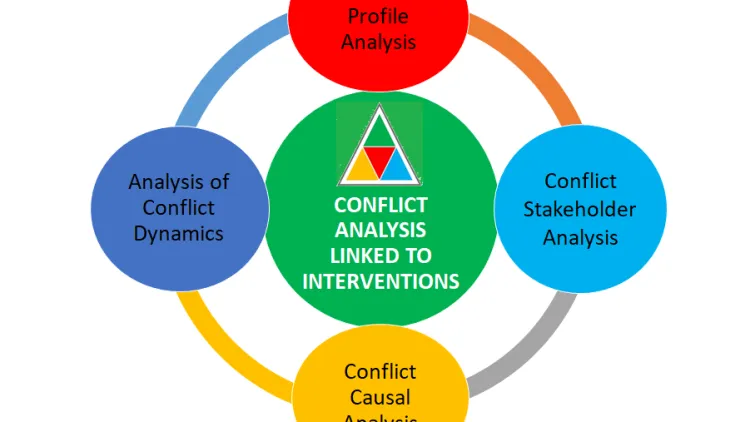
Conflict analysis involves a detailed examination of the causes, actors, dynamics, and outcomes of conflict, with the goal of understanding the conflict’s nature and identifying ways to resolve or manage it.
The workshop focuses on Conflict Analysis to cater to the diverse needs of corporate professional
Curriculum & Topics
14 Topics | 52 Sessions
-
 Workshop 1.1:
Structural Causes: Fundamental factors such poverty, inequality, political marginalization, or ethnic and religious strife that foster an environment conducive to conflict.
Workshop 1.1:
Structural Causes: Fundamental factors such poverty, inequality, political marginalization, or ethnic and religious strife that foster an environment conducive to conflict.
-
Workshop 1.2:
Proximate Causes: Immediate events that precipitate the onset of conflict, such disputed elections, leadership crises, or abrupt economic declines.
-
Workshop 1.3:
Psychological Factors: The role of fear, perceptions, mistrust, and trauma in exacerbating conflict.
-
Workshop 1.4:
N/A
-
Workshop 2.1:
Primary Parties: Actors directly involved, including states, armed groups, political parties, or communities.
-
Workshop 2.2:
Secondary Parties: Indirectly engaged entities such as allies, proxy troops, or nations offering material or ideological assistance.
-
Workshop 2.3:
Spoilers: Actors who gain from ongoing conflict and may seek to undermine peace initiatives.
-
Workshop 2.4:
Mediators and Facilitators: External entities, such as international organizations, governments, or NGOs, that aid in dispute resolution.
-
Workshop 2.5:
N/A
-
Workshop 3.1:
Economic Factors: Competition for resources, whether land, oil, minerals, or water, that exacerbates the conflict.
-
Workshop 3.2:
Political Power Struggles: Conflicts about leadership, political authority, or governance, encompassing confrontations between authoritarian regimes and opposition factions.
-
Workshop 3.3:
Ethnic and Religious Tensions: Conflicts rooted in identity, when ethnic or religious distinctions are leveraged to garner support or incite hostility.
-
Workshop 3.4:
Historical Grievances: Enduring grievances originating from historical events, colonization, or previous injustices that persistently influence contemporary disputes.
-
Workshop 3.5:
N/A
-
Workshop 4.1:
Escalation and De-escalation: The dynamics through which hostilities amplify or subside, shaped by military operations, diplomatic negotiations, or external interventions.
-
Workshop 4.2:
Cycles of Violence: The self-perpetuating nature of violence, revenge, and counter-violence that results in prolonged conflict.
-
Workshop 4.3:
Interconnectedness of ones: The manner in which disputes regarding a singular problem (e.g., land) may be linked to more extensive ones (e.g., governance, identity, resources).
-
Workshop 4.4:
Power Asymmetry: The equilibrium or disparity of power between opposing parties, influencing the character of the conflict and possible resolutions.
-
Workshop 4.5:
N/A
-
Workshop 5.1:
Latent Conflict: Circumstances characterized by underlying tensions that have not yet manifested as overt conflict.
-
Workshop 5.2:
Manifest Conflict: Open, active conflict where violence or confrontation is occurring.
-
Workshop 5.3:
Post-Conflict: After a conflict, the focus shifts to rebuilding, reconciliation, and preventing the recurrence of violence.
-
Workshop 5.4:
N/A
-
Workshop 6.1:
Mapping ties: Identifying main actors and their ties, alliances, and rivalries to comprehend the structure and dynamics of the conflict.
-
Workshop 6.2:
Stakeholder Interests: Evaluating the objectives, motives, and interests of each participant, including both those directly engaged and those impacted by the dispute.
-
Workshop 6.3:
Power and Influence: Analyzing the distribution of power among stakeholders, particularly identifying those capable of impacting the conflict’s resolution.
-
Workshop 6.4:
N/A
-
Workshop 7.1:
Deep versus Surface Causes: Distinguishing between superficial issues (e.g., territory) and underlying structural factors (e.g., inequality, historical grievances).
-
Workshop 7.2:
Transforming Relationships: Advancing beyond ephemeral remedies to tackle the fundamental social, political, and economic frameworks that sustain conflict.
-
Workshop 7.3:
Capacity Building: Equipping communities and institutions to effectively manage conflict and enhance resilience against future disputes.
-
Workshop 8.1:
Capacity Building: Equipping communities and institutions to effectively manage conflict and enhance resilience against future disputes.
-
Workshop 8.2:
Conflicts can be categorized as internal (such as civil wars and insurgencies) or external (such as interstate conflicts), and comprehending this distinction aids in the customization of conflict resolution strategies.
-
Workshop 8.3:
Localized versus Widespread: Certain conflicts are restricted to particular regions, but others may possess national or even international implications.
-
Workshop 8.4:
N/A
-
Workshop 9.1:
Conflicting Narratives: The varying perceptions and interpretations of the conflict by different groups, which frequently influence public opinion and rationalize actions. Narratives may emphasize victimization, resistance, or historical rectitude.
-
Workshop 9.2:
Media and Information: The influence of media and propaganda in shaping perceptions of war and in the mobilization of support or vilification of adversaries.
-
Workshop 9.3:
Identity and Conflict: The centrality of ethnic, religious, and cultural identities in increasing differences during conflicts.
-
Workshop 9.4:
N/A
-
Workshop 10.1:
Negotiation and Mediation: Recognizing prospects for discourse, compromise, and third-party mediation to achieve peace.
-
Workshop 10.2:
Peace Agreements: The formulation, execution, and oversight of peace agreements, ensuring they tackle fundamental concerns and garner extensive support.
-
Workshop 10.3:
Nonviolent Approaches: Promoting nonviolent methods of conflict resolution, including civil resistance, diplomacy, and peace education.
-
Workshop 11.1:
Gendered Impacts of Conflict: Acknowledging that men and women engage in and are affected by conflict in distinct ways, with women frequently bearing a disproportionate burden of sexual violence and displacement.
-
Workshop 11.2:
The Role of Women in Peacebuilding: Emphasizing the essential contribution of women to peace processes and the necessity of incorporating gender perspectives in conflict analysis.
-
Workshop 11.3:
N/A
-
Workshop 12.1:
Scarcity and rivalry: The manner in which rivalry for natural resources, such as water or land, can provoke or exacerbate conflicts.
-
Workshop 12.2:
Environmental Degradation: Examining how environmental changes, such as climate change or deforestation, contribute to conflict and displacement.
-
Workshop 12.3:
N/A
-
Workshop 13.1:
Regional and International Actors: The effect of neighbouring states, international organizations, or foreign powers on wars by involvement, diplomacy, or backing for various factions.
-
Workshop 13.2:
Globalization and Conflict: The influence of global economic and political dynamics on local conflicts, including arms trade, economic sanctions, and the role of multinational firms.
-
Workshop 14.1:
Reconciliation and Healing: Analyzing efforts to heal social divisions and rebuild trust between former adversaries.
-
Workshop 14.2:
Transitional Justice: Mechanisms to address past human rights violations, including trials, truth commissions, and reparations for victims.
-
Workshop 14.3:
State-Building: The process of creating stable political institutions, promoting good governance, and preventing the resurgence of violence.