14 Topics
 5 Days
 70 Sessions
Programme Overview
Training Description
- Development Programme Managers
- Donor and Development Partner Representatives
- Monitoring and Evaluation Professionals
- Gender and Social Inclusion Specialists
- Urban and Regional Development Planners
- Ward and Community-Level Administrators
- Elected Representatives and Local Government Leaders
- Community Leaders and Representatives
- Citizen Participation and Advocacy Professionals
- Public Procurement and Project Planning Professionals
- Professionals involved in participatory governance, inclusive budgeting, community engagement, public accountability, and local development planning
Session Objectives
- Grasp the core principles and benefits of participatory budgeting. Design a culturally sensitive and inclusive PB process. Mobilize and engage diverse community groups effectively. Develop a transparent and fair voting mechanism for projects
About the Course
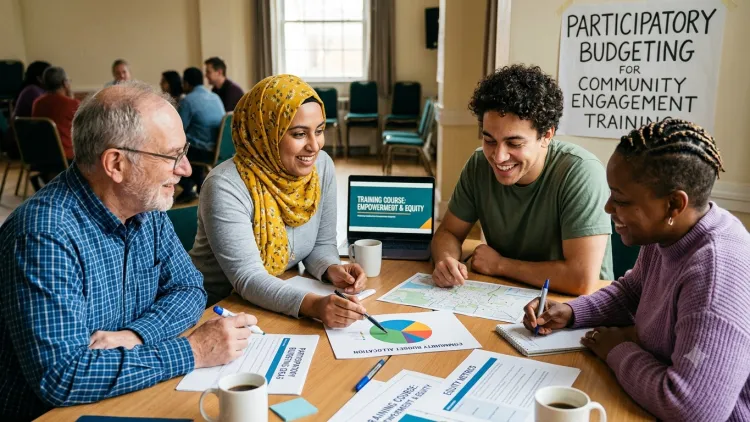
Empowerment & Equity: Participatory Budgeting for Community Engagement is a practical training course designed to equip government officials, community leaders, development professionals, and civil society practitioners with the knowledge and skills to involve citizens and stakeholders meaningfully in budget planning, resource allocation, and public spending decisions.The course explores how participatory budgeting can strengthen transparency, accountability, inclusion, trust, and community ownership by creating structured opportunities for citizens to identify priorities, propose projects, evaluate options, and influence how public resources are allocated. Participants will examine participatory budgeting models, stakeholder engagement strategies, community consultation methods, digital participation tools, inclusion mechanisms, and approaches for translating community priorities into realistic budget proposalsParticular emphasis is placed on ensuring that participation reaches women, youth, persons with disabilities, marginalized communities, low-income groups, and other traditionally underrepresented stakeholders, while maintaining fiscal discipline and alignment with development priorities..
Curriculum & Topics
14 Topics | 70 Sessions
-
 Workshop 1.1:
What is participatory budgeting and its historical context
-
Workshop 1.2:
Key principles: transparency, equity, and civic participation
-
Workshop 1.3:
The benefits of PB for governance and community development
-
Workshop 1.4:
Differentiating PB from other forms of public consultation
-
Workshop 1.5:
Global trends and the evolution of PB
-
Workshop 2.1:
Defining the scope and size of the participatory budget
-
Workshop 2.2:
Setting clear rules and a timeline for the process
-
Workshop 2.3:
Identifying and engaging key stakeholders
-
Workshop 2.4:
Creating a communications strategy to reach all residents
-
Workshop 2.5:
Structuring the institutional framework for PB
-
Workshop 3.1:
Strategies for reaching marginalized and vulnerable groups
-
Workshop 3.2:
The role of community leaders and facilitators
-
Workshop 3.3:
Using social media, workshops, and door-to-door campaigns
-
Workshop 3.4:
Building a sense of ownership and trust
-
Workshop 3.5:
Addressing potential barriers to participation
-
Workshop 4.1:
Facilitating community assemblies and public forums
-
Workshop 4.2:
Tools for brainstorming and idea generation
-
Workshop 4.3:
Transforming raw ideas into concrete project proposals
-
Workshop 4.4:
Criteria for evaluating proposals based on public priorities
-
Workshop 4.5:
The role of technical experts in refining proposals
-
Workshop 5.1:
Designing a fair and accessible voting system
-
Workshop 5.2:
In-person vs. digital voting platforms
-
Workshop 5.3:
Strategies to maximize voter turnout and participation
-
Workshop 5.4:
Ensuring the integrity and security of the vote
-
Workshop 5.5:
Communicating the results transparently
-
Workshop 6.1:
The transition from voted projects to budget allocation
-
Workshop 6.2:
Contracting and procurement for PB projects
-
Workshop 6.3:
Managing project timelines and budgets
-
Workshop 6.4:
The role of community members in project oversight
-
Workshop 6.5:
Dealing with unexpected challenges and delays
-
Workshop 7.1:
Legal authority for local governments to implement PB
-
Workshop 7.2:
Integrating PB funds into the official budget
-
Workshop 7.3:
Financial management and accounting for PB projects
-
Workshop 7.4:
Creating a PB-specific budget line
-
Workshop 7.5:
The role of audit in ensuring fiscal responsibility
-
Workshop 8.1:
Analysis of successful PB initiatives in cities worldwide
-
Workshop 8.2:
Lessons learned from different cultural and political contexts
-
Workshop 8.3:
Examples of PB in different sectors (e.g., infrastructure, social services)
-
Workshop 8.4:
Studying the impact of PB on local policies and services
-
Workshop 8.5:
Critical review of challenges and failures
-
Workshop 9.1:
Designing a framework to track the progress of PB projects
-
Workshop 9.2:
Developing indicators for both process and outcome evaluation
-
Workshop 9.3:
Measuring the impact of PB on community trust and engagement
-
Workshop 9.4:
Collecting and analyzing feedback from participants
-
Workshop 9.5:
Using M&E data to improve future PB cycles
-
Workshop 10.1:
The use of online platforms for proposal submission and voting
-
Workshop 10.2:
Leveraging mobile technology for wider participation
-
Workshop 10.3:
Data visualization and mapping for transparent reporting
-
Workshop 10.4:
Managing and protecting participant data
-
Workshop 10.5:
The role of digital tools in hybrid PB models
-
Workshop 11.1:
Training facilitators and community leadersvvvvvv
-
Workshop 11.2:
Educating government officials on their new roles
-
Workshop 11.3:
Workshops for residents on budget literacy and proposal writing
-
Workshop 11.4:
Building a sustainable network of PB champions
-
Workshop 11.5:
Creating a knowledge-sharing platform
-
Workshop 12.1:
Integrating PB with other governance reforms
-
Workshop 12.2:
Using PB to address climate and environmental issues
-
Workshop 12.3:
The role of PB in post-conflict or humanitarian settings
-
Workshop 12.4:
PB for youth and school communities
-
Workshop 12.5:
Scaling PB from a pilot project to a city-wide program
-
Workshop 13.1:
Overcoming political resistance and bureaucratic inertia
-
Workshop 13.2:
Dealing with data and information asymmetries
-
Workshop 13.3:
Managing conflicts and disagreements during the process
-
Workshop 13.4:
Ensuring equitable distribution of projects across neighborhoods
-
Workshop 13.5:
Maintaining momentum and preventing fatigue
-
Workshop 14.1:
Building a compelling case for PB to decision-makers
-
Workshop 14.2:
Communicating the value and impact of PB to the public
-
Workshop 14.3:
Engaging the media to promote success stories
-
Workshop 14.4:
The role of civil society advocacy in institutionalizing PB
-
Workshop 14.5:
Forming alliances to support a legal framework for PB