15 Topics
 10 Days
 75 Sessions
Programme Overview
Training Description
Who Should Attend
This course is ideal for;
1. Distribution System Planners
2. Power Systems Engineers
3. Grid Operators and Dispatchers
4. Utility Asset Managers
5. Renewable Energy Project Developers
6. Electrical Engineers
7. Government Regulators
8. Technical Consultants
9. Researchers in Power Systems
10. Graduate Students in Energy
Session Objectives
- Master the foundational principles of modern distribution network planning.
- Understand the core components and architecture of a distribution system.
- Learn about the impact of distributed energy resources (DERs) on grid operations.
- Grasp the complexities of distribution system load flow analysis.
- Develop proficiency in designing and implementing smart grid technologies.
- Explore best practices in managing and optimizing grid operations.
- Learn about robust approaches to ensuring network reliability and quality of service.
- Identify the critical legal, regulatory, and policy considerations in planning.
- Develop skills in using software tools for distribution system analysis.
- Formulate strategies for building a resilient and sustainable power system.
About the Course
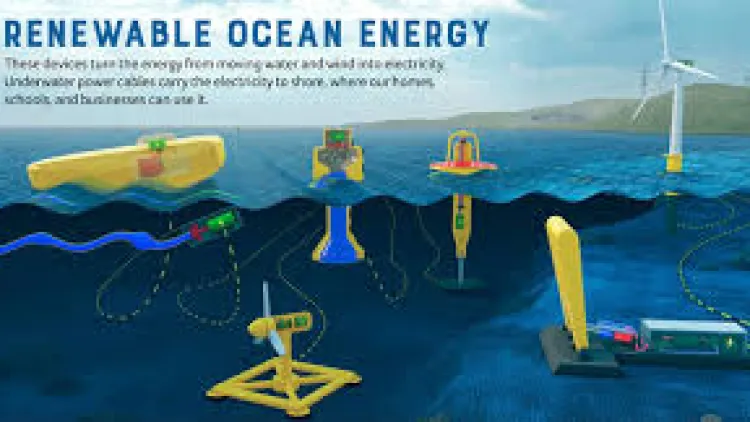
The power grid is no longer a one-way street, and managing the surge of rooftop solar, electric vehicles, and distributed storage requires a fundamentally new approach to grid management. With our Commercial Scale Hydro-Ocean Energy Technologies Training Course, you will gain the hands-on expertise needed to tackle the realities of a two-way grid, from bidirectional power flow to advanced system automation. Under expert instruction, you will learn step-by-step how to utilize the latest modeling tools, execute dynamic load forecasting, design robust protection schemes, and confidently manage real-time grid operations. You will walk away with the practical skills required to overcome voltage constraints, safely integrate distributed clean energy, and lead the transformation of traditional distribution networks into smart, resilient, and highly flexible energy systems.
Curriculum & Topics
15 Topics | 75 Sessions
-
 Workshop 1.1:
The evolution of the distribution network
-
Workshop 1.2:
Key components: substations, feeders, transformers
-
Workshop 1.3:
Network configurations: radial, loop, and network
-
Workshop 1.4:
Single-phase and three-phase systems
-
Workshop 1.5:
The role of a Distribution System Operator (DSO)
-
Workshop 2.1:
Methodologies for short- and long-term load forecasting
-
Workshop 2.2:
The impact of distributed generation on load profiles
-
Workshop 2.3:
Modeling electric vehicle (EV) charging
-
Workshop 2.4:
Data sources for forecasting (e.g., smart meters)
-
Workshop 2.5:
Dealing with uncertainty in demand forecasting
-
Workshop 3.1:
The rise of DERs: solar PV, energy storage, microgrids
-
Workshop 3.2:
The technical challenges of DER integration (e.g., voltage rise)
-
Workshop 3.3:
Reverse power flow and its management
-
Workshop 3.4:
Hosting capacity analysis
-
Workshop 3.5:
The role of smart inverters
-
Workshop 4.1:
Principles of distribution network planning
-
Workshop 4.2:
Planning for a low-carbon future
-
Workshop 4.3:
Capacity planning and augmentation
-
Workshop 4.4:
Integrating new technologies into planning
-
Workshop 4.5:
The importance of a clear and focused research question
-
Workshop 5.1:
Principles of distribution load flow analysis
-
Workshop 5.2:
Using software tools for analysis (e.g., OpenDSS, PSS/E)
-
Workshop 5.3:
Modeling different types of loads and generators
-
Workshop 5.4:
Addressing losses and voltage drop
-
Workshop 5.5:
The role of a "risk and mitigation" plan
-
Workshop 6.1:
The concept of a smart distribution network
-
Workshop 6.2:
Real-time monitoring and control (SCADA)
-
Workshop 6.3:
The role of sensors and communication networks
-
Workshop 6.4:
The Internet of Things (IoT) in the distribution grid
-
Workshop 6.5:
Automated fault detection, isolation, and service restoration (FDIR)
-
Workshop 7.1:
The role of a distribution control center
-
Workshop 7.2:
Managing real-time grid conditions
-
Workshop 7.3:
Outage management and restoration
-
Workshop 7.4:
The impact of DERs on operational procedures
-
Workshop 7.5:
The importance of a simple scorecard and a dashboard
-
Workshop 8.1:
Key metrics for power quality (e.g., voltage flicker, harmonics)
-
Workshop 8.2:
Assessing system reliability and its metrics (e.g., SAIDI, SAIFI)
-
Workshop 8.3:
Power quality mitigation techniques
-
Workshop 8.4:
Designing for enhanced reliability
-
Workshop 8.5:
The role of a clear and consistent reporting style
-
Workshop 9.1:
The principles of overcurrent protection
-
Workshop 9.2:
Fuses, circuit breakers, and reclosers
-
Workshop 9.3:
Coordinated protection schemes
-
Workshop 9.4:
The challenge of bidirectional power flow
-
Workshop 9.5:
Arc flash and other safety considerations
-
Workshop 10.1:
The role of battery storage in distribution
-
Workshop 10.2:
Sizing and placing energy storage systems
-
Workshop 10.3:
Using storage for peak shaving and voltage support
-
Workshop 10.4:
The economics of energy storage
-
Workshop 10.5:
The role of a "data story map"
-
Workshop 11.1:
The impact of EV charging on distribution grids
-
Workshop 11.2:
Managed vs. unmanaged charging
-
Workshop 11.3:
The concept of Vehicle-to-Grid (V2G)
-
Workshop 11.4:
Modeling EV load profiles
-
Workshop 11.5:
Planning for mass EV adoption
-
Workshop 12.1:
The process of interconnecting DERs to the grid
-
Workshop 12.2:
Technical and regulatory requirements
-
Workshop 12.3:
Interconnection studies and their importance
-
Workshop 12.4:
Managing the interconnection queue
-
Workshop 12.5:
The role of a program's theory of change
-
Workshop 13.1:
The principles of asset management
-
Workshop 13.2:
Using data analytics for predictive maintenance
-
Workshop 13.3:
The lifecycle of distribution equipment
-
Workshop 13.4:
Planning for asset replacement and upgrades
-
Workshop 13.5:
The role of a "stakeholder analysis"
-
Workshop 14.1:
The economics of distribution network investments
-
Workshop 14.2:
The role of regulation in driving modernization
-
Workshop 14.3:
Performance-based ratemaking
-
Workshop 14.4:
New business models for DSOs
-
Workshop 14.5:
The importance of a clear and compelling KPI
-
Workshop 15.1:
Identifying cybersecurity threats
-
Workshop 15.2:
Best practices for securing the grid
-
Workshop 15.3:
Protecting communication networks and data
-
Workshop 15.4:
The role of different stakeholders in security
-
Workshop 15.5:
The future of grid security