15 Topics
 5 Days
 60 Sessions
Programme Overview
Training Description
Farmers and agricultural producers
Agricultural extension officers and advisors
Agricultural researchers and scientists
Policymakers and government officials
Environmental consultants and NGOs
Agribusiness professionals
Land managers and conservationists
Rural development practitioners
Sustainability officers
Agricultural educators
Climate change adaptation specialists
Food security analysts
Students and enthusiasts of sustainable agriculture
Session Objectives
- Understand the principles and benefits of climate-smart agriculture (CSA). Implement strategies for climate change adaptation in agricultural systems. Apply techniques for mitigating greenhouse gas emissions from agriculture. Develop skills in assessing climate risks and vulnerabilities in agriculture. Implement water-smart agriculture practices for climate resilience. Utilize soil health management techniques for carbon sequestration. Integrate agroforestry and diversified cropping systems for climate adaptation. Understand the role of livestock management in climate-smart agriculture.
About the Course
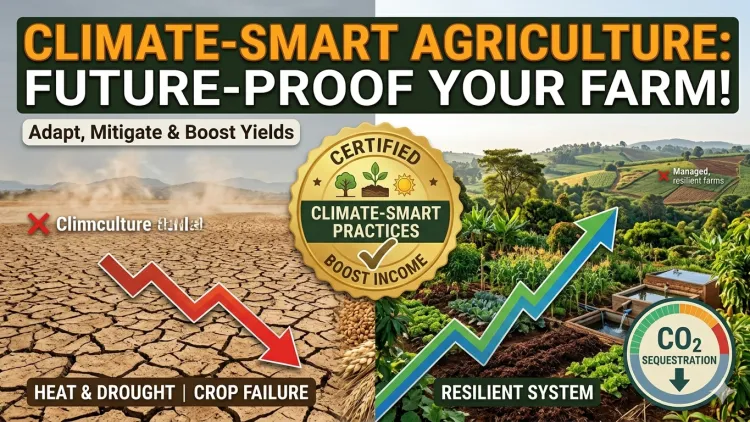
Climate-Smart Agriculture Practices equips farmers, agricultural professionals, and policymakers with the knowledge and skills to adapt to and mitigate climate change impacts. This course focuses on implementing sustainable agricultural techniques that enhance productivity, resilience, and reduce greenhouse gas emissions. Participants will learn to optimize resource use, manage risks, and contribute to climate-resilient food systems. By mastering climate-smart agriculture, professionals can ensure food security and environmental sustainability in a changing climate.
Curriculum & Topics
15 Topics | 60 Sessions
-
 Workshop 1.1:
Principles and objectives of CSA.
-
Workshop 1.2:
Understanding climate change impacts on agriculture.
-
Workshop 1.3:
The three pillars: productivity, adaptation, mitigation.
-
Workshop 1.4:
Benefits and challenges of CSA implementation.
-
Workshop 2.1:
Assessing climate risks and vulnerabilities.
-
Workshop 2.2:
Implementing adaptive management practices.
-
Workshop 2.3:
Developing drought and flood resilience.
-
Workshop 2.4:
Diversifying farming systems for risk reduction.
-
Workshop 3.1:
Identifying sources of agricultural emissions.
-
Workshop 3.2:
Implementing mitigation techniques: soil carbon sequestration, reduced fertilizer use.
-
Workshop 3.3:
Managing livestock emissions.
-
Workshop 3.4:
Enhancing energy efficiency in agricultural operations.
-
Workshop 4.1:
Methodologies for assessing climate risks.
-
Workshop 4.2:
Analyzing vulnerability of agricultural systems.
-
Workshop 4.3:
Using climate data and modeling.
-
Workshop 4.4:
Developing risk management plans.
-
Workshop 5.1:
Efficient irrigation techniques.
-
Workshop 5.2:
Water harvesting and conservation.
-
Workshop 5.3:
Drought-resistant crop varieties.
-
Workshop 5.4:
Managing water resources in a changing climate.
-
Workshop 6.1:
Building soil organic matter.
-
Workshop 6.2:
Implementing conservation tillage.
-
Workshop 6.3:
Utilizing cover crops and crop rotations.
-
Workshop 6.4:
Enhancing soil microbial activity.
-
Workshop 7.1:
Integrating trees into farming systems.
-
Workshop 7.2:
Designing diversified cropping systems.
-
Workshop 7.3:
Enhancing biodiversity and ecosystem services.
-
Workshop 7.4:
Improving resilience through diversification.
-
Workshop 8.1:
Sustainable grazing practices.
-
Workshop 8.2:
Improving livestock feed efficiency.
-
Workshop 8.3:
Managing manure and waste.
-
Workshop 8.4:
Integrating livestock into mixed farming systems.
-
Workshop 9.1:
Enhancing food availability and access.
-
Workshop 9.2:
Improving nutrition and dietary diversity.
-
Workshop 9.3:
Reducing food loss and waste.
-
Workshop 9.4:
Building resilient food systems.
-
Workshop 10.1:
Precision agriculture and digital tools.
-
Workshop 10.2:
Climate-smart technologies and practices.
-
Workshop 10.3:
Remote sensing and data analytics.
-
Workshop 10.4:
Innovations in crop and livestock management.
-
Workshop 11.1:
Accessing climate finance mechanisms.
-
Workshop 11.2:
Understanding carbon markets and payments for ecosystem services.
-
Workshop 11.3:
Developing project proposals for climate funding.
-
Workshop 11.4:
Utilizing incentives for CSA adoption.
-
Workshop 12.1:
Understanding national and international policies.
-
Workshop 12.2:
Implementing enabling policy environments.
-
Workshop 12.3:
Building institutional capacity.
-
Workshop 12.4:
Promoting multi-stakeholder collaboration.
-
Workshop 13.1:
Developing effective communication strategies.
-
Workshop 13.2:
Building awareness and knowledge sharing.
-
Workshop 13.3:
Utilizing extension services and farmer networks.
-
Workshop 13.4:
Scaling up successful CSA practices.
-
Workshop 14.1:
Analyzing real-world examples.
-
Workshop 14.2:
Highlighting best practices and lessons learned.
-
Workshop 14.3:
Documenting impacts and outcomes.
-
Workshop 14.4:
Farmer testimonials and project visits.
-
Workshop 15.1:
Emerging trends and innovations.
-
Workshop 15.2:
Adapting to evolving climate scenarios.
-
Workshop 15.3:
Building resilient and sustainable agricultural systems.
-
Workshop 15.4:
The role of CSA in global development.