7 Topics
 5 Days
 35 Sessions
Programme Overview
Training Description
Who Should Attend
This course is ideal for:
- Sustainability Officers and Directors
- Senior Leaders and Executives
- Legal Counsel
- Investor Relations Professionals
- Governance Professionals and Company Secretaries
- Financial Reporting Professionals
- Consultants specializing in climate risk and ESG
- Compliance Officers
- Chief Risk Officers
- Board Members and Directors
Session Objectives
- Understand the core concepts of climate risk and its strategic implications for corporate governance.
- Develop a comprehensive understanding of climate-related financial disclosures
- Master strategies for identifying, assessing, and mitigating climate-related risks and opportunities.
- Learn to integrate climate considerations into board oversight and strategic decision-making.
- Cultivate skills in transparent climate reporting and stakeholder communication.
About the Course
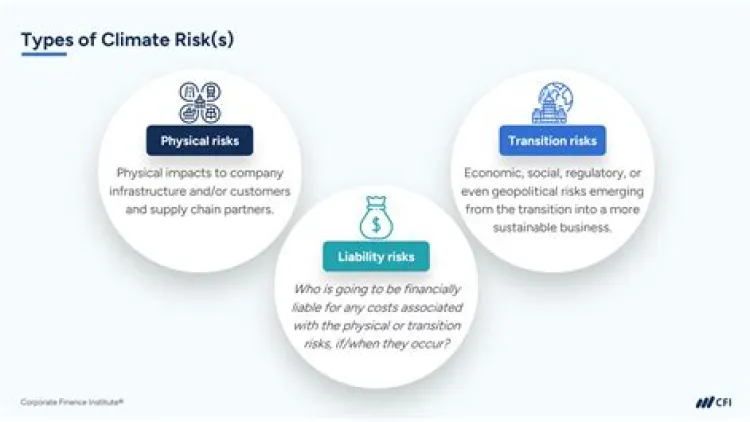
In today's rapidly changing global landscape, climate risk has emerged as a critical strategic imperative for corporate governance, profoundly impacting financial stability, operational resilience, and long-term value creation. Boards and senior leaders are increasingly challenged to navigate the complex implications of climate change, from physical risks and transition risks to evolving regulatory demands and heightened stakeholder scrutiny. This comprehensive training course is meticulously designed to equip current and aspiring leaders with the essential frameworks and practical strategies to integrate climate considerations into their governance structures and drive sustainable business practices.
This 5-day intensive program will empower participants to cultivate a deep understanding of climate-related financial disclosures, master risk assessment methodologies for environmental impacts, and refine their ability to lead with foresight and accountability in a climate-conscious era. You will learn to identify climate-related opportunities, build resilient supply chains, and foster a culture that champions environmental stewardship and responsible growth. By mastering these critical competencies, you will enhance your capacity to navigate climate complexities, inspire sustainable innovation, and secure your organization's future as a responsible global citizen.
Curriculum & Topics
7 Topics | 35 Sessions
-
 Workshop 1.1:
Defining climate risk (physical and transition risks) and its impact on business.
Workshop 1.1:
Defining climate risk (physical and transition risks) and its impact on business.
-
Workshop 1.2:
Understanding the strategic imperative of climate governance for long-term value.
-
Workshop 1.3:
Exploring the interconnectedness of climate change with financial performance and reputation.
-
Workshop 1.4:
The role of leadership in setting climate ambition and strategy.
-
Workshop 1.5:
Case studies of climate-related governance challenges and successes.
-
Workshop 2.1:
Overview of the Task Force on Climate-related Financial Disclosures (TCFD) framework.
-
Workshop 2.2:
Understanding the four pillars of TCFD: Governance, Strategy, Risk Management, Metrics & Targets.
-
Workshop 2.3:
Preparing for mandatory climate-related disclosures and reporting requirements
-
Workshop 2.4:
Leveraging climate data for transparent and credible reporting.
-
Workshop 2.5:
Future trends in climate disclosure standards (e.g.,
-
Workshop 3.1:
The board's fiduciary duties and responsibilities related to climate change.
-
Workshop 3.2:
Integrating climate expertise and diversity into board composition.
-
Workshop 3.3:
The role of board committees (e.g., Risk, Sustainability, Audit) in climate oversight.
-
Workshop 3.4:
Ensuring effective board discussions and decisions on climate strategy.
-
Workshop 3.5:
Overseeing climate-related targets and progress.
-
Workshop 4.1:
Techniques for identifying physical climate risks (e.g., extreme weather, resource scarcity).
-
Workshop 4.2:
Assessing transition climate risks (e.g., policy changes, technology shifts, market changes).
-
Workshop 4.3:
Developing climate risk appetite and tolerance levels.
-
Workshop 4.4:
Utilizing climate scenario analysis for strategic planning and risk assessment.
-
Workshop 4.5:
Integrating climate risk into enterprise risk management (ERM) frameworks.
-
Workshop 5.1:
Developing a climate strategy aligned with business objectives and global goals.
-
Workshop 5.2:
Identifying climate-related opportunities (e.g., new markets, sustainable products, efficiency gains).
-
Workshop 5.3:
Setting ambitious but achievable emissions reduction targets (e.g.,
-
Workshop 5.4:
Investing in climate resilience and adaptation measures.
-
Workshop 5.5:
The role of innovation in climate solutions.
-
Workshop 6.1:
Engaging with key climate stakeholders (investors, regulators, employees, customers, communities).
-
Workshop 6.2:
Communicating climate strategy and performance transparently.
-
Workshop 6.3:
Avoiding "greenwashing" and ensuring authentic climate claims.
-
Workshop 6.4:
The role of investor activism and proxy advisors on climate issues.
-
Workshop 6.5:
Building trust and legitimacy through credible climate action.
-
Workshop 7.1:
Developing a roadmap for integrating climate governance practices.
-
Workshop 7.2:
Strategies for fostering a climate-aware culture throughout the organization.
-
Workshop 7.3:
Leveraging technology and data analytics for climate performance tracking.
-
Workshop 7.4:
Continuous learning and adaptation to evolving climate science and policy.
-
Workshop 7.5:
Creating a personalized action plan for championing climate risk and corporate governance.