15 Topics
 5 Days
 60 Sessions
Programme Overview
Training Description
Pastoralists and livestock herders
Farmers in arid and semi-arid regions
Agricultural extension officers and advisors
Veterinary professionals
Rural development practitioners
Researchers and scientists
Conservationists and environmentalists
Agribusiness professionals
Non-governmental organization (NGO) workers
Students of animal science and arid land management
Individuals interested in sustainable agriculture in drylands
Government officials and policymakers
Session Objectives
- Understand the unique adaptations and benefits of camel and donkey farming in arid regions. Implement techniques for selecting and managing appropriate camel and donkey breeds. Understand the nutritional requirements of camels and donkeys in arid environments. Implement techniques for optimizing grazing and forage management in arid lands. Understand the role of disease prevention and health management in camel and donkey production. Implement techniques for implementing effective vaccination and parasite control programs. Understand the principles of camel and donkey breeding and genetics.
About the Course
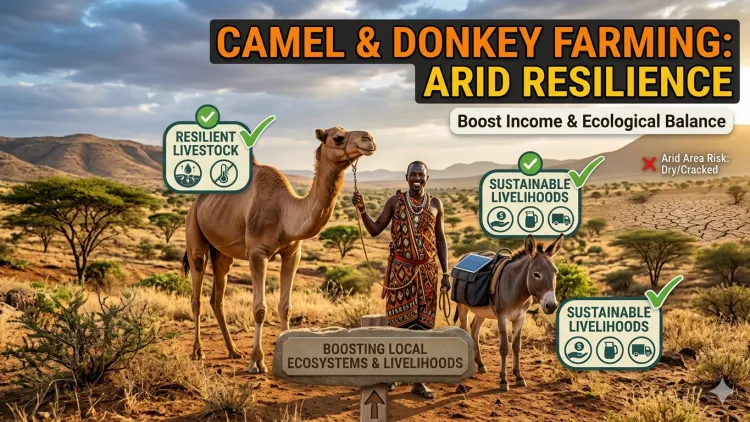
Camel and Donkey Farming for Arid Regions equips farmers, pastoralists, and development practitioners with the knowledge and skills to sustainably manage these vital animals in harsh environments. This course focuses on understanding the unique adaptations of camels and donkeys, implementing effective breeding and management strategies, and maximizing their contributions to livelihoods in arid and semi-arid lands (ASALs). Participants will learn to enhance animal health, optimize production, and explore diverse uses for these resilient species. By mastering camel and donkey farming, professionals can strengthen food security, promote economic stability, and contribute to the ecological balance of arid regions.
Camels and donkeys are indispensable resources in arid regions, offering transport, milk, meat, and labor in challenging conditions. This course delves into the specific needs of these animals, exploring their physiological adaptations, nutritional requirements, and disease management. By integrating traditional ecological knowledge with modern veterinary and husbandry practices, this program empowers participants to create sustainable and profitable farming systems that support both human communities and the fragile ecosystems of arid lands.
Curriculum & Topics
15 Topics | 60 Sessions
-
 Workshop 1.1:
Principles and benefits of camel and donkey farming in drylands.
Workshop 1.1:
Principles and benefits of camel and donkey farming in drylands.
-
Workshop 1.2:
Understanding the role of these animals in arid ecosystems.
-
Workshop 1.3:
Benefits of sustainable and resilient livestock production.
-
Workshop 1.4:
Historical context and traditional practices.
-
Workshop 2.1:
Techniques for choosing breeds suited to arid environments.
-
Workshop 2.2:
Implementing breed characteristics and performance evaluation.
-
Workshop 2.3:
Utilizing breed-specific management strategies.
-
Workshop 2.4:
Managing breed diversity and local adaptation.
-
Workshop 3.1:
Understanding the nutrient needs of camels and donkeys.
-
Workshop 3.2:
Implementing feeding strategies in resource-scarce areas.
-
Workshop 3.3:
Utilizing local forage and supplementary feeds.
-
Workshop 3.4:
Managing water requirements and drought feeding.
-
Workshop 4.1:
Techniques for implementing sustainable grazing systems.
-
Workshop 4.2:
Utilizing range management and forage quality assessment.
-
Workshop 4.3:
Implementing rotational grazing and drought reserves.
-
Workshop 4.4:
Managing grazing pressure and land rehabilitation.
-
Workshop 5.1:
Understanding common diseases and health challenges.
-
Workshop 5.2:
Implementing preventative health programs.
-
Workshop 5.3:
Utilizing disease monitoring and diagnostics.
-
Workshop 5.4:
Managing biosecurity measures in nomadic settings.
-
Workshop 6.1:
Techniques for implementing vaccination protocols.
-
Workshop 6.2:
Utilizing parasite control strategies and treatments.
-
Workshop 6.3:
Implementing preventative parasite management.
-
Workshop 6.4:
Managing medication administration in remote areas.
-
Workshop 7.1:
Understanding the principles of camel and donkey breeding.
-
Workshop 7.2:
Implementing selection strategies and genetic improvement.
-
Workshop 7.3:
Utilizing breeding records and performance data.
-
Workshop 7.4:
Managing reproductive management in harsh conditions.
-
Workshop 8.1:
Techniques for implementing effective breeding programs.
-
Workshop 8.2:
Utilizing selection criteria and performance recording.
-
Workshop 8.3:
Implementing genetic evaluation and selection tools.
-
Workshop 8.4:
Managing breeding stock selection and replacement.
-
Workshop 9.1:
Understanding the requirements for appropriate handling.
-
Workshop 9.2:
Implementing facility design and construction.
-
Workshop 9.3:
Utilizing traditional and modern handling equipment.
-
Workshop 9.4:
Managing animal training and work practices.
-
Workshop 10.1:
Techniques for managing birthing processes in remote settings.
-
Workshop 10.2:
Implementing neonatal care and management.
-
Workshop 10.3:
Utilizing traditional and modern veterinary practices.
-
Workshop 10.4:
Managing reproductive records and performance.
-
Workshop 11.1:
Understanding animal welfare and health regulations.
-
Workshop 11.2:
Implementing land use and environmental regulations.
-
Workshop 11.3:
Utilizing transboundary movement regulations.
-
Workshop 11.4:
Managing legal compliance and documentation.
-
Workshop 12.1:
Analyzing the economic benefits of camel and donkey farming.
-
Workshop 12.2:
Evaluating market trends and product demand.
-
Workshop 12.3:
Identifying value-added product opportunities.
-
Workshop 12.4:
Managing farm financial planning and budgeting.
-
Workshop 13.1:
Developing marketing and sales strategies.
-
Workshop 13.2:
Building pastoralist networks and industry partnerships.
-
Workshop 13.3:
Implementing training programs for arid land skills.
-
Workshop 13.4:
Scaling up successful livestock businesses.
-
Workshop 14.1:
Analyzing real-world examples of successful operations.
-
Workshop 14.2:
Highlighting best practices and innovative techniques.
-
Workshop 14.3:
Documenting economic and social impacts.
-
Workshop 14.4:
Pastoralist and farmer testimonials.
-
Workshop 15.1:
Exploring emerging trends and innovations.
-
Workshop 15.2:
Integrating new technologies and research findings.
-
Workshop 15.3:
Adapting to evolving climate challenges and market demands.
-
Workshop 15.4:
Building resilient and sustainable arid land systems.