4 Topics
 5 Days
 12 Sessions
Programme Overview
Training Description
Who Should Attend
This course is ideal for:
- Business Continuity and Disaster Recovery Professionals.
- Risk Managers and Enterprise Risk Management (ERM) Specialists.
- IT Managers and Operations Leaders responsible for system resilience.
- Senior Executives and Department Heads responsible for critical business functions.
- Internal Auditors and Compliance Personnel overseeing business resilience programs.
Session Objectives
- Identify and mitigate organizational threats.
- Understand crisis management through the development of an Incident Management Plan.
- Develop structures for effective crisis management.
- Create a risk register to identify primary and secondary risks.
About the Course
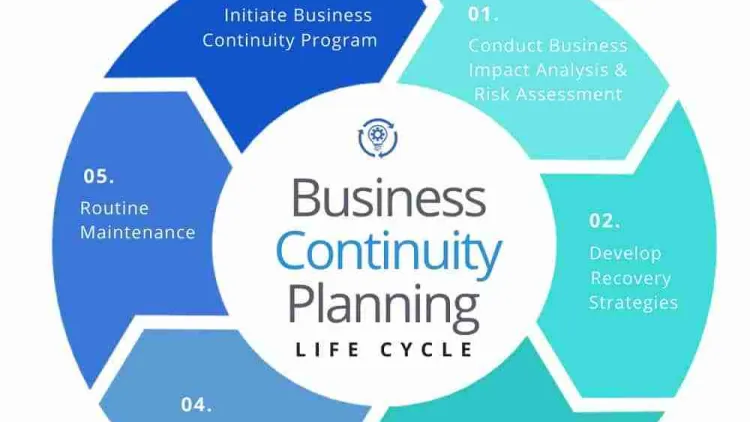
This comprehensive workshop is designed to provide participants with the practical skills and methodological frameworks necessary to develop, implement, and maintain a robust Business Continuity Management (BCM) program that safeguards critical operations against disruption. It covers the core phases of the BCM lifecycle, including Business Impact Analysis (BIA), risk assessment, strategy development, plan creation, and testing. Participants will gain hands-on experience in identifying mission-critical activities, establishing Recovery Time Objectives (RTOs) and Recovery Point Objectives (RPOs), and creating actionable response and recovery plans to minimize downtime, reduce financial losses, and protect organizational reputation following any type of incident or disaster.
Curriculum & Topics
4 Topics | 12 Sessions
-
 Workshop 1.1:
BCM Lifecycle: Understanding the stages of the BCM process from policy setting and analysis to implementation and maintenance.
Workshop 1.1:
BCM Lifecycle: Understanding the stages of the BCM process from policy setting and analysis to implementation and maintenance.
-
Workshop 1.2:
BCM Standards and Regulations: Overview of key global standards like ISO 22301 and regulatory requirements driving BCM.
-
Workshop 1.3:
The Business Case for BCM: Quantifying the financial, operational, and reputational costs of downtime and the value of resilience.
-
Workshop 2.1:
Risk Assessment for BCM: Identifying and analyzing potential threats (natural, technological, human) and their likelihood and impact on business functions.
-
Workshop 2.2:
Business Impact Analysis (BIA): Techniques for prioritizing business processes, defining Maximum Tolerable Period of Disruption (MTPD), and establishing RTOs (Recovery Time Objectives) and RPOs (Recovery Point Objectives).
-
Workshop 2.3:
Dependencies Mapping: Identifying critical internal and external resource, vendor, and system dependencies required for recovery.
-
Workshop 3.1:
Developing Recovery Strategies: Evaluating and selecting appropriate solutions for IT (e.g., hot site, cloud recovery) and non-IT resources (e.g., manual workarounds, alternate facilities).
-
Workshop 3.2:
Structuring the BC Plan: Outlining the essential components of the plan, including incident response, crisis communication, and restoration procedures.
-
Workshop 3.3:
Crisis Communication Planning: Establishing clear internal and external communication protocols during a disruption to manage perception and inform stakeholders.
-
Workshop 4.1:
Plan Implementation: Assigning clear roles, responsibilities, and teams (e.g., Crisis Management Team, Recovery Teams) and providing necessary training.
-
Workshop 4.2:
Testing and Exercising: Designing and conducting various types of exercises (e.g., tabletop drills, full simulations) to validate the plan's effectiveness.
-
Workshop 4.3:
Maintenance and Review: Establishing a formal process for the ongoing review, update, and audit of the BC plan to ensure its continued relevance and currency.