15 Topics
 5 Days
 75 Sessions
Programme Overview
Training Description
Who Should Attend
This course is ideal for;
- Energy Sector Professionals
- Blockchain Developers and Architects
- Environmental, Social, and Governance (ESG) Officers
- Renewable Energy Project Developers
- Supply Chain and Logistics Managers
- Corporate Sustainability Leaders
- Investors in the Clean Energy Sector
- Policymakers and Regulators
- Financial Technology (Fintech) Innovators
- Students in Energy and Computer Science
Session Objectives
- Master the core principles of blockchain technology and its relevance to the energy sector.
- Learn how to design a decentralized, immutable framework for energy traceability.
- Understand the key components of a blockchain-based energy certificate system.
- Grasp the complexities of smart contracts for automating energy transactions.
- Develop proficiency in tokenizing renewable energy and carbon credits.
- Explore best practices for building peer-to-peer energy trading platforms.
- Learn about robust approaches to ensuring data integrity and security.
- Identify the critical legal, regulatory, and ethical considerations.
- Develop skills in evaluating the economic and environmental benefits.
- Formulate strategies for a data-driven approach to green energy markets.
About the Course
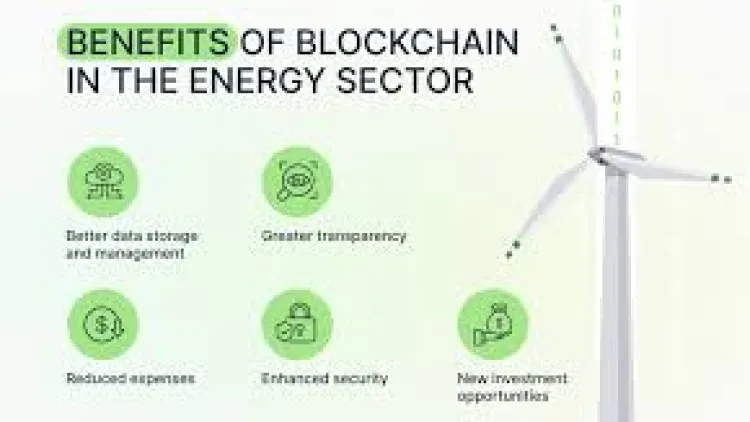
The global transition to a decentralized and distributed energy grid, with millions of homes and businesses generating their own power, creates a complex challenge: how do we verify that the energy consumed is truly from a clean, renewable source? Traditional systems of tracking and certification are often centralized, opaque, and susceptible to fraud. Blockchain technology offers a transformative solution by providing a decentralized, immutable, and transparent ledger that can record every kilowatt-hour of renewable energy from its point of generation to its final consumption. This innovative approach builds unprecedented trust and accountability within the energy ecosystem.
This program provides a comprehensive and practical deep dive into the application of blockchain technology to solve the traceability and transparency challenges of the renewable energy sector. Participants will gain a fundamental understanding of how to use smart contracts to automate energy transactions, tokenize energy and carbon credits for efficient trading, and build secure, peer-to-peer marketplaces. By focusing on real-world case studies and hands-on exercises, attendees will be equipped to design and implement decentralized solutions that not only track green energy but also create new, more efficient business models that accelerate the clean energy transition.
Curriculum & Topics
15 Topics | 75 Sessions
-
 Workshop 1.1:
The core concepts of distributed ledgers
-
Workshop 1.2:
The difference between a blockchain and a traditional database
-
Workshop 1.3:
Consensus mechanisms: Proof-of-Work vs. Proof-of-Stake
-
Workshop 1.4:
The role of cryptography in blockchain security
-
Workshop 1.5:
The difference between public, private, and consortium blockchains
-
Workshop 2.1:
The current state of renewable energy tracking
-
Workshop 2.2:
The role of renewable energy certificates (RECs)
-
Workshop 2.3:
The challenges of double counting and fraud
-
Workshop 2.4:
The importance of a clear and focused research question
-
Workshop 2.5:
How blockchain solves the trust deficit
-
Workshop 3.1:
Designing a blockchain for energy traceability
-
Workshop 3.2:
The role of nodes and participants
-
Workshop 3.3:
The importance of a "risk and mitigation" plan
-
Workshop 3.4:
Data requirements and on-chain vs. off-chain storage
-
Workshop 3.5:
Scalability and performance considerations
-
Workshop 4.1:
The concept of a self-executing contract
-
Workshop 4.2:
Smart contract programming languages (e.g., Solidity)
-
Workshop 4.3:
Writing a smart contract for energy verification
-
Workshop 4.4:
The importance of a simple scorecard and a dashboard
-
Workshop 4.5:
Auditing and security of smart contracts
-
Workshop 5.1:
The concept of tokenizing a physical asset
-
Workshop 5.2:
Creating a digital token to represent 1 MWh of renewable energy
-
Workshop 5.3:
The role of fungible and non-fungible tokens (NFTs)
-
Workshop 5.4:
The importance of a "data story map"
-
Workshop 5.5:
The business case for tokenized energy
-
Workshop 6.1:
The principles of P2P energy trading
-
Workshop 6.2:
Designing a decentralized energy marketplace
-
Workshop 6.3:
Using blockchain to manage real-time transactions
-
Workshop 6.4:
The importance of a clear and consistent reporting style
-
Workshop 6.5:
The role of a P2P market in grid resilience
-
Workshop 7.1:
The fundamentals of carbon markets
-
Workshop 7.2:
The challenges of the traditional carbon market
-
Workshop 7.3:
Tokenizing carbon credits for transparency
-
Workshop 7.4:
The role of a program's theory of change
-
Workshop 7.5:
The impact on global carbon reduction efforts
-
Workshop 8.1:
The role of smart meters and IoT devices
-
Workshop 8.2:
How to get real-world data onto the blockchain
-
Workshop 8.3:
The concept of an oracle
-
Workshop 8.4:
The importance of a "stakeholder analysis"
-
Workshop 8.5:
Ensuring data integrity from source to ledger
-
Workshop 9.1:
New business models enabled by blockchain
-
Workshop 9.2:
The role of a clear and compelling KPI
-
Workshop 9.3:
The economics of reduced transaction costs
-
Workshop 9.4:
The creation of new revenue streams
-
Workshop 9.5:
The importance of a simple scorecard and a dashboard
-
Workshop 10.1:
The importance of governance in a blockchain network
-
Workshop 10.2:
The role of an energy consortium or foundation
-
Workshop 10.3:
The decision-making process for network updates
-
Workshop 10.4:
The importance of a clear and focused research question
-
Workshop 10.5:
Building trust among competitors
-
Workshop 11.1:
Common attack vectors and vulnerabilities
-
Workshop 11.2:
The principles of cryptographic security
-
Workshop 11.3:
The role of an independent security audit
-
Workshop 11.4:
The importance of a "risk and mitigation" plan
-
Workshop 11.5:
Best practices for securing a blockchain-based system
-
Workshop 12.1:
The legal status of digital assets and smart contracts
-
Workshop 12.2:
The role of a "data story map"
-
Workshop 12.3:
Navigating policy and regulation in different jurisdictions
-
Workshop 12.4:
The importance of a program's theory of change
-
Workshop 12.5:
The future of energy policy and blockchain
-
Workshop 13.1:
Case study: A blockchain-based REC platform
-
Workshop 13.2:
Case study: A P2P energy trading project
-
Workshop 13.3:
Case study: A carbon credit trading platform
-
Workshop 13.4:
Lessons learned from global initiatives
-
Workshop 13.5:
The future of blockchain in the energy sector
-
Workshop 14.1:
The challenges of scalability and energy consumption
-
Workshop 14.2:
The role of a "stakeholder analysis"
-
Workshop 14.3:
The future of interoperability between blockchains
-
Workshop 14.4:
The potential of quantum computing
-
Workshop 14.5:
The evolution of the green energy market
-
Workshop 15.1:
Overview of relevant blockchain platforms (e.g., Ethereum, Hyperledger)
-
Workshop 15.2:
The use of key development tools and IDEs
-
Workshop 15.3:
The importance of a clear and consistent reporting style
-
Workshop 15.4:
Best practices for code management and version control
-
Workshop 15.5:
The importance of a clear and compelling KPI