15 Topics
 10 Days
 76 Sessions
Programme Overview
Training Description
Who Should Attend
This course is ideal for:
- Production Engineers
- Operations Managers
- Field Technicians
- Reservoir Engineers
- Completion Engineers
- Project Managers
- Technical Specialists
Session Objectives
- Understand the fundamentals of asset integrity and reliability engineering.
- Master risk-based inspection (RBI) and reliability-centered maintenance (RCM) techniques.
- Utilize failure modes and effects analysis (FMEA) and root cause analysis (RCA).
- Implement corrosion management and prevention strategies.
- Design and build robust asset integrity management systems.
- Optimize predictive maintenance and condition monitoring.
About the Course
Maximize production efficiency and extend well lifespan with our specialized Artificial Lift Systems Optimization Training Course. This program is designed to equip you with the essential skills to select, design, and optimize artificial lift systems, ensuring enhanced production and cost-effectiveness. In today's challenging production environments, mastering artificial lift optimization is crucial for organizations seeking to maximize asset value and minimize operational costs. Our artificial lift training course provides hands-on experience and expert guidance, empowering you to apply cutting-edge techniques for practical, real-world applications.
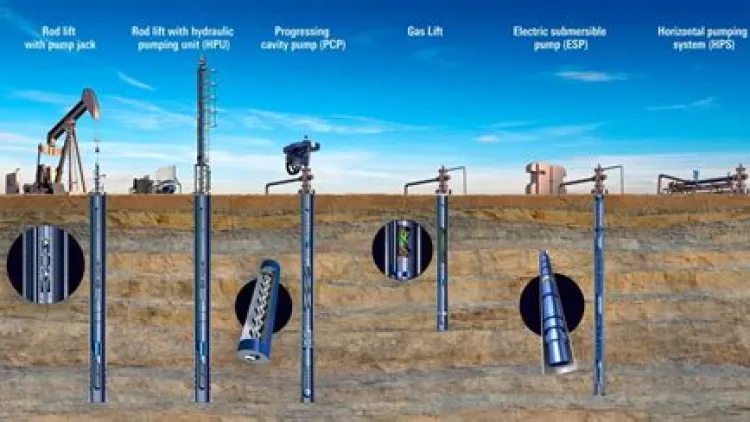
This artificial lift systems optimization training delves into the core concepts of various artificial lift methods, performance analysis, and troubleshooting, covering topics such as ESP, gas lift, rod pump, and progressive cavity pump systems. You'll gain expertise in using industry-standard tools and techniques to artificial lift systems optimization, meeting the demands of modern production operations. Whether you're a production engineer, operations manager, or field technician, this Artificial Lift Systems Optimization course will empower you to drive strategic production decisions and optimize well performance.
Curriculum & Topics
15 Topics | 76 Sessions
-
 Workshop 1.1:
Fundamentals of asset integrity and reliability engineering.
Workshop 1.1:
Fundamentals of asset integrity and reliability engineering.
-
Workshop 1.2:
Overview of asset integrity and reliability principles.
-
Workshop 1.3:
Setting up an asset integrity management framework.
-
Workshop 1.4:
Introduction to asset integrity tools and methodologies.
-
Workshop 1.5:
Best practices for asset integrity.
-
Workshop 2.1:
Mastering risk-based inspection (RBI) and reliability-centered maintenance (RCM) techniques.
-
Workshop 2.2:
Utilizing risk assessment and consequence analysis.
-
Workshop 2.3:
Implementing RCM analysis and maintenance planning.
-
Workshop 2.4:
Designing and building RBI and RCM programs.
-
Workshop 2.5:
Best practices for RBI and RCM.
-
Workshop 3.1:
Utilizing failure modes and effects analysis (FMEA) and root cause analysis (RCA).
-
Workshop 3.2:
Implementing FMEA for risk identification and mitigation.
-
Workshop 3.3:
Utilizing RCA for incident investigation and prevention.
-
Workshop 3.4:
Designing and building FMEA and RCA workflows.
-
Workshop 3.5:
Best practices for failure analysis.
-
Workshop 4.1:
Implementing corrosion management and prevention strategies.
-
Workshop 4.2:
Utilizing cathodic protection and chemical inhibition.
-
Workshop 4.3:
Implementing coating inspection and maintenance.
-
Workshop 4.4:
Designing and building corrosion control programs.
-
Workshop 4.5:
Best practices for corrosion management.
-
Workshop 5.1:
Designing and build robust asset integrity management systems.
-
Workshop 5.2:
Utilizing data management and reporting.
-
Workshop 5.3:
Implementing integrity assessment and planning.
-
Workshop 5.4:
Designing and building integrity management plans.
-
Workshop 5.5:
Best practices for integrity systems.
-
Workshop 6.1:
Optimizing predictive maintenance and condition monitoring.
-
Workshop 6.2:
Utilizing vibration analysis and thermal imaging.
-
Workshop 6.3:
Implementing sensor data analysis and machine learning.
-
Workshop 6.4:
Designing and building predictive maintenance systems.
-
Workshop 6.5:
Best practices for predictive maintenance.
-
Workshop 7.1:
Troubleshooting and addressing common challenges in asset integrity and reliability.
-
Workshop 7.2:
Analyzing inspection data and failure data.
-
Workshop 7.3:
Utilizing problem-solving techniques for resolution.
-
Workshop 7.4:
Resolving common integrity management errors.
-
Workshop 7.5:
Best practices for troubleshooting.
-
Workshop 8.1:
Implementing regulatory compliance and safety standards.
-
Workshop 8.2:
Utilizing industry codes and standards.
-
Workshop 8.3:
Implementing safety management systems and audits.
-
Workshop 8.4:
Designing and building compliance programs.
-
Workshop 8.5:
Best practices for compliance.
-
Workshop 9.1:
Integrating asset integrity and reliability with operational planning.
-
Workshop 9.2:
Utilizing maintenance planning and scheduling.
-
Workshop 9.3:
Implementing real-time monitoring and reporting.
-
Workshop 9.4:
Designing and building integrated integrity systems.
-
Workshop 9.5:
Best practices for integration.
-
Workshop 10.1:
Understanding how to manage large-scale asset integrity projects.
-
Workshop 10.2:
Utilizing project management tools and techniques.
-
Workshop 10.3:
Implementing program evaluation and reporting.
-
Workshop 10.4:
Designing scalable integrity solutions.
-
Workshop 10.5:
Best practices for project management.
-
Workshop 11.1:
Exploring emerging technologies in asset integrity (digital twins, AI for reliability).
-
Workshop 11.2:
Utilizing digital twins for asset simulation and modeling.
-
Workshop 11.3:
Implementing AI and machine learning for predictive maintenance.
-
Workshop 11.4:
Designing and building advanced integrity systems.
-
Workshop 11.5:
Optimizing advanced applications for specific use cases.
-
Workshop 11.6:
Best practices for advanced applications.
-
Workshop 12.1:
Applying real world use cases for asset integrity and reliability in various industrial settings.
-
Workshop 12.2:
Utilizing integrity management in oil and gas facilities.
-
Workshop 12.3:
Implementing integrity management in chemical plants.
-
Workshop 12.4:
Utilizing integrity management in power generation.
-
Workshop 12.5:
Implementing integrity management in infrastructure projects.
-
Workshop 12.6:
Best practices for real-world applications.
-
Workshop 13.1:
Leveraging asset integrity tools and frameworks for efficient implementation.
-
Workshop 13.2:
Utilizing integrity management software and databases.
-
Workshop 13.3:
Implementing risk assessment and inspection tools.
-
Workshop 13.4:
Designing and building automated integrity workflows.
-
Workshop 13.5:
Best practices for tool implementation.
-
Workshop 14.1:
Implementing asset integrity project monitoring and metrics.
-
Workshop 14.2:
Utilizing integrity performance indicators and KPIs.
-
Workshop 14.3:
Designing and building monitoring systems for integrity projects.
-
Workshop 14.4:
Optimizing monitoring for real-time insights.
-
Workshop 14.5:
Best practices for monitoring.
-
Workshop 15.1:
Emerging trends in asset integrity technologies and applications.
-
Workshop 15.2:
Utilizing autonomous inspection and repair systems.
-
Workshop 15.3:
Implementing advanced sensor and monitoring systems.
-
Workshop 15.4:
Best practices for future integrity management.