15 Topics
 5 Days
 60 Sessions
Programme Overview
Training Description
Farmers and agricultural producers
Foresters and land managers
Agricultural extension officers and advisors
Environmental consultants and NGOs
Rural development practitioners
Researchers and scientists
Policymakers and government officials
Sustainability officers
Landscape designers
Community development workers
Agroforestry practitioners
Climate change adaptation specialists
Students and enthusiasts of sustainable land use
Session Objectives
- Understand the principles and benefits of agroforestry systems. Design and implement diverse agroforestry practices. Select appropriate tree species for agroforestry systems. Understand the role of agroforestry in soil health improvement. Implement techniques for integrating livestock into agroforestry systems. Understand the role of agroforestry in water management and conservation. Analyze the contribution of agroforestry to biodiversity enhancement.
About the Course
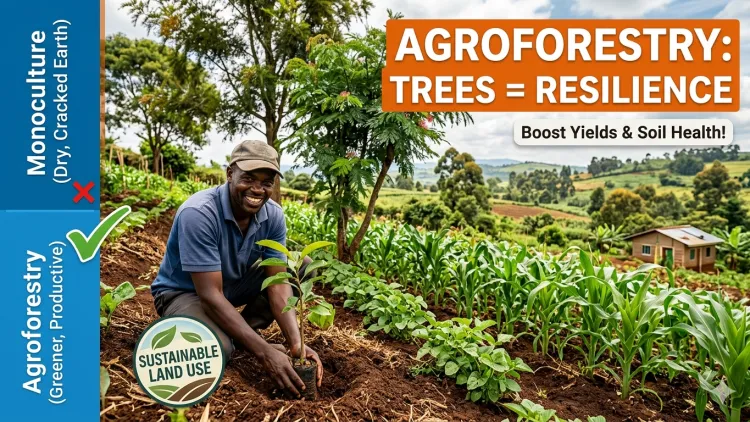
Agroforestry and Sustainable Land Use equips professionals with the knowledge and skills to integrate trees into farming landscapes for enhanced ecological, economic, and social benefits. This course focuses on designing and implementing agroforestry systems that improve soil health, increase biodiversity, and provide diversified income sources. Participants will learn to optimize land use, mitigate climate change, and build resilient agricultural systems. By mastering agroforestry, professionals can contribute to sustainable land management and improve rural livelihoods.
Curriculum & Topics
15 Topics | 60 Sessions
-
 Workshop 1.1:
Defining agroforestry and its key components.
Workshop 1.1:
Defining agroforestry and its key components.
-
Workshop 1.2:
Exploring the historical and cultural significance of agroforestry.
-
Workshop 1.3:
Understanding the ecological, economic, and social benefits.
-
Workshop 1.4:
Distinguishing between different agroforestry systems.
-
Workshop 2.1:
Principles of agroforestry system design.
-
Workshop 2.2:
Planning and site analysis for agroforestry.
-
Workshop 2.3:
Integrating spatial and temporal arrangements.
-
Workshop 2.4:
Selecting appropriate agroforestry practices.
-
Workshop 3.1:
Criteria for selecting suitable tree species.
-
Workshop 3.2:
Understanding the ecological roles of trees.
-
Workshop 3.3:
Matching tree species to specific site conditions.
-
Workshop 3.4:
Considerations for multiple-use tree selection.
-
Workshop 4.1:
Role of trees in enhancing soil organic matter.
-
Workshop 4.2:
Impact of agroforestry on soil fertility and structure.
-
Workshop 4.3:
Techniques for erosion control and soil conservation.
-
Workshop 4.4:
Managing nutrient cycling in agroforestry systems.
-
Workshop 5.1:
Designing silvopastoral systems.
-
Workshop 5.2:
Benefits of integrating livestock with trees.
-
Workshop 5.3:
Managing grazing and browsing in agroforestry.
-
Workshop 5.4:
Animal welfare and productivity considerations.
-
Workshop 6.1:
Role of trees in regulating water flow.
-
Workshop 6.2:
Techniques for water harvesting and infiltration.
-
Workshop 6.3:
Managing water scarcity and drought.
-
Workshop 6.4:
Impact of agroforestry on watershed management.
-
Workshop 7.1:
Role of trees in creating diverse habitats.
-
Workshop 7.2:
Attracting pollinators and beneficial insects.
-
Workshop 7.3:
Enhancing wildlife conservation.
-
Workshop 7.4:
Managing ecological interactions in agroforestry.
-
Workshop 8.1:
Carbon sequestration in agroforestry systems.
-
Workshop 8.2:
Impact of trees on microclimate regulation.
-
Workshop 8.3:
Enhancing climate resilience of farming systems.
-
Workshop 8.4:
Adapting agroforestry to changing climatic conditions.
-
Workshop 9.1:
Harvesting and processing timber and non-timber forest products.
-
Workshop 9.2:
Developing value-added agroforestry products.
-
Workshop 9.3:
Managing tree pruning and thinning.
-
Workshop 9.4:
Ensuring sustainable product utilization.
-
Workshop 10.1:
Diversifying income sources through agroforestry.
-
Workshop 10.2:
Identifying market opportunities for agroforestry products.
-
Workshop 10.3:
Developing business models for agroforestry enterprises.
-
Workshop 10.4:
Accessing financing and investment for agroforestry.
-
Workshop 11.1:
Techniques for assessing agroforestry performance.
-
Workshop 11.2:
Monitoring ecological and economic indicators.
-
Workshop 11.3:
Using participatory monitoring methods.
-
Workshop 11.4:
Evaluating the impact of agroforestry practices.
-
Workshop 12.1:
Understanding national and international policies.
-
Workshop 12.2:
Implementing enabling policy environments.
-
Workshop 12.3:
Building institutional capacity for agroforestry.
-
Workshop 12.4:
Promoting multi-stakeholder collaboration.
-
Workshop 13.1:
Developing effective communication strategies.
-
Workshop 13.2:
Building awareness and knowledge sharing.
-
Workshop 13.3:
Utilizing extension services and farmer networks.
-
Workshop 13.4:
Scaling up successful agroforestry models.
-
Workshop 14.1:
Analyzing real-world examples.
-
Workshop 14.2:
Highlighting best practices and lessons learned.
-
Workshop 14.3:
Documenting impacts and outcomes.
-
Workshop 14.4:
Site visits and farmer testimonials.
-
Workshop 15.1:
Exploring emerging trends and innovations.
-
Workshop 15.2:
Adapting to evolving environmental and market conditions.
-
Workshop 15.3:
Building resilient and sustainable landscapes.
-
Workshop 15.4:
The role of agroforestry in global sustainability.