8 Topics
 5 Days
 40 Sessions
Programme Overview
Training Description
Who Should Attend
HR Managers and Directors
• Agile Coaches and Transformation Leads
• HR Business Partners
• Organizational Development Specialists
• Talent and Learning Professionals
• Change Management Consultants
• Employee Experience Designers
• Workforce Strategy Professionals
Session Objectives
- Understand the principles of Agile and their relevance to HR
- Apply Agile frameworks to recruitment, performance, and learning
- Redesign HR processes for adaptability and employee empowerment
- Foster a collaborative and feedback-rich HR culture
- Drive business agility through people practices
- Build HR’s role in agile transformation initiatives
- Develop cross-functional HR squads and agile ceremonies
- Promote transparency, alignment, and rapid experimentation
About the Course
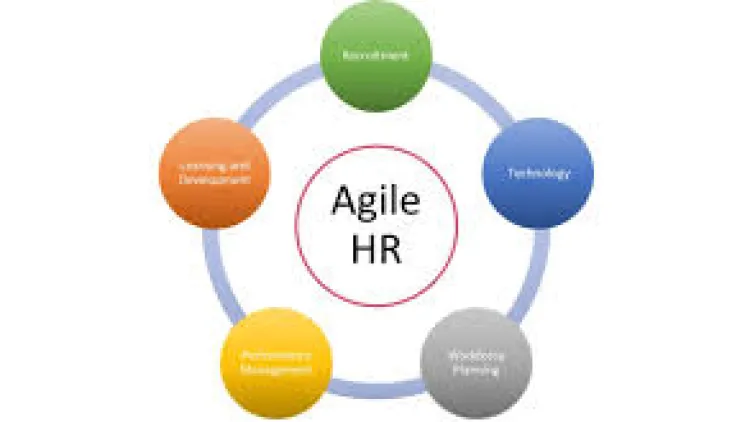
The Agile HR Frameworks for Adaptive Organizations Training Course is designed to empower HR professionals with the mindset, tools, and practices necessary to drive flexibility, speed, and innovation in dynamic workplaces. As organizations face constant change, traditional HR structures often struggle to keep pace. Agile HR offers a transformative approach to people operations—embracing cross-functional collaboration, iterative planning, and employee-centric design. This course explores how Agile principles can be applied to HR processes like recruitment, performance, learning, and organizational design, enabling HR teams to become enablers of agility across the enterprise.
Curriculum & Topics
8 Topics | 40 Sessions
-
 Workshop 1.1:
The need for agility in modern HR
Workshop 1.1:
The need for agility in modern HR
-
Workshop 1.2:
Principles of the Agile Manifesto in HR contexts
-
Workshop 1.3:
Comparing traditional vs. agile HR models
-
Workshop 1.4:
Benefits of Agile HR for people and performance
-
Workshop 1.5:
The Agile HR maturity journey
-
Workshop 2.1:
Overview of Scrum, Kanban, SAFe, and Lean
-
Workshop 2.2:
Choosing the right framework for HR projects
-
Workshop 2.3:
Role of HR in enterprise Agile transformations
-
Workshop 2.4:
Tools for workflow visualization and backlog management
-
Workshop 2.5:
Setting Agile rituals: stand-ups, retrospectives, sprints
-
Workshop 3.1:
Agile recruitment pipelines and sprint hiring
-
Workshop 3.2:
Candidate experience design thinking
-
Workshop 3.3:
Collaborative hiring and hiring squads
-
Workshop 3.4:
Feedback loops and iterative job marketing
-
Workshop 3.5:
Data-driven decisions in recruitment
-
Workshop 4.1:
Goal setting with OKRs and alignment tools
-
Workshop 4.2:
Replacing annual reviews with continuous feedback
-
Workshop 4.3:
Peer-to-peer recognition and team-based goals
-
Workshop 4.4:
Coaching and development conversations
-
Workshop 4.5:
Performance retrospectives and pulse surveys
-
Workshop 5.1:
Employee-driven learning paths and platforms
-
Workshop 5.2:
Employee-driven learning paths and platforms
-
Workshop 5.3:
Sprint-based learning cycles
-
Workshop 5.4:
Rapid upskilling for emerging competencies
-
Workshop 5.5:
Embedding feedback into learning design
-
Workshop 6.1:
From hierarchies to networks of teams
-
Workshop 6.2:
Self-organizing teams and team autonomy
-
Workshop 6.3:
Role clarity in fluid structures
-
Workshop 6.4:
Aligning HR structures with product delivery
-
Workshop 6.5:
Cross-functional collaboration frameworks
-
Workshop 7.1:
Co-creation of change with employees
-
Workshop 7.2:
Agile communication strategies
-
Workshop 7.3:
Leading through uncertainty and complexity
-
Workshop 7.4:
Building psychological safety and experimentation
-
Workshop 7.5:
Continuous improvement as cultural norm
-
Workshop 8.1:
Crafting a roadmap for Agile HR adoption
-
Workshop 8.2:
Building agile capabilities within HR teams
-
Workshop 8.3:
Selecting pilot projects for early wins
-
Workshop 8.4:
Measurement and metrics for Agile HR success
-
Workshop 8.5:
Case studies and global best practices