15 Topics
 10 Days
 74 Sessions
Programme Overview
Training Description
Who Should Attend
Session Objectives
- Understand the fundamentals of recommender systems and personalization.
- Master collaborative filtering techniques for user-item recommendations.
- Utilize content-based filtering for personalized content delivery.
- Implement hybrid recommendation models for enhanced accuracy.
- Design and build recommendation engines for various applications.
- Optimize recommendation models for user engagement and conversion.
- Troubleshoot and address common challenges in recommendation systems.
- Implement model evaluation and validation techniques for personalization.
- Integrate recommendation systems into real-world platforms.
- Understand how to handle cold-start problems in recommendations.
- Explore advanced recommendation techniques (e.g., deep learning models, contextual recommendations).
- Apply real world use cases for recommender systems in various domains.
- Leverage recommendation libraries for efficient model implementation.
About the Course
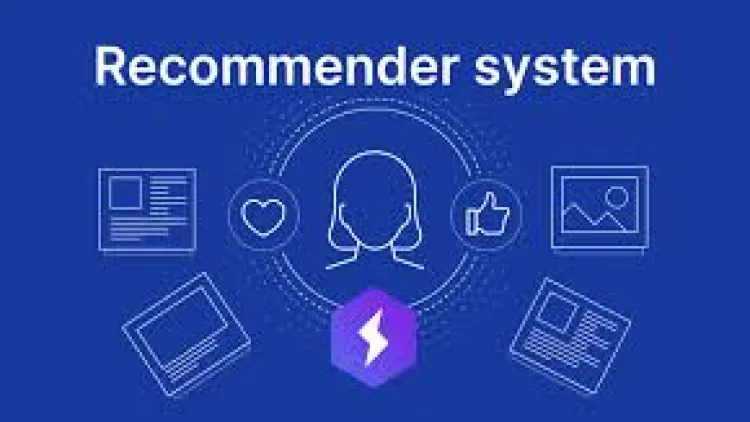
This advanced training provides participants with the knowledge and practical skills to design, develop, evaluate, and deploy intelligent recommender systems and personalized digital experiences. The course explores how machine learning, data analytics, and user behavior can be leveraged to deliver relevant products, content, services, and experiences to individual users.
Participants will examine collaborative filtering, content-based recommendation, hybrid systems, embeddings, ranking models, deep learning, real-time personalization, cold-start problems, recommendation evaluation, and recommender-system deployment. The training emphasizes practical approaches for building scalable recommendation solutions across e-commerce, media, financial services, marketing, and digital platforms.
Curriculum & Topics
15 Topics | 74 Sessions
-
 Workshop 1.1:
Fundamentals of recommender systems and personalization.
-
Workshop 1.2:
Overview of collaborative filtering, content-based filtering, and hybrid models.
-
Workshop 1.3:
Setting up a recommendation development environment.
-
Workshop 1.4:
Introduction to recommendation libraries and tools.
-
Workshop 1.5:
Best practices for recommender systems.
-
Workshop 2.1:
Implementing user-based and item-based collaborative filtering.
-
Workshop 2.2:
Utilizing matrix factorization for collaborative recommendations.
-
Workshop 2.3:
Designing and building collaborative filtering models.
-
Workshop 2.4:
Optimizing collaborative filtering for user similarity and item relevance.
-
Workshop 2.5:
Best practices for collaborative filtering.
-
Workshop 3.1:
Implementing content-based filtering for personalized recommendations.
-
Workshop 3.2:
Utilizing feature extraction and content analysis.
-
Workshop 3.3:
Designing and building content-based recommendation systems.
-
Workshop 3.4:
Optimizing content-based filtering for item relevance.
-
Workshop 3.5:
Best practices for content-based filtering.
-
Workshop 4.1:
Implementing hybrid recommendation models for enhanced accuracy.
-
Workshop 4.2:
Utilizing weighted and switched hybrid techniques.
-
Workshop 4.3:
Designing and building hybrid recommendation systems.
-
Workshop 4.4:
Optimizing hybrid models for combined benefits.
-
Workshop 4.5:
Best practices for hybrid models.
-
Workshop 5.1:
Designing recommendation engines for specific applications.
-
Workshop 5.2:
Implementing model architectures for various recommendation tasks.
-
Workshop 5.3:
Utilizing user interaction data for model improvement.
-
Workshop 5.4:
Optimizing model design for user engagement.
-
Workshop 5.5:
Best practices for engine design.
-
Workshop 6.1:
Optimizing recommendation models for user engagement and conversion.
-
Workshop 6.2:
Utilizing hyperparameter tuning for recommendation systems.
-
Workshop 6.3:
Implementing A/B testing for model evaluation.
-
Workshop 6.4:
Designing scalable recommendation solutions.
-
Workshop 6.5:
Best practices for model optimization.
-
Workshop 7.1:
Debugging common challenges in recommendation systems.
-
Workshop 7.2:
Analyzing model performance and errors.
-
Workshop 7.3:
Utilizing troubleshooting techniques for model improvement.
-
Workshop 7.4:
Resolving common recommendation issues.
-
Workshop 7.5:
Best practices for troubleshooting.
-
Workshop 8.1:
Implementing evaluation metrics for recommendation tasks.
-
Workshop 8.2:
Utilizing cross-validation techniques for personalization models.
-
Workshop 8.3:
Designing and building model validation pipelines.
-
Workshop 8.4:
Optimizing model evaluation strategies.
-
Workshop 8.5:
Best practices for model evaluation.
-
Workshop 9.1:
Integrating recommendation systems into real-world applications.
-
Workshop 9.2:
Utilizing APIs and deployment tools for recommendation models.
-
Workshop 9.3:
Implementing real-time recommendation systems.
-
Workshop 9.4:
Optimizing models for deployment environments.
-
Workshop 9.5:
Best practices for integration.
-
Workshop 10.1:
Implementing techniques for handling cold-start problems.
-
Workshop 10.2:
Utilizing content-based and demographic information.
-
Workshop 10.3:
Designing and building cold-start recommendation strategies.
-
Workshop 10.4:
Optimizing recommendations for new users and items.
-
Workshop 10.5:
Best practices for cold-start.
-
Workshop 11.1:
Implementing deep learning models for recommendations.
-
Workshop 11.2:
Utilizing contextual recommendations and session-based models.
-
Workshop 11.3:
Designing and building advanced recommendation architectures.
-
Workshop 11.4:
Optimizing advanced techniques for specific applications.
-
Workshop 11.5:
Best practices for advanced techniques.
-
Workshop 12.1:
Implementing recommendation systems for e-commerce platforms.
-
Workshop 12.2:
Utilizing recommendation engines for content streaming services.
-
Workshop 12.3:
Implementing recommendation systems for social media feeds.
-
Workshop 12.4:
Utilizing recommendation systems for personalized advertising.
-
Workshop 12.5:
Best practices for real-world applications.
-
Workshop 13.1:
Utilizing Surprise and TensorFlow Recommenders for implementation.
-
Workshop 13.2:
Implementing recommendation models with PyTorch.
-
Workshop 13.3:
Designing and building recommendation pipelines with libraries.
-
Workshop 13.4:
Optimizing library usage for efficient implementation.
-
Workshop 13.5:
Best practices for library implementation.
-
Workshop 14.1:
Implementing model interpretability techniques for recommendation systems.
-
Workshop 14.2:
Utilizing visualization tools for understanding recommendation logic.
-
Workshop 14.3:
Designing and building interpretable recommendation models.
-
Workshop 14.4:
Optimizing model transparency.
-
Workshop 14.5:
Best practices for model interpretability.
-
Workshop 15.1:
Emerging trends in recommender systems and personalization.
-
Workshop 15.2:
Utilizing reinforcement learning for dynamic recommendations.
-
Workshop 15.3:
Implementing federated learning for privacy-preserving recommendations.
-
Workshop 15.4:
Best practices for future applications.