6 Topics
 5 Days
 39 Sessions
Programme Overview
Training Description
- Quantity Surveyors
- Operations Managers and Officers
- Risk Management Professionals
- Procurement and Contract Management Professionals
- Monitoring and Evaluation Professionals
- Government and Public Sector Project Officers
- NGO and Development Programme Professionals
- Project Management Consultants
- Professionals seeking to specialise in project scheduling
- Professionals preparing for the PMI-SP certification examination
Session Objectives
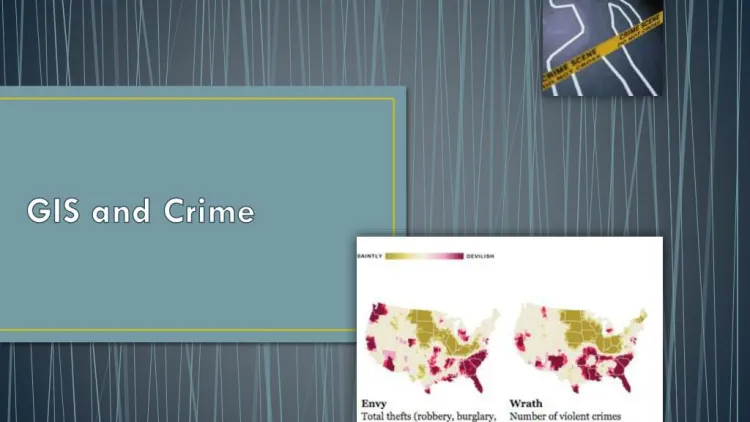
- GIS and mapping terminology GIS application in crime analysis and mapping GIS application in crime solving Geocoding of spatial data Analysis of spatial data related to crime
About the Course
The course provides a practical understanding of professional scheduling throughout the project lifecycle. Participants will learn how to translate project scope into detailed activities, establish dependencies, estimate durations, develop realistic schedules, identify critical paths, optimise resources, analyse schedule risks, and monitor performance.The programme is particularly valuable for professionals working on complex projects where time, resources, dependencies, and schedule performance have a significant impact on successful project delivery. It also provides focused preparation for professionals pursuing the PMI Scheduling Professional (PMI-SP) certification.
Curriculum & Topics
6 Topics | 39 Sessions
-
 Workshop 1.1:
Definition of Core terms
-
Workshop 1.2:
Types of Crime Analysis
-
Workshop 1.3:
Crime Analysis Model
-
Workshop 2.1:
Historical Overview
-
Workshop 2.2:
Types of Mapping
-
Workshop 2.3:
Crime Analysis Mapping
-
Workshop 2.4:
GIS Components
-
Workshop 2.5:
Data of geographic features
-
Workshop 2.6:
GIS toolbox
-
Workshop 2.7:
Visual display/mapping
-
Workshop 2.8:
Querying GIS data
-
Workshop 2.9:
Map Scanning and Conversion
-
Workshop 2.10:
Geo-Referencing
-
Workshop 2.11:
Digitizing
-
Workshop 2.12:
Creation of Point Map
-
Workshop 2.13:
Database Design
-
Workshop 2.14:
Buffer Zone Generation, Queries and Crime Pattern Analyses
-
Workshop 3.1:
Definition of Problem Solving
-
Workshop 3.2:
SARA Approach to Problem Solving
-
Workshop 3.3:
Crime Analysis and Problem Solving
-
Workshop 4.1:
Types of Data
-
Workshop 4.2:
Tabular Data
-
Workshop 4.3:
Geographic Data
-
Workshop 4.4:
General Data Integrity Issues
-
Workshop 4.5:
Data Management
-
Workshop 4.6:
Metadata
-
Workshop 4.7:
Geocoding
-
Workshop 4.8:
The geocoding process
-
Workshop 5.1:
Single Symbol Mapping
-
Workshop 5.2:
Graduated Mapping
-
Workshop 5.3:
Graduation By Size
-
Workshop 5.4:
Graduation By Color
-
Workshop 5.5:
Classification Methods
-
Workshop 6.1:
Factors to Consider
-
Workshop 6.2:
Methods of Dissemination
-
Workshop 6.3:
Components of Crime Analysis Products
-
Workshop 6.4:
Types of Crime Analysis Products
-
Workshop 6.5:
General Crime Analysis Product Elements
-
Workshop 6.6:
Map Design Elements