
 15 Topics
 10 Days
 60 Sessions
Programme Overview
Training Description
Who Should Attend
This course is designed for financial advisors, retirement planners, investment professionals, and individuals planning for retirement. This includes Financial Advisors, Retirement Planners, Investment Managers, Actuaries, Wealth Managers, Insurance Professionals, Pension Fund Managers, Consultants, Financial Analysts, and Individuals nearing or in retirement. These individuals require expertise in retirement income planning and decumulation strategies to effectively manage retirement income.
Session Objectives
- Understand the principles of actuarial modeling for pension fund projections.
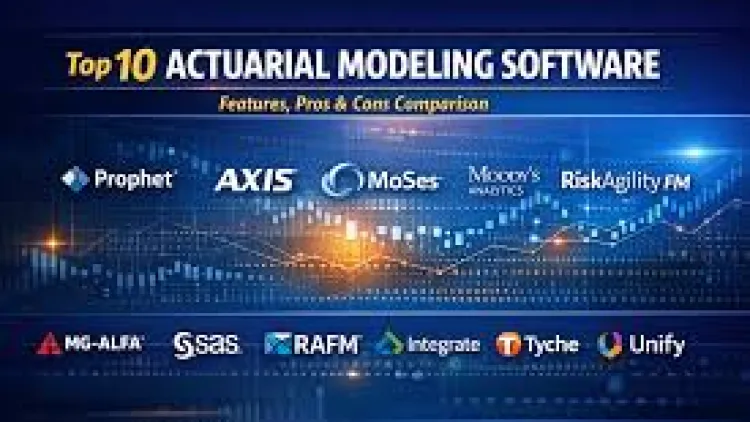
- Develop and implement actuarial models using relevant software and tools.
- Analyze demographic and economic assumptions for pension projections.
- Understand the role of stochastic modeling in pension fund projections.
- Analyze the impact of different investment strategies on pension fund performance.
- Develop methodologies for validating and calibrating actuarial models.
- Evaluate and improve the accuracy of actuarial projections for pension funds.
About the Course
Actuarial Modeling and Scenario Analysis for Pension Projections equips professionals with the skills to develop realistic simulations for assessing pension fund performance. This course focuses on utilizing advanced actuarial techniques, building robust models, and conducting comprehensive scenario analyses. Participants will learn to analyze complex data, project future liabilities, and evaluate the impact of various economic and demographic factors. By mastering actuarial modeling, professionals can enhance the accuracy of pension projections and improve strategic decision-making.
Curriculum & Topics
15 Topics | 60 Sessions
-
 Workshop 1.1:
• Overview of actuarial modeling and its role in pension fund management.
Workshop 1.1:
• Overview of actuarial modeling and its role in pension fund management.
-
Workshop 1.2:
• Understanding the importance of realistic simulations and scenario analysis.
-
Workshop 1.3:
• Introduction to key actuarial concepts and terminology.
-
Workshop 1.4:
• Setting the stage for developing robust pension projection models.
-
Workshop 2.1:
• Analyzing the core principles of actuarial modeling (mortality, interest rates, salary growth).
-
Workshop 2.2:
• Understanding the role of actuarial assumptions and data inputs.
-
Workshop 2.3:
• Examining the impact of model design and complexity.
-
Workshop 2.4:
• Developing a foundational understanding of actuarial modeling.
-
Workshop 3.1:
• Implementing techniques for developing actuarial models using relevant software .
-
Workshop 3.2:
• Understanding the role of data management and model coding.
-
Workshop 3.3:
• Analyzing the impact of software capabilities and limitations.
-
Workshop 3.4:
• Developing skills in utilizing actuarial modeling software.
-
Workshop 4.1:
• Understanding the importance of demographic and economic assumptions.
-
Workshop 4.2:
• Analyzing the impact of mortality rates, fertility rates, and migration.
-
Workshop 4.3:
• Examining the role of interest rates, inflation, and salary growth.
-
Workshop 4.4:
• Developing methodologies for selecting and validating assumptions.
-
Workshop 5.1:
• Implementing techniques for scenario analysis and stress testing.
-
Workshop 5.2:
• Understanding the role of historical and hypothetical scenarios.
-
Workshop 5.3:
• Analyzing the impact of economic shocks and demographic changes.
-
Workshop 5.4:
• Developing strategies for evaluating pension fund resilience.
-
Workshop 6.1:
• Understanding the role of stochastic modeling in capturing uncertainty.
-
Workshop 6.2:
• Analyzing the impact of random variables and simulations.
-
Workshop 6.3:
• Examining the use of Monte Carlo simulations and other stochastic techniques.
-
Workshop 6.4:
• Developing skills in implementing stochastic models.
-
Workshop 7.1:
• Analyzing the impact of different investment strategies on pension fund performance.
-
Workshop 7.2:
• Understanding the role of asset allocation and risk management.
-
Workshop 7.3:
• Examining the impact of investment returns and volatility.
-
Workshop 7.4:
• Developing strategies for optimizing investment strategies.
-
Workshop 8.1:
• Implementing techniques for validating and calibrating actuarial models.
-
Workshop 8.2:
• Understanding the role of backtesting and sensitivity analysis.
-
Workshop 8.3:
• Analyzing the impact of model errors and biases.
-
Workshop 8.4:
• Developing methodologies for ensuring model accuracy.
-
Workshop 9.1:
• Understanding the regulatory and compliance aspects of actuarial projections.
-
Workshop 9.2:
• Analyzing the role of actuarial standards and reporting requirements.
-
Workshop 9.3:
• Examining the impact of regulatory changes on projection methodologies.
-
Workshop 9.4:
• Developing strategies for ensuring regulatory compliance.
-
Workshop 10.1:
• Implementing strategies for communicating projection results to stakeholders.
-
Workshop 10.2:
• Understanding the role of actuarial reports and presentations.
-
Workshop 10.3:
• Analyzing the impact of communication on stakeholder perceptions.
-
Workshop 10.4:
• Developing techniques for presenting complex information effectively.
-
Workshop 11.1:
• Understanding advanced mortality modeling techniques (cohort effects, period effects).
-
Workshop 11.2:
• Analyzing the impact of mortality improvements and longevity risk.
-
Workshop 11.3:
• Examining the role of mortality tables and projection models.
-
Workshop 11.4:
• Developing skills in building sophisticated mortality models.
-
Workshop 12.1:
• Understanding the role of Economic Scenario Generators (ESGs) in financial modeling.
-
Workshop 12.2:
• Analyzing the impact of different ESG models and assumptions.
-
Workshop 12.3:
• Examining the role of interest rate models and equity return simulations.
-
Workshop 12.4:
• Developing strategies for integrating ESGs into pension projections.
-
Workshop 13.1:
• Implementing techniques for liability valuation and discounting.
-
Workshop 13.2:
• Implementing techniques for liability valuation and discounting.
-
Workshop 13.3:
• Analyzing the impact of different discounting methodologies.
-
Workshop 13.4:
• Developing skills in valuing pension liabilities.
-
Workshop 14.1:
• Analyzing real-world case studies of actuarial modeling in pension funds.
-
Workshop 14.2:
• Learning from best practices across different pension funds and regions.
-
Workshop 14.3:
• Identifying key lessons learned and challenges in implementation.
-
Workshop 14.4:
• Discussing the role of innovation and adaptation.
-
Workshop 15.1:
• Exploring emerging trends and opportunities in actuarial modeling (AI-driven modeling, real-time analytics, ESG integration).
-
Workshop 15.2:
• Developing action plans for advancing actuarial modeling within pension funds.
-
Workshop 15.3:
• Analyzing the role of individual and collective action.
-
Workshop 15.4:
• Understanding the importance of long-term commitment and continuous learning.